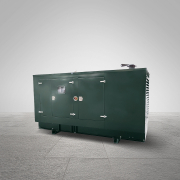
Genesal Energy, part of Manchester Royal Infirmary’s refurbishment

Genesal Energy is proud to announce its involvement in the refurbishment of the Manchester Royal Infirmary (MRI) Emergency Department.

This ambitious project not only aims to improve the hospital’s facilities, but also reaffirms the commitment to providing a first-class healthcare service in a constantly evolving landscape of medicine. The renovation of this facility is designed to increase capacity and improve efficiency, adapting to the changing needs of today’s healthcare.

With nearly 5,200 square metres, 27 Boxes, six new ORs and 10 resuscitation rooms, the hospital will be consolidated as a regional centre of reference for the management of emergencies, trauma and various specialised surgeries.

One of the biggest challenges is to ensure that the Emergency Department and the ORs remain operational during the construction works. Temporary access routes and segregated work areas will be implemented, allowing the hospital to continue to provide vital services with minimal impact to users.

A crucial element of this project is the design and installation of a 1770 kVA soundproof generator set for hospitals. This system not only provides a reliable power solution, but also meets the stringent acoustic requirements of the hospital environment, achieving an average attenuation level of 75-78 dB(A) at 1 metre.

This project was installed by one of our UK Partners Ingram installations Ltd. Ingram installations is one of the UK’s leading Standby Generator Specialist installers that has been working with the UK’s NHS for over 50yrs. Genesal Energy, together with Manchester University NHS Foundation Trust (MFT) and Ingram installations Ltd., is committed to leaving a lasting legacy for staff, patients and the community the hospital serves.

Our Engineering Solution

To guarantee a minimum noise level was paramount, so a 40 feet HC container with double rock wool acoustic insulation (100 mm) and an acoustic membrane on walls and ceiling was designed. It is also fire resistant for 60 minutes (RF-60 Panel).

For further noise reduction, large air inlet and outlet baffles have been installed, as well as an external reinforcement silencer on the air outlet. The – 30 dB stainless steel exhaust silencer has been incorporated to prevent corrosion.

To ensure total soundproofing while the unit is switched off, motorised air inlet and outlet louvres are fitted, which close automatically. The power connection of the generator is made by means of a Modular Busbar System, which has required the design of an external Link Box that allows a flexible and safe connection.

Installation of soundproof generator sets at Manchester Royal Infirmary.

This Link Box is powered directly from the genset power cabinet via internal wiring with six wires per phase of 240 mm², ensuring efficient power management. In addition, the genset is equipped with a 1,000 litre double-walled fuel tank feeding directly the engine via double-walled fuel pipes, with a vacuum leaks detection system. In the event of a fire, a mechanical safety shut-off valve is activated, shutting down the engine immediately.

To ensure efficient refuelling, the system includes a custom-designed redundant fuel transfer system with dual pumps and a ‘Flow Switch’ for automatic switching between pumps. This system can be connected to an external mother tank, ensuring a constant and reliable fuel supply.

Finally, the generator features a dual start system, which includes two electric starter motors and a double set of AGM batteries, ensuring operability in critical situations.

Features

  • 40′ HC container with double rock wool insulation in walls and ceiling. Air inlet and outlet baffles. Interior and external air outlet silencers attached. All to meet the specific attenuation level of 75-78 dB (A) at 1 metre.
  • 1,000 litres Double-walled (Steel-steel) fuel tank with leak detection (vacuum) at the rear of the container.
  • Double-walled, leak-detection (vacuum) fuel pipes.
  • Redundant fuel transfer system, with double pump (24Vdc & 230Vac). Both with manual shut-off valve and limit switch. In addition, a ‘Flow Switch’ for the automatic changeover from one to the other and a motorised valve (with spring return to closed position).
  • Easily accessible from the outside control panel
  • Power panel independent of the monoblock, and therefore isolated from vibrations, with adjustable LSI switch and busbar with top outlet.
  • External Power Link Box for power connection via customer-supplied Modular Busbar System.
  • Internal wiring from busbar to Modular Busbar System with 6 cables per phase (5 ‘phases’) of 240mm2 halogen-free (total 30 cables).
  • Normal and emergency lighting (at least 10 lumen) inside and outside the container.
  • Motorised air inlet and outlet grilles.
  • Double starting system with 2 electric starter motors and double set of AGM batteries.
  • Battery protection box.
  • Stainless steel exhaust silencer located in the upper external part of the container.
  • Automatic mechanical safety valve to shut off fuel supply in case of fire.
  • RF60 fire protection.
  • 3,000 W double engine preheating system with recirculation pump.

Genesal Energy strengthens power supply in critical military operations

In the demanding military context, where reliability and availability of energy is crucial, Genesal Energy has deployed its precision engineering to secure the power supply in critical situations.

Recently, a generator set was installed in Germany with the clear objective of keeping critical military infrastructures operational.

Generator sets such as this one are essential to meet the energy demands of units in the field, operating in locations that are difficult to access and far from conventional infrastructures. In addition to providing continuous power to keep machines and equipment operational, these systems are designed with advanced protection and safety features ensuring safe and reliable operation 24/7.

The implementation of Genesal Energy’s generators not only ensures operability in extreme conditions, but also demonstrates our commitment to innovation and reliability in energy solutions for the military sector. This project underlines our team’s ability to design and deploy solutions tailored to the critical needs of our customers, ensuring operational success in every mission.

Our Engineering solution

Genesal Energy developed a monoblock engine-alternator generator in a 3400mm soundproof enclosure. This design includes an integrated 450-litre tank that provides a 12 ½ autonomy, ensuring a continuous supply of energy without interruption. In addition, a fuel transfer system from external tanks was implemented, ensuring prolonged operation.

The engineering behind the genset includes advanced vibration isolation through a rubber anti-vibration system, as well as integral protections for moving parts and hot components. Elements such as emergency stop mushrooms ensure the safe operation of the equipment at all times, complying with the most stringent safety and quality standards.

The unit was branded and painted according to customer specifications.

Features

  • Type of construction: Monoblock engine-alternator in soundproofed 3400mm cabin.
  • 450 L base frame inserted tank, with liquid collection tray
  • Silencer model: GSI 230 (-30dB)
  • Control panel: ComAp InteliGen4 200
  • 250 A Circuit Breaker
  • Tudor TC1453 145 Ah battery

Genesal Energy ensures business continuity for a shopping area in Denmark

The installation of a generator in a shopping centre is crucial to ensure operational continuity in the event of a widespread power outage. As these can cause significant economic losses, backup power can mitigate these risks by protecting food and perishable goods, as well as ensuring the safety of customers and employees on the premises.

The project presented considerable complexity, as the starting point was the need to fit a 660 kVA genset in a small room. To meet the customer’s needs, the engineering department designed a special canopy, with a completely redesigned frame that made it possible to reduce the height of the final assembly. This redesign was possible thanks to a made-to-measure silencer and the redesign of the cab’s longitudinal axles.

In addition, to meet the requirement to maintain an average noise level of 80 dB(A) at 1 meter, an external silencer was designed to be attached to the room’s air outlet, ensuring that the appropriate acoustic levels are maintained, and the comfort of the end customer is safeguarded.

This project in Copenhagen is a perfect example of how Genesal Energy adapts to the specific needs of each client, even in the most challenging conditions,’ explains Genesal Energy’s engineering department. ‘Our mission is to provide energy solutions that are not only effective, but also contribute to the safety and well-being of the communities in which we operate.’

Genesal Energy continues to reaffirm its commitment to innovation and quality in the energy sector, ensuring that commercial facilities across Europe have the solutions they need to deal with any eventuality.

Features

  • Generator room air outlet silencer-30 dB(A).
  • Special canopy with a maximum height of 2,000 mm and made-to-measure silencer, side-mounted exhaust outlet.
  • Double set of batteries with automatic changeover (AUTO+MANUAL).
  • Motorised circuit breaker.
  • Liquid collection tray.
  • Relays for control of motorised on-site grilles.

Biogas and biomethane: key players in the circular economy and the energy transition

Aerial view of a wastewater treatment plant, key to biogas and biomethane production in the circular economy.

“Biogas and biomethane stand out within the bio circularity ecosystem for their ability to offer immediate and viable solutions in the ecological transition.”

Margarita de Gregorio, CEO of Biocirc.

One of the fundamental aspects in the fight against climate change is the economy. Currently, the linear economy, based on the ‘extract, produce, consume and dispose’ model, contributes significantly to the environmental crisis by prioritising economic profit and ignoring sustainability. This way of acting leads to a depletion of natural resources, the generation of large amounts of waste and the emission of greenhouse gases.

It is therefore crucial to move towards what is known as the ‘circular economy’. This new economic system promotes the management and recovery of waste to keep it in the production cycle for as long as possible. This helps to reduce both the consumption of raw materials, and the amount of waste generated.

The part of the circular economy that addresses the production cycle of those sectors whose raw materials are of biological origin is known as bio circularity. This approach makes it possible to replace raw materials of fossil origin with others of renewable origin, while at the same time reusing organic waste, contributing to the decarbonisation of multiple sectors and to a more sustainable management of waste.

In this context, biogas and biomethane play crucial roles thanks to their ability to regenerate natural systems and contribute to the energy transition. But first things first…

What is biogas and biomethane?

Cows grazing in front of a biogas plant in a rural setting.
Biogas is a renewable, carbon-neutral gas produced from the anaerobic digestion of organic matter, i.e. from the biodegradation of organic waste in the absence of oxygen. Thus, during this process, which takes place in an airtight tank or digester, the carbohydrates, proteins and lipids present in the waste are broken down by a series of bacteria, releasing a mixture of gases known as biogas. In addition, digestate, a biosolid with high fertiliser capacity, is also obtained as a by-product.

The composition of biogas varies depending on the waste used as raw material or substrate, although it is usually between 50-75% methane (CH₄) and 25-45% carbon dioxide (CO), with small amounts of other gases such as hydrogen sulphide (H₂S), ammonia (NH₃), volatile organic compounds (VOC) and water vapour.

Of the aforementioned, the methane concentration is the most relevant factor, as it determines the calorific value of the fuel. 1 m³ of biogas with a composition of 50% CH₄ would produce 5 kWh of energy, replacing 0.50 m³ of natural gas; whereas, if the methane composition is raised to 65%, the same cubic metre of biogas would produce 6.40 kWh of energy, replacing 0.65 m³ of natural gas. [These calculations are based on the lower calorific value of natural gas (10.83 kWh/m³)].

On the other hand, before being used as energy, biogas must undergo a process to remove impurities that can cause damage to the installations and reduce the efficiency of the system. H₂S, for example, is highly corrosive and can damage motors, turbines and other equipment if it is not removed adequately. In addition, water vapour reduces the calorific value of the biogas, which is why it is essential to separate it.

After this process, biogas is suitable for use as a fuel in the production of heat in gas boilers or in the generation of electricity through combustion engines, among others.

However, to broaden its applications, biogas can undergo an additional process, known as ‘upgrading’, for the production of biomethane. This process involves the almost total elimination of CO and other residual compounds, raising the methane concentration to more than 95%. The result is a renewable gas with energy-characteristics comparable to fossil natural gas.

The advantage of biomethane over biogas lies in its higher calorific value and its ability to replace natural gas, thanks to its high methane content. This allows biomethane to be injected directly into the existing gas grid, extending its use to sectors such as transport, industry and residential. Its integration into existing infrastructure makes it an immediate decarbonisation solution, especially compared to other renewable gases, which require the development of specific infrastructures. Moreover, if biogenic CO₂ capture is carried out during its production, biomethane can achieve negative carbon emissions.

Opportunities in the valorisation of organic waste

The dual benefits of biogas and biomethane – as a renewable energy source and a climate mitigation tool – are sufficient to take them into account in the transition to a sustainable, low-carbon energy system. But their use has advantages that go far beyond the simple production of energy, as the production of these biofuels is also emerging as an innovative and sustainable solution for the valuation of organic waste produced by various economic sectors.

Currently, part of this waste is managed inefficiently and it often ends up polluting soil, water and the atmosphere itself, which has a high environmental impact. In this context, anaerobic digestion can play a key role in managing waste such as the following:

  • Livestock sector: Livestock waste, such as manure, slurry, animal bedding and cleaning water, can lead to the incorporation of heavy metals into the soil, the pollution of water by excess nitrates or the emission of ammonia into the atmosphere if not properly managed.
  • Agricultural sector: Agricultural residues, including pruning, wood and herbaceous waste, are often inefficiently managed through indiscriminate burning or abandonment, contributing to environmental degradation, fires and the spread of pests.
  • Food sector: Slaughterhouse rejects, waste from the fishing industry, organic waste and liquid by-products from the dairy industry, or fruit or vegetable scraps that are not reused can end up rotting in landfills, where they emit methane, a gas with a warming potential 21 times greater than CO₂.
  • Municipal Solid Waste (MSW): The organic fraction of municipal solid waste (MSW), such as food waste or domestic pruning, can be biodegraded and reused to produce energy or natural fertilisers. This process also contributes to achieving the recycling targets set out in Law 7/2022 on Waste and Contaminated Soils, which allows further progress towards a circular economy by reducing municipal waste.
  • Wastewater Treatment Plants (WWTP): Sludge generated in wastewater treatment represents a costly challenge for WWTPs, as its management can account for up to 50% of operational costs. Anaerobic digestion can reduce the volume of sludge and generate biogas, turning a problematic waste into a renewable source of energy.

Biogas plant facilities surrounded by agricultural fields and waste management areas.
In other words, biogas and biomethane stand out not only as renewable energy sources and tools for decarbonisation, but also for their ability to reduce dependence on fossil fuels, bringing greater flexibility to the energy system.

Their ability to decarbonise sectors that are difficult to electrify is particularly valuable in the transition to a cleaner energy model.


In addition, anaerobic digestion technology is already well established, and the necessary infrastructure is available, making biogas and biomethane an immediate solution.

A crucial added value of these sources is their contribution to the circular economy, since, as we have seen, they allow the revalorisation of organic waste generated by various sectors. Not only do they significantly reduce waste, but they also create new opportunities in sustainable and circular value chains, especially on a small scale and in rural environments. This approach favours the dynamisation of these areas, while contributing to the fulfilment of the objectives of the bioeconomy in Spain, promoting a more balanced and sustainable model of economic development.

Diagram of the biogas and biomethane production and utilization process.

Picture 1. Biogas value chain

Biogas and Biomethane Genesal Energy gensets

Genesal Energy is fully aware of the enormous potential of renewable gases and the importance of the circular economy. We participate in projects that promote the valorisation of waste to transform it into valuable resources such as biofuels. These gases can be used on gas power gensets, taking a further step towards a sustainable energy model by not only using a renewable source instead of conventional fossil diesel, but also a source generated from the reuse of waste that would otherwise end up representing an environmental problem.

Hand in hand with FACSA, SMALLOPS, AIMEN and UVA, we are part of the ENEDAR project – ‘Improving the energy efficiency and sustainability of wastewater treatment plants through the valorisation of WWTP sludge’, financed by the Ministry of Science, Innovation and Universities and the European funds NextGeneration UE/PRTR.

Genesal Energy is here responsible for designing and validating the operation of a generator set powered by fuels from the anaerobic digestion of sewage sludge from a pilot plant; reaffirming our commitment to the energy transition and the creation of immediate and practical solutions for a sustainable future.

Genesal Energy key to guaranteeing supply in large hotels

In Mexico, climate instability is a factor that cannot be ignored, especially in regions where weather phenomena such as tropical storms and hurricanes are frequent.

These can cause unexpected and prolonged power outages, affecting the operation of key sectors such as the hotel industry. To cope with these conditions, having a reliable energy back-up system, such as a generator, is essential.

Genesal Energy has designed and installed three generator sets in a renowned hotel chain in Mexico, ensuring that the establishment continues to operate safely and efficiently during adverse situations and guaranteeing the operation of emergency & IT systems, heating and air conditioning that ensure the safety and comfort of guests.

In the hotel industry, operational continuity is key to ensuring a safe and comfortable experience for guests. In this context, the installation of generator sets as a backup power source has become essential, especially in regions where power outages can jeopardize both safety and comfort.

Project objective: Safety and comfort, come what may

The main objective of this project was to provide a reliable back-up power source for the hotel, ensuring that essential services continue to operate during any power outage. Emergency systems, such as exit lights, fire alarms, automatic doors and security equipment. Maintaining comfort is also a priority, ensuring the operation of air conditioning, lighting and other basic services that directly impact the experience.

Thanks to this installation, the hotel now has a robust energy solution that ensures continuous power supply during critical situations. Guest safety and service comfort are assured, reinforcing Genesal Energy’s commitment to providing tailored energy solutions that meet the highest demands in any industry, including hospitality.

What solution did Genesal Energy engineer?

Genesal Energy designed and installed three open generator sets, each equipped with advanced features to ensure optimal performance and efficient integration into the hotel’s facilities. These generators have 600 litres baseframe integrated fuel tanks. In addition, an automatic fuel transfer system was incorporated to connect the daily tanks to a main tank, ensuring that the fuel supply is constant and efficient.

The units are equipped with a control panel that allows parallel operation between them, which facilitates management and ensures constant performance. A synchronisation board was also provided between the island of gensets and the grid. Motorised circuit breakers with trip coil were also integrated to protect the system against overloads and electrical faults. Safety was a priority in this design, including explosion-proof battery boxes, and hand pumps for both fuel transfer and oil drainage to facilitate maintenance.

Features

  • Open set.
  • 600L base frame integrated fuel tank.
  • Control panel for parallel operation between units.
  • Motorised automatic switch, with trip coil.
  • Battery protection box.
  • Automatic transfer system with electric pump.
  • Manual pump for safety fuel impulsion.
  • Manual pump for oil drainage.
  • Busbar for power output.

Genesal Energy strengthens energy security in the Dominican Republic

According to official data, the Dominican Republic has experienced sustained growth in energy demand in recent decades, driven by increased industrial, commercial and residential activity.

To ensure a reliable electricity supply, a robust infrastructure and systems that guarantee continuity of service, even in the face of unforeseen events, are required. Genesal Energy has designed and installed a generator set for a critical electrical substation in Guayubín.

The main objective of the project is that the substation can effectively manage the electricity coming from power stations and power plants, transform the voltage and connect to the large distribution lines that supply large areas of the country.

The importance of the genset in an electrical substation

The role of a generator set in a power substation is essential to the safety and stability of the system. Substations, as key nodes in the power grid, are responsible for the distribution of power to large regions, and a prolonged interruption in their operation could leave thousands of people without power. A generator set acts as an immediate backup in the event of failures, keeping control, protection and communications systems operational. It also ensures the continuity of critical services such as transformer cooling, plant lighting and equipment overload protection, minimising the risk of damage.

Our customer needed a solution to guarantee the supply of the substation’s AC auxiliary services. So a soundproofed generator set was designed, which can be activated automatically according to the substation’s requirements, providing the necessary energy at key moments.

The Guayubín electrical substation project is an example of how Genesal Energy provides innovative and customised energy solutions to strengthen the Dominican Republic’s electrical infrastructure. Thanks to the installation of this generator set, the substation will be able to operate reliably and efficiently, guaranteeing a continuous supply of energy at critical times and contributing to the energy development of the country.

Our Engineering Solution

Genesal Energy’s engineering team developed a soundproofed 3800mm canopy genset with a 600 litre fuel tank, tailored to the customer’s specific requirements. The genset power was customised to allow for a 350 KCM gauge connection, per phase, with terminals for a 185 mm² cross-section. In addition, the design included a control system that allows cable entry to manage multiple connections.

As the project progressed, the need was identified to install an additional 500-gallon (approximately 2,000 litres) external tank, located 10 metres from the generator set. To ensure a continuous flow of fuel, an automatic transfer system with a booster pump and solenoid valves was implemented, which involved several adaptations to the canopy and tank design.

Features

  • Calculation of the necessary sections for the inlet and outlet of gases in the room.
  • Automatic fuel transfer system, with maximum level buoy, minimum level buoy by gauge, transfer impulsion pump, solenoid valve to cut off or control the system, among others.
  • Machining of the tank and canopy for the appropriate adaptations of the transfer.
  • Oversized silencer model (-30dB).
  • Engine heating system 1000W.
  • 600 L fuel tank.

Uninterruptible Power, the Key to Industrial Success in the Heart of Guanajuato

Genesal Energy continues to strengthen its commitment to the industrial sector, offering power backup solutions adapted to the most demanding market needs. On this occasion, it has supplied a state-of-the-art open generator set for an automotive manufacturing plant in Guanajuato, Mexico. This equipment will provide contingency power to a new assembly line for painting, one of the most critical processes in the automotive production chain.

Backup generator sets in factories are not only a strategic advantage, but essential to ensure operational continuity. In high-demand sectors, such as the automotive industry, where every minute of production counts, having a backup power source prevents unplanned shutdowns that could lead to major economic losses and delays in the supply chain. In addition to protecting the investment, a generator set ensures that quality and safety standards are maintained even in the event of power failures.

Power to ensure operational continuity

Thanks to our genset, uninterrupted operation of the assembly line ensures the workflow is not affected by possible electrical failures. It is installed in a hangar near the paint line and has been designed to meet the customer’s main need: long autonomy. This is achieved by means of an independent 3000 litre double-walled steel tank, designed to provide an energy reserve in accordance with the specific requirements of the installation.

The generator set supplied in Guanajuato stands out for its advanced specifications, which ensure its ability to operate reliably in demanding industrial conditions. With this project, Genesal Energy reaffirms its commitment to accompany the automotive industry in its growth, offering high quality energy solutions.

Features

  • Open genset with independent control cabinet, it can be unbolted and placed close to the generator set.
  • Large self-supporting power cabinet with the possibility of top entry of 10 power cables of 300mm^2 by the end customer.
  • 3000 litres independent double-walled (Steel-steel) fuel tank.
  • Fuel flow meter installed in control cabinet on independent display.
  • Critical -40 dB(A) silencer.
  • Analogue oil temperature sensor.
  • Due to the installation at high altitude above sea level, precise calculations of the power of the unit at the final location.


How to connect a genset in industrial or commercial installations

Technician connecting a generator in an industrial setting
Connecting a generator set to the power grid of an industrial or commercial facility is a key process to ensure a continuous supply during grid failures.

In sectors such as industry, hospitals or data centres, where energy is vital, it is essential to know the correct steps and methods to make a safe and efficient connection.

Basic concepts for the connection of a generating set

Before proceeding with the installation of a generating set, it is essential to carry out an exhaustive analysis of the electrical demand of the installation. This involves calculating the power required for critical equipment, verifying current safety regulations and correctly sizing the system components.

Each installation has specific needs, so it is essential to design a system that guarantees a reliable supply and complies with protection standards.

Key requirements include

  • Critical load assessment: Identify which areas and equipment need continuous supply in the event of mains failure.
  • System planning: Determine the type of generator set, switchgear capacity, and the voltage and frequency to be supplied.
  • Regulatory compliance: Ensure that the design of the installation complies with low voltage regulations and that all relevant safety measures are in place.

General view of a shopping center where energy is essential

Methods of connection of a generating set to the mains

Direct connection of the generating set to the grid

To ensure efficient switching between the mains and the generating set, it is essential to use a switchboard. This device automatically detects any mains failure and switches over to the genset without manual intervention (in case of an automatic system). The ATS (automatic switchboard) is the key element in installations where the continuity of the power supply is critical, as it ensures that the change of the power supply is carried out without cuts or with a minimum cut-off.

Learn more about the mains/generator switching process here.

The installation process of an ATS includes the configuration of its parameters so that, in the event of any mains failure, the system can start the generator and transfer the load instantaneously. This type of automation is essential in sectors such as hospitals, data centres or telecommunications infrastructures, where any interruption may be unacceptable.

Connecting a three-phase genset

In high-demand industrial environments, three-phase gensets are often used to ensure a balanced power distribution. These generators operate using three phases of alternating current and can be connected in two main configurations: star or delta.

  • Star connection: In this scheme, all phases are connected to a single neutral point, which facilitates the balancing of distributed loads.
  • Delta connection: In this type of connection, the end of one phase is connected to the beginning of the next phase, creating a closed loop between the phases.

The choice between these two schemes will depend on the type of load, the power required and the infrastructure available in the installation.

Connection to critical systems

In critical facilities such as hospitals, telecommunications centres or industrial plants, it is crucial that certain equipment is always kept operational. For this purpose, secure lines are implemented that directly connect critical systems to the generator set.

These lines are designed to receive power immediately in the event of a grid failure. In addition, many of these systems include redundancies and continuous monitoring, ensuring that the generator set is always ready to start when needed. In these cases, it is common to use several generators connected in parallel to improve security and supply capacity.
Doctors in a hospital reviewing an X-ray

Steps to connect a generator set safely

1. Assessment of the installation’s power and requirements

The first step to a proper connection is to make a detailed assessment of the power required by the installation during a power outage. This includes identifying the equipment requiring continuous supply and determining the rated and starting powers to be provided by the genset.

It is crucial to correctly calculate the critical load to ensure that the selected generator is able to cover all the needs of the facility without overloading.

2. Configuration of the Automatic Transfer Switchboard (ATS)

The ATS is responsible for the automatic switchover between the mains and the genset. Its correct configuration is key to ensuring that the system reacts quickly and efficiently to failures in the mains supply. This includes adjusting the delay times, the sensitivity of the system to detect fluctuations in voltage and frequency, as well as the generator start and stop settings.

A well-configured ATS not only ensures efficient switching, but also protects both the generator set and the connected equipment from possible fluctuations or failures in the grid.

3. Installation of conductors and protections

To ensure the safety of the installation, it is essential to correctly select the conductors and protective devices, such as fuses, differential and thermal relays. In three-phase installations, it is particularly important to ensure that the three phases are balanced to avoid problems of overload in one phase and underutilization in the others.

The dimensioning of the conductors must be done according to the capacity of the generating set and the distance between the generator and the switchboards. In addition, independent earthing systems must be installed to protect both personnel and equipment against possible insulation faults.

4. Connection and synchronisation tests

Once the installation is complete, it is crucial to perform extensive tests to ensure that the genset can transfer the load correctly without interruption. These tests include:

  • Verifying that the ATS responds appropriately to a simulated mains failure.
  • Checking that the genset can take the full load of the installation without sudden variations in frequency or voltage.
  • Perform synchronisation tests for installations where several generators operate in parallel, ensuring that all generators work in a balanced way and without interference.

In addition, the quality of the power supplied by the generator set should be verified, ensuring that it meets the requirements of the critical equipment of the installation.

A detailed analysis of the power requirements, the proper configuration of the automatic transfer switch (ATS) and the implementation of protective measures are essential to ensure a reliable and continuous power supply.

The key to success in these installations lies in designing a system that allows critical equipment to continue operating without interruption, ensuring the safety and efficiency of the entire electrical infrastructure.

Energy safety in the fight against climate change: risks and opportunities

Landscape with wind turbines at sunset, symbolizing the transition to renewable energy with energy safety and the fight against climate change.
For several years now, one of the biggest challenges in the fight against climate change has been related to the energy safety supply.

Although progress has been made, the energy sector is still the largest emitter of greenhouse gases and further efforts are needed. Also, energy production needs to be renewable and adaptable to already occurring climate conditions. Erratic weather patterns, rising global temperatures and the intensification of extreme weather events challenge the ability of energy systems to provide secure, continuous and affordable supply highlighting this need for adaptation.

Growth in energy demand

Climate change, combined with population growth and economic development, increases energy demand globally. E.g. The use of air conditioning systems in countries with emerging economies and warm climates, where income growth is allowing greater access to cooling technologies. In 2000, the global energy demand for residential air conditioning in summer was 300 TWh, but this is projected to increase to 4,000 TWh by 2050 in regions such as India, Brazil and other developing countries.

As global temperatures rise, these countries will experience longer and hotter summers, which will increase cooling use and thus electricity demand. Although in the more advanced economies and colder climates the need for heating during the winter is likely to decrease, overall energy demand will continue to increase due to the use of air conditioning in the summer months. This change in energy consumption patterns will require a reassessment of global energy strategies, with particular attention to the growing needs of developing countries.

Impact on power generation

Climate change is also affecting power generation. Thermal power plants, which currently produce around 80% of the world’s electricity, are reducing their efficiency due to higher ambient temperatures. Thermal conversion is less efficient in extremely hot conditions. In addition, the availability cooling of water is decreasing forcing them to operate at reduced capacities or even to temporarily halt power production. Thermal plants are designed to operate under more stable climatic conditions and, although most energy transition plans involve the closure of most of these, it must be kept in mind that this process will be gradual. During this transition period, thermal plants will remain a key part of the global energy supply, especially in countries where the infrastructure for renewable energy is not yet fully developed.

Nuclear power plants are particularly vulnerable to extreme weather events, such as hurricanes or storms, which can damage their cooling systems and other critical equipment necessary for the safe operation of reactors. Events such as Hurricane Harvey in 2017, which affected nuclear plants in Texas, highlight the need to strengthen energy infrastructures in the face of such events.

On the other hand, hydroelectric power, which depends on the hydrological cycle, is also at risk. In regions such as the Zambeze River in Africa, hydropower generation capacity is projected to decline by up to 35% by 2050 due to reduced rainfall and rising temperatures. However, in Asia, projections suggest an increase in hydropower capacity, showing that climate change will affect different regions differently.

In addition, renewable energies such as solar and wind are also exposed to the effects of climate change. Increased cloud cover in certain areas will affect the efficiency of solar panels, while more frequent and severe storms could damage both solar and wind installations. Extreme weather events and changes in wind patterns will complicate the integration of these sources into electricity systems, which may require greater investment in energy storage technologies to mitigate their intermittency.

Diagram of the energy system adaptation cycle in response to climate change.

Threats to energy infrastructure

Energy transmission and distribution infrastructures are particularly vulnerable to climate change. Higher temperatures, rising sea levels, melting permafrost, floods and landslides will put energy transmission networks and pipelines at risk. In coastal areas, rising sea levels may damage pipelines and energy facilities, while in permafrost areas, thawing could affect the stability of infrastructure. In addition, heat waves and forest fires that are becoming more frequent also pose a threat to power lines, as has already been seen in countries such as the United States and Australia.

The fossil fuel sector, in particular oil and gas, is also exposed to extreme weather events. Tropical cyclones, such as Hurricane Katrina in 2005, can disrupt operations on offshore extraction platforms and affect onshore infrastructure, leading to disruptions in global energy production and supply. Although the melting of ice in the Arctic presents an opportunity for exploration of new oil and gas reserves – which could increase the global supply of these resources – the exploitation of these reserves would entail new environmental and logistical risks.

The role of generating sets in energy safety

In this context of increasing energy demand and infrastructure vulnerability, gensets emerge as a vital solution to improve energy security. They act as back-up systems that ensure a continuous supply of electricity during outages or interruptions. Particularly useful for critical facilities, such as hospitals, data centres, wind farms and emergency services, which cannot afford interruptions in their power supply.

In addition, gensets are versatile and can be used in a variety of applications, from industrial operations to residential areas, providing an independent power source that can be tailored to the specific needs of each user. In regions where the electrical infrastructure is more vulnerable to disruptions, gensets can provide an effective emergency power solution, ensuring that communities and industries continue to function even during the most severe weather events.

Finally, the deployment of cleaner and more efficient gensets, powered by renewable fuels or clean energy technologies, can contribute to mitigating greenhouse gas emissions, aligning with long-term sustainability goals.

In this sense, gensets not only act as a temporary solution to energy supply insecurity but can also be integrated into a broader climate change adaptation and resilience strategy, offering both energy security and opportunities to move towards a more sustainable future.

The UK’s largest pet care company entrusts its supply to Genesal Energy

Genesal Energy has designed a generator set with very specific needs for one of the logistics centres of the UK’s leading pet care company, Pets at Home.

Emergency generator sets are crucial in a logistics centre. They guarantee the continuity of daily operations protecting the supply chain and customer service.
A tailor-made canopy – adapted to the space of 8100 x 2100 x 2475 mm – was designed: a soundproofed unit that guarantees an average sound pressure level of 85 dB at 1 metre and has exhaust gas silencers with -35 dB attenuation on the roof. The power panel is located on the outside in order to facilitate connection.

Dimensional restrictions solved; another challenge was that the new equipment had to be compatible with the existing one. Also sorted out.
A safe energy source in the event of any supply failure. Customer’s satisfaction best friend.

Our Engineering Solution

Although this generator set would be installed in a 40′ HC container in its standard assembly version, our engineering team designed a 8100 x 2100 x 2475 mm canopy with the power panel installed outside in order to facilitate the connection of power cables by the customer.

Features

  • 8100 mm modular soundproofed canopy guaranteeing an average sound pressure level of 85 dB at 1 metre.
  • The unit was equipped with a liquid collection tray to contain possible coolant, oil or fuel leaks.
  • An exhaust gas silencer with -35 dB attenuation was installed on the canopy roof.
  • The canopy was fitted with an integrated air silencer module.
  • A power output cabinet was designed external to the genset, with the following features:
  • 2 x 3-Pole circuit breakers. One for the genset and the other one for an external genset.
  • Castle key to prevent the closing of both breakers at the same time.
  • Powerlocks connection for an external genset.
  • Powerlocks connection for a load bank.
  • Busbar.
  • This power cabinet allowed an external genset to be connected to supply the loads in the event of the genset not being available.