Guaranteed power for essential services in Western England

In the heart of Lancashire, Genesal Energy has successfully completed the installation of three soundproofed generator sets at a local authority in Blackpool.

We reinforce our commitment to the protection of critical spaces ensuring that patients and healthcare staff can carry out their activities without interruption in the event of a power failure.

In local government buildings, electrical power is not just a resource: it is the foundation on which many essential activities for the population are based. From issuing documents and processing paperwork to coordinating emergency services, any interruption in the power supply can cause delays, inconvenience and, in some cases, significant consequences for citizens.

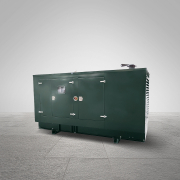
Soundproof generator by Genesal Energy during installation.

Genesal Energy installed three generator sets of 330 kVA each, specifically designed to meet the hospital’s needs. The units, insulated not to exceed 75 dB(A) at 1 metre, were manufactured in specially dimensioned canopies and finished with C5M environmentally resistant paint. In addition, they are synchronised with each other by means of a DeepSea DSE8610 control system, which ensures perfect operability between the units.

Each generator has a 650 litre fuel tank and a transfer system that allows continuous fuel supply from an external tank at ground level. Anti-condensation heaters on the alternators and anti-corrosion treatment on the windings have also been added to ensure their operability in all climate conditions.

The careful design of this project not only responds to the high technical standards that these buildings require, but also to the importance of maintaining a safe environment for users and workers.

Soundproof generators installed by Genesal Energy at Blackpool Hospital.

Our Engineering Solution

Supply of an emergency network with the design, manufacture and commissioning of soundproofed generator sets which guarantee the operation and safety of the centre’s activities at all times.

Features

  • 3 x 330kVA Specially oversized soundproofed canopy 75db(A) @ 1m, C5M surface treatment in customised RAL.
  • DeepSea DES8610 Control panel for synchronisation between units.
  • 650 litres Integrated fuel tanks.
  • External fuel filling point with 3 x transfer pumps, solenoid valves, leakage sensors, fuel polishing systems, and connection boxes.
  • Anti-condensation heaters on alternator.
  • Anti-corrosion treatment on alternator windings, PMG and neutral contactors.

General view of the generators installed by Genesal.

What is it and how does the Mains/Genset switching work?

Power plant backlit against the sunset glow.
Mains/Genset switching is a key process in the installation of gensets, ensuring continuous power supply during grid failures. This mechanism is essential in critical sectors, where a lack of electricity can cause serious problems.

In this article, we explain in detail what Mains/Genset switching is, the different types of systems, and how to choose the most suitable for your installation.

What is a Mains/Genset switch?

Concept and definition

Mains/Genset switchover is the process of switching from the main power source (the mains) to a backup power source (the genset) when a mains failure is detected. This switching can be done manually or automatically and ensures continuity of power supply.

Importance in uninterruptible power supply

This process is essential in facilities that cannot afford a prolonged power outage, such as hospitals, industries or data centres. Thanks to switching, the generator set is activated to ensure that power continues to flow without interruption, avoiding economic losses and possible damage to sensitive equipment.
Imagen de industria con sistema de conmutación

Mains/Genset switchboards and diagrams

Mains/Genset switchboard: Function and components

The switchboard is an essential device in this process. It is composed of two power inputs: the mains and the generating set, and an output which distributes the electricity to the loads. While the grid is in operation, the switchboard keeps its input active, but in case of failure, it switches to the genset input.

Types of switching systems

Based on their operation, there are 3 types of switching systems:

  • Manual: Requires human intervention to switch from mains to genset.
  • Automatic: The system acts automatically as soon as it detects a mains failure.
  • Remote: Allows remote switching, which can be useful in decentralised installations.

Manual (local) switching

This is the simplest switching system. Manual switching requires an operator to physically intervene to switch from the mains to the genset. This type of system is usually used in installations where power outages do not have a serious impact or in cases where simplicity and low cost are a priority. The operator, in the event of a mains failure, must operate a switch or device to start the genset and transfer the load.

Advantages of Manual Switching

  • Reduced cost: Manual systems are more economical compared to automatic systems.
  • Simplicity: They are easy to install and operate in non-critical environments.
  • Direct control: The operator can decide when and how to switch.

Disadvantages of Manual Switching

  • Slow response time: Requires human intervention, which delays the reactivation of the supply.
  • Operator dependency: If no personnel are available, switching will not take place.
  • Risk of errors: Manual operation can lead to errors, such as failures in the switching procedure.

Automatic switching

Automatic switchover is the most advanced and efficient option. This system is designed to detect faults in the electrical network immediately and switch over to the generator set without human intervention. It is ideal for installations where continuity of power supply is crucial, as the process is fast and avoids prolonged outages.

Advantages of automatic switchover

  • Fast response: Switching is done in a matter of seconds, minimising outage time.
  • Increased reliability: No reliance on human intervention, reducing the margin of error.
  • Continuity of service: Ideal for critical installations where a prolonged outage could have serious consequences.

Remote switching

Remote switching allows remote switching between the grid and the genset to be performed remotely. This system is useful in decentralised installations or in large installations where physical access to the switching systems is not practical, such as telecommunications installations scattered throughout the territory.

The operator can activate the switching from a remote panel, a mobile device or via a programmed system.

Advantages of remote switching

  • Remote access: The system can be controlled from any location, which facilitates management in complex installations.
  • Operational flexibility: Can be integrated with other remote control and automation systems.
  • Reduced physical intervention: Reduces the need for physical travel to the equipment location.
  • Can be both automatic and manual (remotely).

Photograph of a city illuminated at sunset

Maintenance and considerations for Mains/Genset switching

Common problems and solutions in unstable networks

In areas with unstable power grids, switchboards can be damaged by constant power surges and outages. A common solution is to use surge arresters and opt for DC-supplied switchboards, which are less susceptible to mains fluctuations.

Maintenance of switchboards

Regular maintenance of switchboards is essential to ensure their proper functioning. It is recommended to check contactors and control relays, and to ensure that there is no wear or damage to coils or circuit breakers.

Mains/Genset switching is an essential component in any installation using generator sets as a backup power source. Selecting the right system and carrying out regular maintenance is key to ensuring that the power supply is continuous and uninterrupted.

Check this article for more information on connecting generators.

How much is a generator set worth: Key factors in calculating the price

Industrial generator being installed at a plant.

In the industrial sector, the choice of a genset is not only about finding the most economical equipment, but also about selecting the one that best fits the operational and strategic needs of the company.

Understanding which factors influence the price of a generator set is crucial to making an investment that guarantees reliability, efficiency and durability in the long term. We review them below.

Power

A critical factor that has a direct impact on cost. This value, expressed in kilowatts (kW) or kilovoltamperes (kVA), defines the load carrying capacity of the equipment. In an industrial environment, it is essential to select a generator set that not only meets current power demands, but also has room for future upgrades.

Higher power equipment is not only more expensive, but also requires a larger infrastructure for proper installation and operation.

Fuel type

Diesel generators, although more expensive than petrol generators, are preferred in industrial environments due to their durability, efficiency and lower maintenance costs.

On the other hand, gas gensets offer a more sustainable option with lower emissions, although their implementation requires the availability and cost of gas supply.

Technology and functionalities

The advanced features of a genset can significantly influence its price. Some aspects to consider include:

  • Automatic start-up: Ideal for ensuring operational continuity in the event of power outages.
  • Remote monitoring: Allows efficient and preventive management, reducing downtime and optimising maintenance.
  • Protection systems: Integration of systems to protect against overloads, short circuits and other operational risks.

Each of these features adds value to the equipment, but also increases its base cost.

Technician working on the installation of a new industrial generator.

Soundproofing options

The choice between an open-type or soundproofed genset will depend on its intended location. Soundproofed gensets are the choice in areas where noise control is a priority, such as hospitals or city centres, but are more expensive due to the additional sound insulation and materials required in their manufacture.

Applications and environment

The type of application for which the genset is intended also influences its price. Equipment designed for industrial use, capable of operating in extreme conditions or critical applications, is usually more robust and therefore more expensive.

When assessing the needs of a project, it is crucial to consider:

  • Environmental conditions: Equipment designed to operate in extreme climates, from sub-zero temperatures to desert conditions, will require specific modifications.
  • Regulations: Complying with emissions or noise regulations may require additional components that increase the price.

Industrial plant in a cold, snowy environment.

Summary of factors affecting the price of a generator set

  • Power: Directly proportional to the load capacity.
  • Fuel: Diesel, petrol or natural gas have different costs.
  • Technology: Automatic start, remote monitoring, or advanced protection. These are features that will increase the price.
  • Design: Open vs. Soundproofed. Soundproofing requires materials that come at an additional cost.
  • Application: Industrial, commercial, or extreme conditions.

By considering these factors, it is possible to choose the generator set that best fits the needs of each project, optimising the investment and ensuring reliable performance.

Genesal Energy is committed to offering tailored, high-quality solutions, backed by solid experience and specialised technical support.

How to calculate the generator you need

Technicians analyzing blueprints and details of an electrical project in an industrial setting.

Selecting the right genset is a critical task that goes beyond simply estimating power. An incorrect calculation can result in oversized equipment, which implies unnecessary costs, or undersized equipment, compromising the operation of the entire installation.

Below, we show you how to correctly calculate the generator set you need, considering all the technical factors involved.

How to proceed with power calculation

Firstly, you need to determine the required power, carrying out a load assessment. In order to do this correctly, it is also necessary to consider the start-up peaks caused by some types of loads such as electric motors.

Load assessment: The first step is to identify all the loads that the genset will have to feed. This includes machinery, electrical systems, safety equipment, and any other critical devices to be powered by the genset. It is essential to add up the constant powers of all these loads considering that all the loads might not be connected at the same time.

Consideration of start-up peaks: Some machinery has a peak electrical demand at start-up which can be between 2 and 5 times higher than their consumption in normal operation. Most commonly, these are the ones driven by electric motors, some examples and their classification are given below:

  • Light starting: Turbines and fans (2 to 3 times of normal consumption).
  • Medium start: Conveyor belts and compressors (3 to 4 times of normal consumption).
  • Heavy start-up: Cranes and lifting equipment (4 to 5 times of normal consumption).

Technicians working on the maintenance and inspection of a generator in an industrial plant.

Calculation will also depend on the type of motor drive. If the electric motor is powered by a frequency inverter (or other advanced system) the starting peak may vary. E.g. Direct starts, the most unfavourable case.

It is also important to know the moment each load shall be started as it may be the case that all the loads do not start at the same time, this is called the load-step start.

F.i. In order for the diesel engine to be able to handle the high starting peaks, a genset of twice as much power as the highest starting peak is considered.

Total power calculation: Sum of the constant powers identified in the load assessment.

Table for calculating the power of a generating set

The above calculations can be expressed in a table like this one:

Equipment / Load Constant Power (KW) Simultaneity factor Starting factor Start-up Power (kW) Load-Step Start Total Power (kW)
Machine A 5 1 3 15 1
Machine B 8 1 2 16 1
Lighting 3 1 1 3 2
Compressor 10 1 4 40 2
Fans 4 1 2 8 1
Total Constant Power 30 kW
Load-Step 1 Start-up 39 kW
Load-Step 2 Start-up 43 kW
Needed Power 86 kW (2 x 43kW)
Safety Margin (10%) 94.6 kW
Power Factor (0.8) 118.25 kVA

How to use this table

  • Equipment or load: List the equipment or loads to be connected to the genset.
  • Constant power (kW): Enter the rated power of each piece of equipment in kilowatts (kW).
  • Simultaneity factor: Indicate a figure to express how many loads are operating simultaneously.
  • Start-up factor: Apply a start-up factor for each equipment according to its type (e.g., 2 for light start-up, 4 for heavy start-up).
  • Starting power (kW): Multiply the power by the starting factor.
  • Starting step: Indicate the different steps to express which loads start simultaneously.
  • Total power (kW): Add the starting powers to obtain the total power required.
  • Safety margin: Apply a safety margin (10% in this case).
  • Power Factor: Divide the adjusted total power by the power factor (normally 0.8) to obtain the apparent power in kVA, which is used to select the genset.

Generator calculation formula

kVA = (Total Power in kW x Safety Margin) / Power Factor

The generator calculation formula allows technicians to accurately size a generator set based on real power demand and environmental conditions. The basic formula involves adding the constant load power (kW), considering start-up peaks, applying a safety margin (typically 10%), and dividing by the power factor (commonly 0.8) to convert kW to kVA. This ensures the selected genset can handle both steady loads and starting surges efficiently. Adjustments must also be made for altitude and temperature when applicable.

Snowy mountain landscape illustrating the challenges of operating generators in cold climates, where low temperatures can affect engine startup and efficiency.

Environmental conditions affecting genset power requirements

Extreme environmental conditions can have a significant impact on the performance and efficiency of a generator set. It is crucial to consider these variables when calculating the required power and selecting the right equipment.

Extreme temperatures

  • Low temperatures: In cold climates, engine start may be slower and engine oil may thicken, reducing efficiency and increasing wear. It is essential to consider a genset with engine & fuel preheating systems, as well as oil suitable for low temperatures.
  • High temperatures: Excessive heat can cause the engine to overheat and reduce the cooling capacity of the system. Generator sets in these environments should be equipped with enhanced cooling systems, such as larger capacity radiators or additional fans.

Altitude

At higher altitudes, air density decreases, which affects both combustion and cooling capacity. This results in a reduction of the power available from the genset. It is considered that for every 300 metres of altitude above sea level, engine power decreases by approximately 3-5%.

Adjustments required according to environmental conditions

  • Power adjustment: Recalculate the required genset power to consider losses associated with altitude and temperature.
  • Selection of suitable components: Ensure that the genset has specific components for operating in extreme environmental conditions, such as enhanced cooling systems or corrosion protection.
  • Additional maintenance and testing: Implement a regular maintenance programme that includes FATs in the actual environmental conditions in which the equipment will operate to ensure optimal performance and prevent unexpected failures.

Taking these environmental factors into account is essential to ensure that the genset will operate reliably and efficiently, regardless of the conditions it is exposed to.

Genesal Energy Engineering Department takes all these critical factors into account when designing and selecting the most suitable generator set for each project. We ensure that each piece of equipment is perfectly adapted to the specific environmental conditions and energy needs of our customers, guaranteeing optimum performance, durability and efficiency, no matter where.

30 years of Genesal Energy: innovation and sustainability driving a future of pure energy.

We have manufactured around 1,000 high-quality generator sets per year, and we are present in more than 100 countries.

Genesal Energy team celebrating 30 years of innovation and sustainability in energy solutions.

Genesal Energy celebrates three decades of history, a path marked by innovation, sustainability and a firm commitment to customisation. Since 1994, we have proven to be a benchmark in distributed energy generation, consolidating our position as a key player both nationally and internationally.

In a world where the energy demand is constantly evolving, Genesal Energy has anticipated the challenges of the sector. From the design and manufacture of latest generation generator sets to the implementation of customised systems, our teams have always placed innovation at the heart of their activity.

The finest staff of professionals and their expertise have allowed us to develop projects on five continents, guaranteeing energy in remote areas, in key infrastructures and in critical environments. Whether in large industrial plants, hospitals or strategic facilities, our generator sets have ensured a stable and efficient supply, contributing to energy security.

Over the years, and led by our CEOs José Manuel Fernández and Julio Arca, Genesal has strengthened its presence in the international market with innovative and highly competitive solutions. Leaving our mark in more than 100 countries, opening subsidiaries in South America, and collaborating with organisations such as the UN and Iberdrola, among many others.

Our generator sets are meticulously designed and prepared to supply electricity 24/7 in all situations. Guaranteeing the safety of people and maintaining vital infrastructures in operation in the event of a service interruption in the network.

Thanks to a team of 150 employees who give their very best, always focused on the future and committed to innovation as an engine for growth. The involvement and level of professionalism of Genesal Energy’s Team has allowed us to create high-performing energy solutions adapted to the needs of each client in a constantly evolving market.

Greenesal: the commitment to a sustainable future

Sustainability is one of Genesal’s fundamental pillars, a strategic area for the development of the company. This involvement has driven the creation of Greenesal – our energy transition plan – which includes the objectives to be followed to make our activity more efficient and respectful with the environment.

In a context where the transition to cleaner energies is urgent, the company has incorporated environmentally friendly technologies and processes. Among the projects carried out, we have been the first company in the region to have a photovoltaic façade, managed with AI software, which will generate 11,000 kWh per year.

We have also promoted the first Energy Transition Chair in collaboration with the University of Santiago de Compostela with the aims of exchanging knowledge & generate more research linked to sustainability.

Also, among the main lines of work for the coming years is to complete the transition from diesel to gas and sustainable fuels and to incorporate new technologies in all our designs.

Genesal Energy’s 30th anniversary is not only an occasion to celebrate the road we have travelled, but also to look to the future with optimism and ambition. We continue to invest in research & development, leading the transformation of the energy sector towards more sustainable and efficient models.

Emergency supply: Guaranteed

We have implemented many projects on different continents that stand out for their uniqueness and the impact they have on local communities. Specialised designs & Innovative manufacturing for efficient and sustainable generators around the world.

We have been part of projects such as reinforcing the supply in one of the main brown sugar factories in Tanzania, guaranteeing the medical and vital care of one of the main hospitals in La Paz in Bolivia, or doing a real engineering feat to provide a data centre in Norway with sets capable of feeding the emergency network in the most adverse weather conditions.

Genesal Energy machinery is also present in major European infrastructures, such as the Greenlink (the colossal engineering project designed to bring clean energy to thousands of people through an immense underwater highway between the Irish Sea and Pembrokeshire in Wales), the main airports and the largest engineering research centre in Spain.

Genesal Energy continues to explore new frontiers after 30 years of success, ready to continue being a reference in the sector, worldwide.

Genesal Energy designs a new set to guarantee supply to supermarkets

Genesal Energy provides innovative solutions adapted to the needs of any sector, including large food & drink companies.

In their premises, maintaining the flow of electricity is crucial to guarantee the good quality of the products and service.

Firstly, the preservation of perishable goods requires constant refrigeration to ensure their safety for consumption and, secondly, the support of the operation of critical systems such as computer systems, lighting systems or security cameras. If a supermarket suffers a power outage, the financial and reputational losses can be considerable, as well as causing serious disruption to customers and employees.

To avoid this type of situation, Genesal Energy’s team of engineers designed a solution for one of these in Getafe, Spain. In addition to guaranteeing the supply, it was also adapted to the needs and measurements of the dedicated space. The energy autonomy of the establishment was secured ensuring that it remains operational in events such as overloads or short-circuits.

Our solution

Our engineering department developed a soundproof generator set, with a 450-litre tank and a liquid collection container designed to hold all the fluids that could be leaked (oil, coolant, diesel…).

In addition, a trip coil was fitted in the circuit breaker which acts when there is a power cut, activating the automatic immediately.

Features

  • Calculation of necessary cross-sections for air inlet and outlet in the room.
  • Circuit breaker with minimum voltage trip coil for possible overload, short circuit or earth fault events.
  • Exhaust gas silencer -30dB.
  • 1000W preheating system.
  • Leak tray for liquid collection.


Three Genesal Energy gensets for a combined cycle power plant in Mozambique

A step forward in Mozambique’s energy development

The Temane Combined Cycle Power Plant, located in Inhambane, is a vital energy infrastructure in Mozambique. Genesal Energy has provided the necessary equipment for emergency power supply to secure its operation. It represents a step forward in Mozambique’s energy development, providing an efficient, reliable and cleaner source of energy, while boosting economic growth and employment in the region.

Combined cycle power plants are known for its high energy efficiency, which can reach 60% compared to conventional plants. What they do is combine two thermodynamic cycles: a gas turbine cycle and a steam turbine cycle. This technology allows for higher efficiency in electricity production and lower pollutant emissions compared to traditional plants.

Located in an area with significant natural gas reserves, it produces 450 MW that will supply power for 25 years and will serve as a beacon for the construction of almost 600 km of high voltage transmission lines across the country meeting the demand of 1.5 million households. It will also enable infrastructure development and industrial growth in Mozambique.

Genesal Energy engineering team designed and installed three 2,450 kVA soundproofed generator sets in 40′ HC containers.

These sets will be connected in parallel to a common busbar, synchronising between them and with the grid during restoration of supply.

This is one of our projects within the energy sector.

A tailor-made solution

Inside the container, all the systems were integrated for optimum operation of the equipment. A completely customised base frame was made for the required engine-alternator set, fitted with silent blocks to dampen vibrations and prevent them from being transmitted to the rest of the machine.

The Temane power plant needed generator sets that could operate both as emergency groups supplying the loads required during a plant shutdown and in Black Start mode, in which the groups will be capable of supplying the loads necessary to start up the turbines.

In terms of design, each of the generator sets has a control room, a fuel tank room and an engine room. Also, auxiliary systems such as engine heating – to guarantee an optimum starting temperature-, anti-condensation resistances in the alternators, lights and sockets in the different rooms, manual and automatic fuel transfer control systems…
Due to the high temperatures in the area, an air conditioning system has been fitted for the control room and extractors for the rest of the rooms. Considering the strong winds, plates and anchor bolts for fixing the containers were manufactured and supplied. Eventually, attenuators – both exhaust and cooling air – to reduce engine noise levels were fitted.

To increase reliability and safety, the machines are equipped with a fire detection and extinguishing system; an Uninterruptible Power Supply (UPS) for critical services; battery chargers and redundant battery banks that guarantee the start-up of the generator set in any event. The entire communications network between Generator Sets, Master Panel and Combined Cycle Power Plant is fibre optic.

Features

  • 40’HC container with independent rooms for genset, tank and control panel.
  • 4000 litre double-walled (steel-steel) fuel tank installed inside the container.
  • Automatic fuel transfer system from mother tank.
  • Fire detection and extinguishing systems in the engine-alternator and tank rooms. NFPA switchboard.
  • Air conditioning in control room.
  • Forced ventilation with air extractors in the engine-alternator and fuel tank rooms, with PT100 probes to guarantee that the internal temperature does not rise more than 5ºC above the external temperature. Hygrostat for humidity control.
  • Plates and anchor bolts for container.
  • AGM type batteries.
  • Engine equipped with: low coolant level sensor (digital), oil temperature and pressure sensors (analogue).
  • Alternator equipped with: transformers, anti-condensation resistor, PT100 probes in alternator bearings (2 per bearing) and windings.
  • Neutral earthing resistor (NGR).
  • Separate master panel with Siemens S71200 PLC multimode fibre communication. Optical fibre in group.
  • Control panel equipped with:
    • 87G protection relay.
    • Ethernet RJ45 card for modbus TCP/IP communication.
    • ComAp Inteligen BaseBox and ComAp Intelivision 5.
    • IEC61850 communication protocol.
    • OM2 LC Duplex multimode canbus to fibre optic OM2 LC Duplex Converters.

An engineering feat to ensure power supply to a data center in Northern Europe

We design five unique gensets capable of providing a DCP output of 3,000 kVA each.

In an innovative and technological implementation, our engineering team has designed five generator sets that have been installed in a Data Center in Northern Europe. These are ad hoc machines designed to provide a DCP power of 3,000 kVA and meet the stringent technical and regulatory requirements of the project.
We have reached this milestone hand in hand with manufacturers Baudouin, ComAp and Friga-Bohn. The generators were designed to ensure continuous uptime and data security in one of the world’s most critical and demanding environments, protecting the infrastructure against grid outages.
The integration of advanced technologies, customisation to detail and compliance with the highest standards of security and efficiency, consolidate this installation as a model to follow in the industry.

The importance of investing in emergency power generators

The installation of these generators responds to the critical need to ensure operational continuity in data centres, essential for the IT infrastructures of global companies. The benefits include:

  • Data Loss Protection: They provide an alternative power source to protect unsaved data and prevent damage to storage systems.
  • Cooling Maintenance: Enable continuous operation of cooling systems, preventing equipment from overheating.
  • Prevention of Costly Downtime: Minimise downtime that can result in significant financial loss.
  • Regulatory Compliance: Help companies comply with regulations that require robust contingency plans.

Innovation and security in every detail

This completely customised solution exceeded the customer’s most demanding specifications. The design of the container – with special dimensions of 13.5 x 3 x 3 m – includes a structurally reinforced base with pipes running underneath to facilitate connections to the fuel tank and a liquid collection tray that guarantees total containment in case of spills.
In addition, the container was given a C5 type surface treatment in accordance with UNE-EN ISO 12944-2:2018 – ideal for marine environments – guaranteeing exceptional durability and resistance.
To ensure that noise requirements were met the exhaust system was optimised including a thermally insulated (rock wool and aluminium) -30 dB silencer, maximising safety and minimising environmental impact.
In terms of equipment protection, 5,000 A circuit breakers and Power locks were installed, as well as an oversized busbar, specially designed to facilitate the customer’s electrical connection of the system.
Our engineering team also developed an independent cooling system with motorised louvres and a fully integrated & automated fire suppression system to ensure a fast and efficient response in case of an emergency. The incorporation of wide accesses, advanced control systems, fire protection and adverse environment features completed this project and made it a benchmark in the industry.

Requirements and Customised Solutions

  • Non-full-flow: In terms of the cooling system, V-arranged Friga-Bohn air-coolers were installed in a room separated from the generator room. They were sized for a maximum ambient temperature of 38ºC at 100% load. This configuration allowed outside operation of a full flow system, significantly reducing air interference in the operating area.
  • Low noise level: The generators were required to operate at a sound pressure level of no more than 85 dB at 1 metre, at 100% load.
  • Fire protection: A Novec fire detection and gas extinguishing system and sectorisation panels were integrated, ensuring EI60 fire resistance standards.

Business collaboration

After a thorough analysis of the customer’s specific power requirements, generator set models and capacities were selected based on a detailed list of electrical loads. The choice of Baudouin’s 3,000 kVA DCP engines was not a gamble; these engines have been specially designed for critical applications and meet the highest standards of reliability and performance.
Regarding the control system – and as it was essential to ensure the highest availability of the equipment – redundant systems were installed. Namely, a redundant battery rack of eight units in total, separated into two groups of four. Also, a redundant two-stage starting system. First stage fitting two starter motors and managed by the engine ECU and a second stage with one starter motor managed by an ComAp controller. This particular control centre allows, in addition to real-time management and monitoring of the status of the generators, a flexibility that traditional control systems do not provide.

Features

  • V-arranged air-coolers were installed in a room separated from the generator room. They were sized for a maximum ambient temperature of 38ºC at 100% load. This configuration allowed outside operation of a full flow system, significantly reducing air interference in the operating area.
  • The generators were required to operate at a sound pressure level of no more than 85 dB at 1 metre, at 100% load.
  • A Novec fire detection and gas extinguishing system and sectorisation panels were integrated, ensuring EI60 fire resistance standards.

Genesal Energy secures supply at Europe’s leading engineering research centre

Investment in innovation & research ensures the competitiveness of a company.

This is often materialised in a research centre or campus which search for the best suppliers and solutions.

Genesal Energy has designed a solution to secure the power supply of Europe’s largest enclosures engineering space. These 29,000 sq. metres premises are devoted to the research of customised enclosures for large buildings around the world, with a team of 350 engineers and architects.

Our solution was a 250 kVA generator set with an autonomy of more than 6 hours, vibration isolation and a silent engine that does not interfere with advanced test benches or thermal and acoustic performance tests.

Genesal Energy has eliminated the risks of power supply instability, power cuts or voltage variations, ensuring the progress of research.

Our engineering solution: research center generator

An open generator set with an engine-alternator direct coupling on a steel bedplate. The integrated 350 L tank provides an autonomy of 6.8 hours. Vibration isolation between the base plate and the monoblock was achieved by means of a rubber anti-vibration system. The integration of protections for moving parts and hot parts has also been taken into account, as well as emergency stop buttons and other elements necessary to operate the unit safely.

Features

  • Supply: 2,800mm bedplate.
  • Tank: 350 L integrated in the bedplate.
  • Silent model: GSA 365 (-25dB).
  • Control panel: ComAp InteliLite.


We equipped a children’s hospital with a generator to avoid incidents due to lack of power supply

Genesal Energy has equipped a children’s healthcare center in Bebington (Wirral), in the northwest of England, with a generator.

The children’s hospital, located just 8 kilometers from Liverpool, will now have an additional generator to ensure essential care for children, preventing a power outage or any other technical incident from disrupting the normal activities of the center. In this way, the safety of the children is ensured, and they can be attended to at all times both medically and emotionally.

It is crucial for such facilities to have an emergency generator, as its use would help prevent and respond to various adverse situations that may arise in such a center. Thus, it provides confidence and flexibility to ensure the power supply in areas where it is unstable or non-existent, such as rural areas, hard-to-reach areas, or establishments that need guaranteed electricity 24 hours a day. It acts as a power backup and support in situations where the quality of the supply is deficient or prone to frequent interruptions.

Among the differentiating advantages of using an emergency generator is the uninterrupted power supply. In this regard, Genesal Energy ensures that critical operations continue during power outages, avoiding economic and productivity losses.

Similarly, generators for hospitals and healthcare centers keep essential medical equipment running, which is vital for the life and well-being of patients.

Thus, an emergency generator is an essential tool to ensure operational continuity, safety, and resilience in different scenarios.

Its ability to provide reliable power in emergency situations makes it a fundamental and strategic investment for many organizations and infrastructures, especially those providing social and child care.

Guaranteed Safety

On the other hand, security systems are essential. Genesal’s generator will allow surveillance cameras, alarms, and other security systems to continue operating in the event of an electrical failure or power outage. In so-called critical infrastructures, such as water treatment plants or pumping stations, the generator would ensure that basic services are not interrupted.

But this system can also be used for temporary events. In outdoor activities, the generator provides power for lighting, sound, and other necessary equipment, while in construction areas, it allows power to be supplied to tools and equipment in places where there is no access to the electrical grid.

In this regard, Genesal is also positioned as a reference in disaster mitigation, such as earthquakes, hurricanes, or other catastrophes, providing power for shelters, rescue centers, and other emergency facilities. It thus contributes to resilience in extreme situations.

Children’s hospital generator: Solution designed by engineering

The project developed by our engineering department consisted of providing an emergency network with the design, manufacture, and commissioning of a silent generator that guarantees at all times and in any incident the operation and safety of the center’s medical activities.

The generator has a power of 160/176 kVA, in a soundproof cabin, with a bunded type tank integrated into the cabin, a main switch panel, and an external power output panel. The cabin, in addition to rain guards on the door frames, also has a mesh to prevent animals from entering.

Features

  • Soundproof generator in a 3,400 cabin, with a fuel tank integrated into the chassis, capacity 450 L.
  • Liquid collection tray integrated into the chassis.
  • External power output panel with connection plates and auxiliary service terminals to facilitate customer connection.
  • Battery box for explosion protection.