Genesal Energy’s key role in ensuring power stability in Taiwan

In the current context, where the stability of the power grid is more critical than ever, the engineering behind generator sets plays an essential role in ensuring a continuous and reliable power supply.

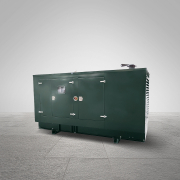
Genesal Energy has taken on the challenge of designing energy efficient solutions as part of a project developed in Yunlin County, Taiwan.

This project not only highlights the technical capability of our engineering team, but also the importance of generator sets in the smooth operation of power substations.

Taiwan, with a population of 23 million people and a geographically complex terrain, relies heavily on the grid. Power on the island comes mostly from traditional sources such as coal and natural gas while renewable energies such as solar and wind continue to gain ground. This context requires power substations to be equipped with advanced technologies, capable of responding quickly to any eventuality. Genesal Energy has developed specific generators for this type of installation, designed not only to provide energy at critical times, but also to be environmentally friendly.

There are about 2,000 secondary substations on the island, many of them located next to residential neighbourhoods, some even right next to residential homes. To provide a stable power service locally Genesal Energy and our local partner, MACRO-e Technology, also considered environmental concerns.

A containerised soundproof generator was designed to take over in the event of a critical situation. The generator will also help the energy storage system to operate longer. Its aim is to stabilise power quality and reduce the possibility of grid collapse.

Advanced technology for Taiwan’s energy challenge

The customer needed a flexible solution tailored to local requirements. Genesal Energy offered a high degree of customisation, allowing MACRO-e Technology to optimise the installation of the generators according to the specific needs of each substation. This includes everything from the design of the containers to the implementation of soundproofing and gas after-treatment systems, ensuring that the highest quality standards are met.

The success of this project in Taiwan reflects Genesal Energy’s commitment to innovation and quality engineering. Our generator sets not only meet technical requirements but are also designed with the environment and safety in mind. Our team’s ability to adapt solutions to the specific challenges of each environment consolidates us as a benchmark in the energy sector, ensuring that each electrical substation is prepared for any contingency.

Our engineering solution

Our engineers designed 20ft containerised generators with Cummins engines and Stamford alternators, which operate with low noise and minimal emissions thanks to a 40 dBA silencer and a gas aftertreatment system.

The fuel transfer system, external access to the control panel and the corrosion protection with stainless steel grilles demonstrate the Genesal Energy team’s dedication to providing a comprehensive solution. In addition, all the necessary safety measures were taken, such as the integration of guards on moving and hot parts, as well as emergency mushrooms and other elements necessary to operate the unit safely.

Features

  • Construction type: Monoblock engine-alternator in 20′ Dry Van container.
  • Without integrated tank, unit prepared for a fuel transfer system.
  • Silencer model: GSI 650 (-30dB).
  • Deep Sea DSE7320 MKII control panel.
  • 2 x Varta M18 180Ah batteries.

Genesal Energy, part of Manchester Royal Infirmary’s refurbishment

Genesal Energy is proud to announce its involvement in the refurbishment of the Manchester Royal Infirmary (MRI) Emergency Department.

This ambitious project not only aims to improve the hospital’s facilities, but also reaffirms the commitment to providing a first-class healthcare service in a constantly evolving landscape of medicine. The renovation of this facility is designed to increase capacity and improve efficiency, adapting to the changing needs of today’s healthcare.

With nearly 5,200 square metres, 27 Boxes, six new ORs and 10 resuscitation rooms, the hospital will be consolidated as a regional centre of reference for the management of emergencies, trauma and various specialised surgeries.

One of the biggest challenges is to ensure that the Emergency Department and the ORs remain operational during the construction works. Temporary access routes and segregated work areas will be implemented, allowing the hospital to continue to provide vital services with minimal impact to users.

A crucial element of this project is the design and installation of a 1770 kVA soundproof generator set for hospitals. This system not only provides a reliable power solution, but also meets the stringent acoustic requirements of the hospital environment, achieving an average attenuation level of 75-78 dB(A) at 1 metre.

This project was installed by one of our UK Partners Ingram installations Ltd. Ingram installations is one of the UK’s leading Standby Generator Specialist installers that has been working with the UK’s NHS for over 50yrs. Genesal Energy, together with Manchester University NHS Foundation Trust (MFT) and Ingram installations Ltd., is committed to leaving a lasting legacy for staff, patients and the community the hospital serves.

Our Engineering Solution

To guarantee a minimum noise level was paramount, so a 40 feet HC container with double rock wool acoustic insulation (100 mm) and an acoustic membrane on walls and ceiling was designed. It is also fire resistant for 60 minutes (RF-60 Panel).

For further noise reduction, large air inlet and outlet baffles have been installed, as well as an external reinforcement silencer on the air outlet. The – 30 dB stainless steel exhaust silencer has been incorporated to prevent corrosion.

To ensure total soundproofing while the unit is switched off, motorised air inlet and outlet louvres are fitted, which close automatically. The power connection of the generator is made by means of a Modular Busbar System, which has required the design of an external Link Box that allows a flexible and safe connection.

Installation of soundproof generator sets at Manchester Royal Infirmary.

This Link Box is powered directly from the genset power cabinet via internal wiring with six wires per phase of 240 mm², ensuring efficient power management. In addition, the genset is equipped with a 1,000 litre double-walled fuel tank feeding directly the engine via double-walled fuel pipes, with a vacuum leaks detection system. In the event of a fire, a mechanical safety shut-off valve is activated, shutting down the engine immediately.

To ensure efficient refuelling, the system includes a custom-designed redundant fuel transfer system with dual pumps and a ‘Flow Switch’ for automatic switching between pumps. This system can be connected to an external mother tank, ensuring a constant and reliable fuel supply.

Finally, the generator features a dual start system, which includes two electric starter motors and a double set of AGM batteries, ensuring operability in critical situations.

Features

  • 40′ HC container with double rock wool insulation in walls and ceiling. Air inlet and outlet baffles. Interior and external air outlet silencers attached. All to meet the specific attenuation level of 75-78 dB (A) at 1 metre.
  • 1,000 litres Double-walled (Steel-steel) fuel tank with leak detection (vacuum) at the rear of the container.
  • Double-walled, leak-detection (vacuum) fuel pipes.
  • Redundant fuel transfer system, with double pump (24Vdc & 230Vac). Both with manual shut-off valve and limit switch. In addition, a ‘Flow Switch’ for the automatic changeover from one to the other and a motorised valve (with spring return to closed position).
  • Easily accessible from the outside control panel
  • Power panel independent of the monoblock, and therefore isolated from vibrations, with adjustable LSI switch and busbar with top outlet.
  • External Power Link Box for power connection via customer-supplied Modular Busbar System.
  • Internal wiring from busbar to Modular Busbar System with 6 cables per phase (5 ‘phases’) of 240mm2 halogen-free (total 30 cables).
  • Normal and emergency lighting (at least 10 lumen) inside and outside the container.
  • Motorised air inlet and outlet grilles.
  • Double starting system with 2 electric starter motors and double set of AGM batteries.
  • Battery protection box.
  • Stainless steel exhaust silencer located in the upper external part of the container.
  • Automatic mechanical safety valve to shut off fuel supply in case of fire.
  • RF60 fire protection.
  • 3,000 W double engine preheating system with recirculation pump.

Genesal Energy strengthens power supply in critical military operations

In the demanding military context, where reliability and availability of energy is crucial, Genesal Energy has deployed its precision engineering to secure the power supply in critical situations.

Recently, a generator set was installed in Germany with the clear objective of keeping critical military infrastructures operational.

Generator sets such as this one are essential to meet the energy demands of units in the field, operating in locations that are difficult to access and far from conventional infrastructures. In addition to providing continuous power to keep machines and equipment operational, these systems are designed with advanced protection and safety features ensuring safe and reliable operation 24/7.

The implementation of Genesal Energy’s generators not only ensures operability in extreme conditions, but also demonstrates our commitment to innovation and reliability in energy solutions for the military sector. This project underlines our team’s ability to design and deploy solutions tailored to the critical needs of our customers, ensuring operational success in every mission.

Our Engineering solution

Genesal Energy developed a monoblock engine-alternator generator in a 3400mm soundproof enclosure. This design includes an integrated 450-litre tank that provides a 12 ½ autonomy, ensuring a continuous supply of energy without interruption. In addition, a fuel transfer system from external tanks was implemented, ensuring prolonged operation.

The engineering behind the genset includes advanced vibration isolation through a rubber anti-vibration system, as well as integral protections for moving parts and hot components. Elements such as emergency stop mushrooms ensure the safe operation of the equipment at all times, complying with the most stringent safety and quality standards.

The unit was branded and painted according to customer specifications.

Features

  • Type of construction: Monoblock engine-alternator in soundproofed 3400mm cabin.
  • 450 L base frame inserted tank, with liquid collection tray
  • Silencer model: GSI 230 (-30dB)
  • Control panel: ComAp InteliGen4 200
  • 250 A Circuit Breaker
  • Tudor TC1453 145 Ah battery

Genesal Energy ensures business continuity for a shopping area in Denmark

The installation of a generator in a shopping centre is crucial to ensure operational continuity in the event of a widespread power outage. As these can cause significant economic losses, backup power can mitigate these risks by protecting food and perishable goods, as well as ensuring the safety of customers and employees on the premises.

The project presented considerable complexity, as the starting point was the need to fit a 660 kVA genset in a small room. To meet the customer’s needs, the engineering department designed a special canopy, with a completely redesigned frame that made it possible to reduce the height of the final assembly. This redesign was possible thanks to a made-to-measure silencer and the redesign of the cab’s longitudinal axles.

In addition, to meet the requirement to maintain an average noise level of 80 dB(A) at 1 meter, an external silencer was designed to be attached to the room’s air outlet, ensuring that the appropriate acoustic levels are maintained, and the comfort of the end customer is safeguarded.

This project in Copenhagen is a perfect example of how Genesal Energy adapts to the specific needs of each client, even in the most challenging conditions,’ explains Genesal Energy’s engineering department. ‘Our mission is to provide energy solutions that are not only effective, but also contribute to the safety and well-being of the communities in which we operate.’

Genesal Energy continues to reaffirm its commitment to innovation and quality in the energy sector, ensuring that commercial facilities across Europe have the solutions they need to deal with any eventuality.

Features

  • Generator room air outlet silencer-30 dB(A).
  • Special canopy with a maximum height of 2,000 mm and made-to-measure silencer, side-mounted exhaust outlet.
  • Double set of batteries with automatic changeover (AUTO+MANUAL).
  • Motorised circuit breaker.
  • Liquid collection tray.
  • Relays for control of motorised on-site grilles.

Biogas and biomethane: key players in the circular economy and the energy transition

Aerial view of a wastewater treatment plant, key to biogas and biomethane production in the circular economy.

“Biogas and biomethane stand out within the bio circularity ecosystem for their ability to offer immediate and viable solutions in the ecological transition.”

Margarita de Gregorio, CEO of Biocirc.

One of the fundamental aspects in the fight against climate change is the economy. Currently, the linear economy, based on the ‘extract, produce, consume and dispose’ model, contributes significantly to the environmental crisis by prioritising economic profit and ignoring sustainability. This way of acting leads to a depletion of natural resources, the generation of large amounts of waste and the emission of greenhouse gases.

It is therefore crucial to move towards what is known as the ‘circular economy’. This new economic system promotes the management and recovery of waste to keep it in the production cycle for as long as possible. This helps to reduce both the consumption of raw materials, and the amount of waste generated.

The part of the circular economy that addresses the production cycle of those sectors whose raw materials are of biological origin is known as bio circularity. This approach makes it possible to replace raw materials of fossil origin with others of renewable origin, while at the same time reusing organic waste, contributing to the decarbonisation of multiple sectors and to a more sustainable management of waste.

In this context, biogas and biomethane play crucial roles thanks to their ability to regenerate natural systems and contribute to the energy transition. But first things first…

What is biogas and biomethane?

Cows grazing in front of a biogas plant in a rural setting.
Biogas is a renewable, carbon-neutral gas produced from the anaerobic digestion of organic matter, i.e. from the biodegradation of organic waste in the absence of oxygen. Thus, during this process, which takes place in an airtight tank or digester, the carbohydrates, proteins and lipids present in the waste are broken down by a series of bacteria, releasing a mixture of gases known as biogas. In addition, digestate, a biosolid with high fertiliser capacity, is also obtained as a by-product.

The composition of biogas varies depending on the waste used as raw material or substrate, although it is usually between 50-75% methane (CH₄) and 25-45% carbon dioxide (CO), with small amounts of other gases such as hydrogen sulphide (H₂S), ammonia (NH₃), volatile organic compounds (VOC) and water vapour.

Of the aforementioned, the methane concentration is the most relevant factor, as it determines the calorific value of the fuel. 1 m³ of biogas with a composition of 50% CH₄ would produce 5 kWh of energy, replacing 0.50 m³ of natural gas; whereas, if the methane composition is raised to 65%, the same cubic metre of biogas would produce 6.40 kWh of energy, replacing 0.65 m³ of natural gas. [These calculations are based on the lower calorific value of natural gas (10.83 kWh/m³)].

On the other hand, before being used as energy, biogas must undergo a process to remove impurities that can cause damage to the installations and reduce the efficiency of the system. H₂S, for example, is highly corrosive and can damage motors, turbines and other equipment if it is not removed adequately. In addition, water vapour reduces the calorific value of the biogas, which is why it is essential to separate it.

After this process, biogas is suitable for use as a fuel in the production of heat in gas boilers or in the generation of electricity through combustion engines, among others.

However, to broaden its applications, biogas can undergo an additional process, known as ‘upgrading’, for the production of biomethane. This process involves the almost total elimination of CO and other residual compounds, raising the methane concentration to more than 95%. The result is a renewable gas with energy-characteristics comparable to fossil natural gas.

The advantage of biomethane over biogas lies in its higher calorific value and its ability to replace natural gas, thanks to its high methane content. This allows biomethane to be injected directly into the existing gas grid, extending its use to sectors such as transport, industry and residential. Its integration into existing infrastructure makes it an immediate decarbonisation solution, especially compared to other renewable gases, which require the development of specific infrastructures. Moreover, if biogenic CO₂ capture is carried out during its production, biomethane can achieve negative carbon emissions.

Opportunities in the valorisation of organic waste

The dual benefits of biogas and biomethane – as a renewable energy source and a climate mitigation tool – are sufficient to take them into account in the transition to a sustainable, low-carbon energy system. But their use has advantages that go far beyond the simple production of energy, as the production of these biofuels is also emerging as an innovative and sustainable solution for the valuation of organic waste produced by various economic sectors.

Currently, part of this waste is managed inefficiently and it often ends up polluting soil, water and the atmosphere itself, which has a high environmental impact. In this context, anaerobic digestion can play a key role in managing waste such as the following:

  • Livestock sector: Livestock waste, such as manure, slurry, animal bedding and cleaning water, can lead to the incorporation of heavy metals into the soil, the pollution of water by excess nitrates or the emission of ammonia into the atmosphere if not properly managed.
  • Agricultural sector: Agricultural residues, including pruning, wood and herbaceous waste, are often inefficiently managed through indiscriminate burning or abandonment, contributing to environmental degradation, fires and the spread of pests.
  • Food sector: Slaughterhouse rejects, waste from the fishing industry, organic waste and liquid by-products from the dairy industry, or fruit or vegetable scraps that are not reused can end up rotting in landfills, where they emit methane, a gas with a warming potential 21 times greater than CO₂.
  • Municipal Solid Waste (MSW): The organic fraction of municipal solid waste (MSW), such as food waste or domestic pruning, can be biodegraded and reused to produce energy or natural fertilisers. This process also contributes to achieving the recycling targets set out in Law 7/2022 on Waste and Contaminated Soils, which allows further progress towards a circular economy by reducing municipal waste.
  • Wastewater Treatment Plants (WWTP): Sludge generated in wastewater treatment represents a costly challenge for WWTPs, as its management can account for up to 50% of operational costs. Anaerobic digestion can reduce the volume of sludge and generate biogas, turning a problematic waste into a renewable source of energy.

Biogas plant facilities surrounded by agricultural fields and waste management areas.
In other words, biogas and biomethane stand out not only as renewable energy sources and tools for decarbonisation, but also for their ability to reduce dependence on fossil fuels, bringing greater flexibility to the energy system.

Their ability to decarbonise sectors that are difficult to electrify is particularly valuable in the transition to a cleaner energy model.


In addition, anaerobic digestion technology is already well established, and the necessary infrastructure is available, making biogas and biomethane an immediate solution.

A crucial added value of these sources is their contribution to the circular economy, since, as we have seen, they allow the revalorisation of organic waste generated by various sectors. Not only do they significantly reduce waste, but they also create new opportunities in sustainable and circular value chains, especially on a small scale and in rural environments. This approach favours the dynamisation of these areas, while contributing to the fulfilment of the objectives of the bioeconomy in Spain, promoting a more balanced and sustainable model of economic development.

Diagram of the biogas and biomethane production and utilization process.

Picture 1. Biogas value chain

Biogas and Biomethane Genesal Energy gensets

Genesal Energy is fully aware of the enormous potential of renewable gases and the importance of the circular economy. We participate in projects that promote the valorisation of waste to transform it into valuable resources such as biofuels. These gases can be used on gas power gensets, taking a further step towards a sustainable energy model by not only using a renewable source instead of conventional fossil diesel, but also a source generated from the reuse of waste that would otherwise end up representing an environmental problem.

Hand in hand with FACSA, SMALLOPS, AIMEN and UVA, we are part of the ENEDAR project – ‘Improving the energy efficiency and sustainability of wastewater treatment plants through the valorisation of WWTP sludge’, financed by the Ministry of Science, Innovation and Universities and the European funds NextGeneration UE/PRTR.

Genesal Energy is here responsible for designing and validating the operation of a generator set powered by fuels from the anaerobic digestion of sewage sludge from a pilot plant; reaffirming our commitment to the energy transition and the creation of immediate and practical solutions for a sustainable future.