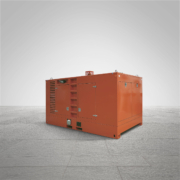
The digital economy is advancing at an unprecedented pace. Artificial intelligence, cloud services, the growth of data traffic and the digitalisation of industry are driving a new generation of technological infrastructure. At the centre of all of them lies an element that leaves no room for error: energy.
Data centres have become the backbone of this digital reality. These are infrastructures where every second counts and where electrical continuity is a critical condition to guarantee the operation of services that sustain the global economy.
Genesal Energy is taking a step further in our commitment to critical power with the launch of a new campaign which, under the slogan “Control the Data”, brings our vision of energy into the data centre universe.
Because in environments where information is everything, controlling energy means securing data.
Critical power for infrastructures that cannot fail
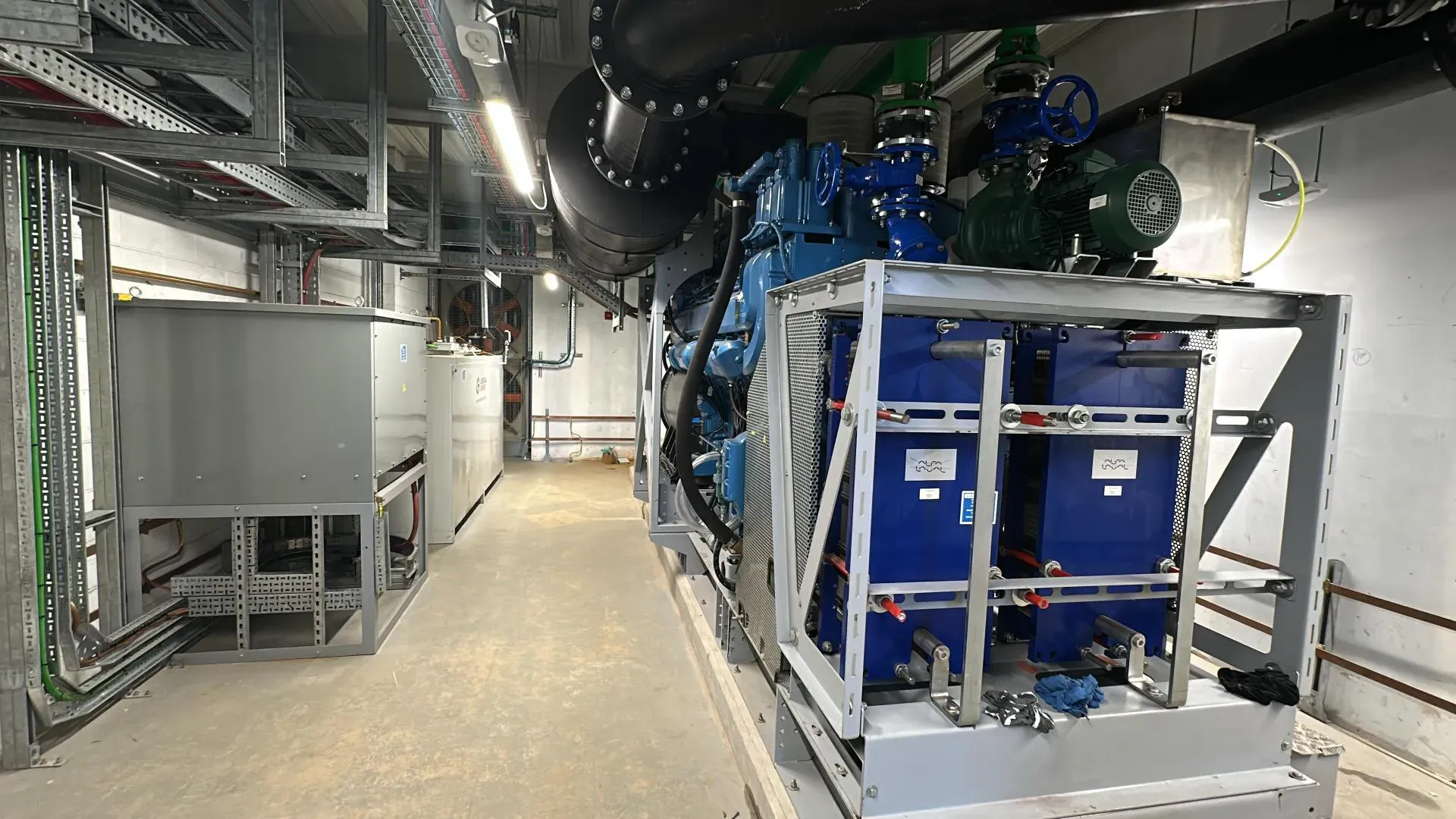
Data centres represent one of the most demanding energy environments today. Supply reliability, the ability to respond to any contingency and integration within complex electrical architectures are determining factors for their operation.
Our approach to this sector starts from a clear idea: every energy project must be designed as an integrated component within the data centre ecosystem.
We develop distributed energy solutions conceived through bespoke engineering, capable of adapting to the levels of redundancy, energy management systems and international standards that define this type of infrastructure. We design power systems prepared to respond at critical moments, ensuring the operational continuity of facilities where failure is simply not an option.
We strengthen our positioning within the data centre ecosystem with the ambition of becoming a long-term strategic energy partner. Our goal is to support operators, engineering firms and developers in the design of robust, resilient energy infrastructures capable of responding to the challenges of a constantly evolving sector.
Energy engineering ready for the digital future
The evolution of data centres does not only demand reliability. It also requires efficiency, sustainability and the ability to adapt to new energy technologies.
Genesal’s solutions integrate Ecodesign criteria, performance optimisation and compatibility with biofuels, helping to improve infrastructure efficiency without compromising operational security. From this perspective, critical power is not limited to ensuring supply continuity. It also plays a key role in the development of more sustainable, resilient and future-ready digital facilities.
A meeting point with the global data centre ecosystem
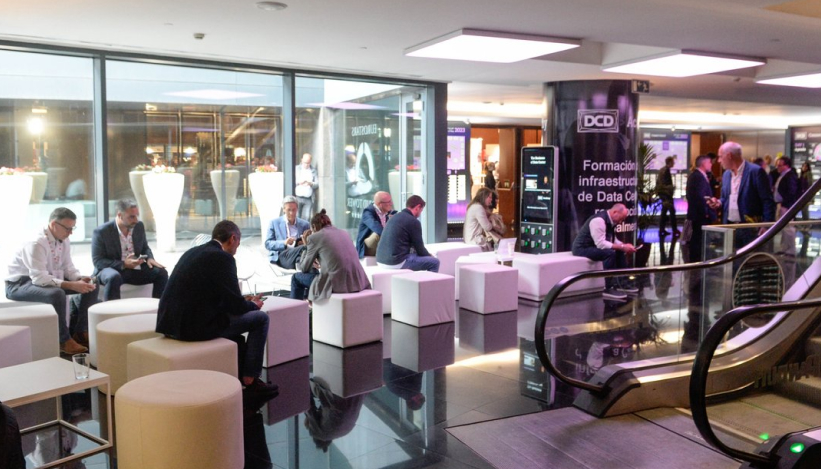
This campaign will also provide the framework for our participation in some of the sector’s leading international events throughout 2026.
Events such as DataForum Helsinki, DCD Connect Madrid, DCD Connect London and Datacloud Global Congress will be key spaces for sharing knowledge, analysing the energy challenges of digital infrastructures and strengthening dialogue with operators, engineering firms and data centre developers from around the world.
A setting where Genesal Energy will continue contributing its experience in critical power and its vision of energy engineering capable of supporting the digital transformation.
https://genesalenergy.com/en/wp-content/uploads/sites/5/2026/03/ge-cpd-thumbnail.jpg710710jordihttps://genesalenergy.com/en/wp-content/uploads/sites/5/2025/03/logo-genesal-pureenergy-2025.svgjordi2026-03-13 12:40:032026-03-13 13:05:28Energy First. Data Always Under Control
We are living through a defining moment for the energy sector.
The transition towards more sustainable models, the integration of renewables and alternative fuels, the exponential growth of data centres and the digitalisation of industry are raising the bar like never before. In this scenario, guaranteeing electrical continuity is no longer an option — it is an essential condition for the success of any critical project.
We develop distributed energy solutions conceived through bespoke engineering, eco-design, efficiency and compatibility with biofuels.
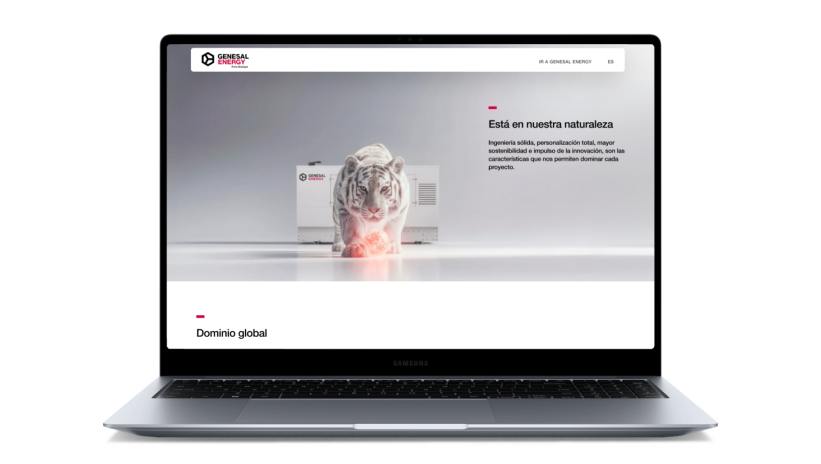
At Genesal Energy, we believe that supplying energy is not enough: it must be mastered. That is why we have evolved our ‘Pure Energy’ brand platform — a natural step that reflects our current position and goals as a leading European player focused on critical power solutions.
With this evolution of ‘Pure Energy’, we strengthen our value proposition under a clear idea: “Master energy and you will master your project.” A more mature and strategic vision that places control, reliability and the ability to anticipate in the most demanding environments.
Engineering, control and vision for the future
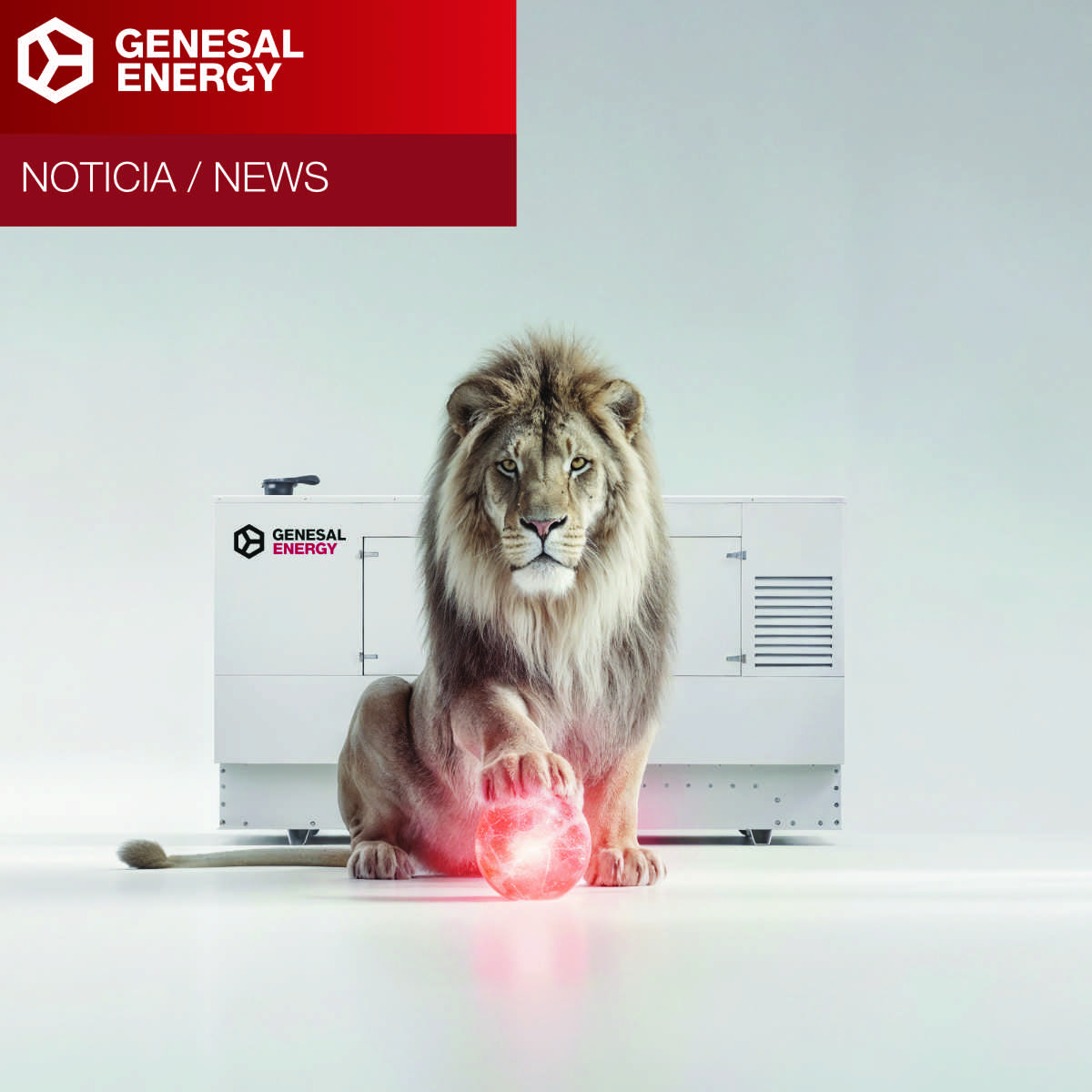
We continue to build on our iconic feline universe — a symbol of precision, control and energy security — but we go one step further. We have reshaped our narrative to focus not only on the product, but on the purpose driving our engineering: designing bespoke solutions that enable our clients to remain in control, even in critical scenarios.
At Genesal Energy, we develop distributed energy solutions conceived through bespoke engineering, eco-design, efficiency and compatibility with biofuels. We manufacture in Europe and tailor each project to specific regulations, power requirements, climates and operational demands, supporting sectors where failure is not an option: data centres, defence, healthcare and industrial infrastructure.
This approach consolidates our position as a key player in robustness, energy sovereignty and operational continuity, delivering technical confidence where it is needed most.
A brand aligned with our industrial reality
The evolution of ‘Pure Energy’ also marks the beginning of a new stage in our communications. Throughout 2026, this positioning will serve as the strategic framework for our actions, events and conversations with key accounts, reinforcing our reputation as a reliable, forward-thinking partner committed to the energy transition.
Master energy and you will master your project.
A brand more closely aligned with our industrial reality, our technical ambition and our firm commitment to the energy transition. Because when it comes to critical power, there is no room for improvisation. It is designed, mastered and placed at the service of projects that simply cannot fail.
https://genesalenergy.com/en/wp-content/uploads/sites/5/2026/02/ge-puraenergia-thumbnail-1.jpg12001200creativohttps://genesalenergy.com/en/wp-content/uploads/sites/5/2025/03/logo-genesal-pureenergy-2025.svgcreativo2026-02-24 09:41:352026-02-25 09:31:46Mastering energy to master every project
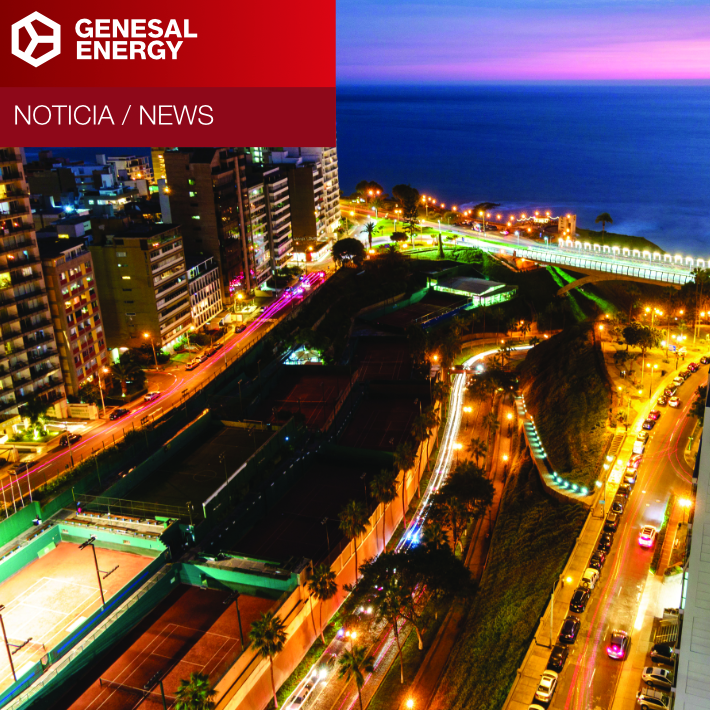
Genesal Energy celebrates 15 years of presence in the Peruvian market, one of the most significant milestones in our international expansion strategy.
Since entering the Andean country, we have supported strategic sectors such as mining, construction, infrastructure, agro-industry and manufacturing, delivering power solutions tailored to high-demand operating environments.
Our establishment in Peru, initiated fifteen years ago, represented Genesal Energy’s first step into Latin America. This strategic decision responded to the country’s sustained economic growth and the increasing need for reliable energy solutions in projects where operational continuity is critical.
Over the past 15 years, the Genesal Energy Peru team has been involved in large-scale, technically complex projects, including the modernisation of the Talara Refinery, the construction of hospital infrastructure in Caraz, the expansion of Jorge Chávez International Airport, and industrial projects for companies such as UNACEM and QUIMPAC. In mining and agro-industry, the company has supported operations in regions including Piura, Huaraz and Moquegua, strengthening its position in key sectors of the Peruvian economy.
Our establishment in Peru, initiated fifteen years ago, represented Genesal Energy’s first step into Latin America.
This trajectory has enabled the integration of engineering developed in Spain with local operational expertise, combining European design and manufacturing standards with adaptation to variables such as altitude, climate and intensive operating conditions. The result is a model that brings together global technological backing and on-site execution capability.
15th Anniversary Special Series
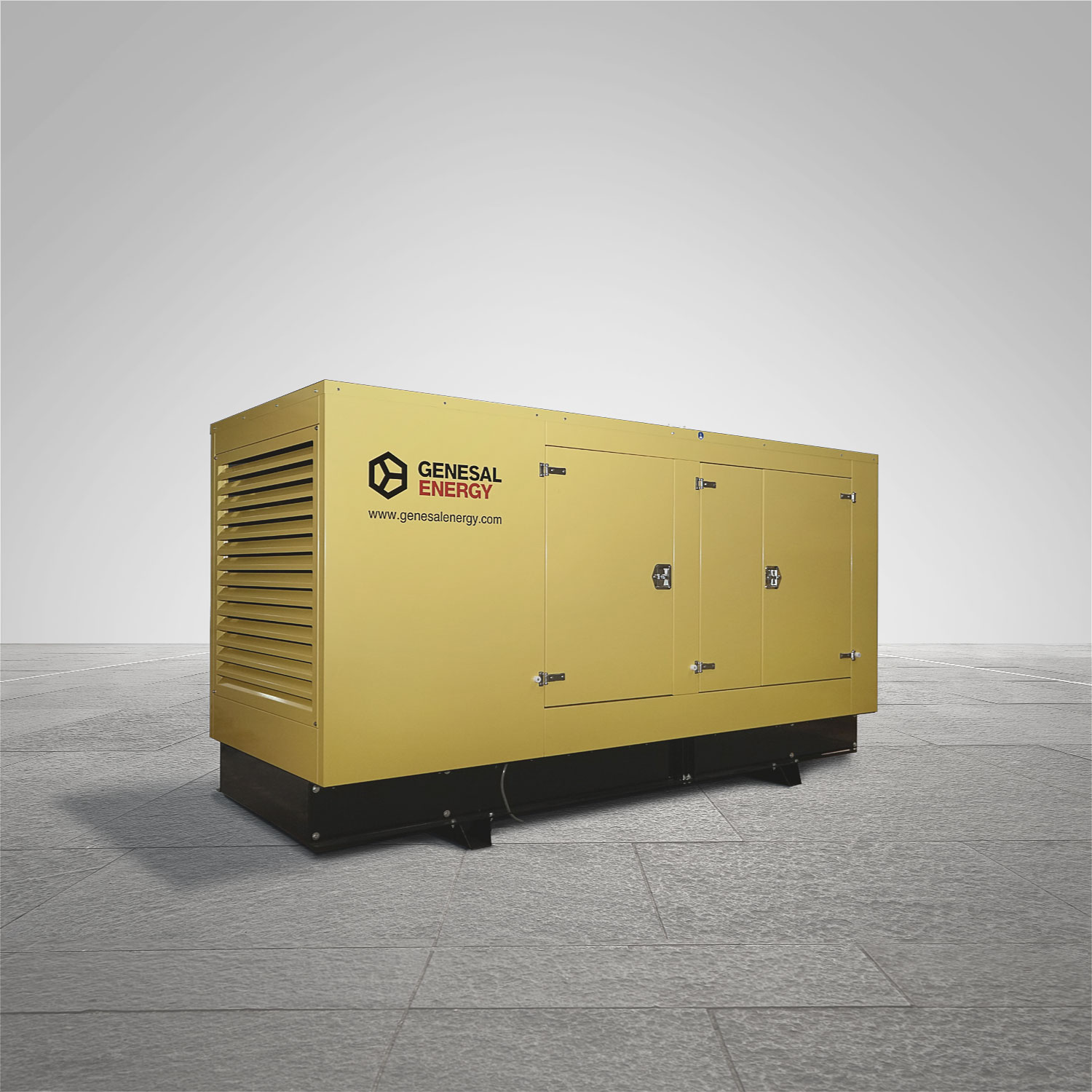
To mark this anniversary, Genesal Energy Peru has launched the 15th Anniversary Special Series, incorporating a new fleet of generator sets as part of an international operational expansion. This fleet, visually identified in yellow as a commemorative edition, strengthens the subsidiary’s rental capacity and nationwide coverage, particularly in strategically important northern regions of the country.
The Special Series represents increased availability and enhanced response capacity, while maintaining the same engineering standards, quality levels and technical support that define Genesal Energy worldwide. These generator sets are in excellent technical condition, thoroughly inspected and certified, and fully integrated into local operations under the company’s established protocols.
Fifteen years after our establishment in Peru, we continue to consolidate our commitment to the Latin American market, reaffirming our dedication to delivering practical, reliable and professionally engineered power solutions tailored to the real needs of each project.
https://genesalenergy.com/en/wp-content/uploads/sites/5/2026/02/ge-futuro-thumbnail.jpg710710creativohttps://genesalenergy.com/en/wp-content/uploads/sites/5/2025/03/logo-genesal-pureenergy-2025.svgcreativo2026-02-17 10:37:122026-02-20 09:56:57Genesal Energy marks 15 years of operations in Peru, strengthening its international expansion
European energy security takes another step forward with the first submarine electrical link between Ireland and France. Stretching over nearly 575 kilometres (500 km under the sea) and with a capacity of 700 MW, this project will enable bidirectional energy exchange between the two countries, reinforcing grid stability, the integration of renewable energy—particularly offshore wind—and competition in electricity markets.
Genesal Energy has taken part in this major submarine interconnection project supplying two generator sets designed to ensure continuous power availability under any operating scenario.
Backup power for a strategic infrastructure
The first unit, a 1,100 kVA main generator set, is responsible for supplying the highest-demand auxiliary loads and providing power during start-up phases or in the event of grid failure. Its role is essential to maintaining system operability at all times, even in the face of unforeseen incidents or disconnections from the main grid.
The secondary 137 kVA generator set is dedicated to supporting control systems, safety systems, emergency lighting and critical communications. Thanks to its design and rapid response capability, it ensures that the most sensitive equipment within the installation continues to operate with total reliability.
The mission of both units is to secure the operational resilience of the system. In extreme situations or grid interruptions, the generator sets supply power to control, protection and communication equipment, ensuring service continuity while preventing damage to the infrastructure.
Engineering tailored to the most demanding conditions
The client required reliable auxiliary power for control, SCADA, cooling, ventilation and pumping systems, as well as black-start capability to support the converters even when the AC grid is unavailable.
The Genesal Energy engineering team designed two fully customised soundproofed generator sets, optimising every element to adapt to the project’s constraints in terms of space, safety and operation.
One of the main challenges was integrating load banks inside the generator sets, which required redesigning the electrical cabinets and optimising the internal layout of the container. Internal double-wall fuel tanks were also designed with leak detection systems and bunded trays, guaranteeing maximum environmental protection.
In addition, the units incorporate air conditioning, panic locks, anchoring plates and structural reinforcement elements, among other customised components developed to meet the project’s stringent standards.
Key features of the GEN1100YC
Separate Power Cabinets and Control Cabinet integrated into an independent electrical room inside the soundproof container.
400 kW load bank integrated into a dedicated room inside the same soundproof container.
Coolant recirculation and heating system for optimal start-up.
Air conditioning in the control room.
C5H (RAL 7035) surface treatment according to ISO 12944 for maximum resistance in industrial and coastal environments.
900 L double-wall baseframe fuel tank with liquid collection system.

External above-ground double-wall 5,000 L steel tank painted to match the generator container.
Automatic fuel transfer system with double-wall piping and leak detection via vacuum console.
Independent leak detection for: baseframe tank, external tank and double-wall piping.
Supply of supports and tray between the container and external tank for overhead routing of transfer piping and electrical cables.
Panic bars, anchoring plates and customised structural supports.
Key features of the GEN137FI
Special 800 L double-wall bunded baseframe tank designed to collect all engine liquids (oil and coolant).
Double-wall leak sensor for the tank monitored through vacuum console.
Manual crank pump for filling the tank.
Earthing coil with clamp for the tank.
Enclosure painted in the client’s required colour with C5H surface treatment according to ISO 12944.
Engine coolant recirculation and heating system to ensure optimal start-up temperature.
60 kW internal load bank integrated inside the enclosure.
Additional 4 Pole motorised breaker (80A) for load bank connection, integrated into an independent Power Cabinet fully isolated from the main group breaker.
https://genesalenergy.com/en/wp-content/uploads/sites/5/2026/01/genesal-9400-9401-irlanda-subestacionelectrica.jpg15001500Gestorhttps://genesalenergy.com/en/wp-content/uploads/sites/5/2025/03/logo-genesal-pureenergy-2025.svgGestor2026-01-23 12:59:232026-03-24 13:03:52Genesal strengthens backup power infrastructure for the Ireland–France grid interconnection
As the year draws to a close, it invites us to look back with pride and forward with ambition. A period of consolidation, learning and decision-making that has shaped our path. At Genesal Energy, we have continued to move forward with the same determination that has guided us since the beginning: to innovate, to grow and to contribute to a more sustainable energy model, helping to improve society.
That spirit has guided us through every project and every challenge we have faced over these months. And it is precisely from that purpose that we have strengthened our international vocation, driven sustainability through engineering, responded swiftly to emergency situations when the country was left in the dark, and consolidated our presence in key sectors such as data centres and defence.
The blackout: readiness to respond to any emergency
The major blackout on 28 April put the entire sector’s response capacity to the test — and, in particular, that of Genesal Energy. From our headquarters in Bergondo, we activated a crisis management team that made it possible to guarantee electricity supply to hospitals and other critical infrastructures. Our generator sets operated at full capacity, while our technical team worked around the clock to ensure that no vital facility was left without power.
Thanks to this rapid response and coordination, we supported centres such as CHUAC, the Teresa Herrera Maternal and Children’s Hospital, Álvaro Cunqueiro Hospital, as well as several hospitals in Madrid and Toledo, among others. Subsequent media coverage highlighted the essential role of backup power solutions in long-duration contingencies.
There are moments when technology speaks for itself. At other times, it is the commitment of a team that speaks. That day, both did.
Momentum in the defence sector and international expansion
In a geopolitical context marked by instability and sustained growth in defence investment across Europe, energy reliability has become a critical factor in ensuring the operability of strategic infrastructures.
We will continue investing in growth with a new expansion of our main factory, increasing production capacity and activity at a pace similar to that of 2025.
Within this environment, the engineering expertise and robustness of our equipment have found a natural space. In 2025, we deployed bespoke solutions designed to operate under extreme conditions, both domestically and internationally, including installations in Germany aimed at maintaining critical military infrastructures operational. These projects demonstrate our ability to adapt designs, advanced protections and safety systems to top-tier operational requirements.
Likewise, our participation in strategic trade fairs and forums such as FEINDEF has strengthened our visibility in a rapidly evolving market. As a result, Genesal Energy continues to consolidate its position as a trusted supplier, delivering solutions to organisations that require equipment capable of ensuring continuous power in any scenario — from logistics bases to command centres and field operations.
When sustainability moves beyond promises and becomes operational
In 2025, Genesal Energy became the first company in the energy sector to obtain ISO 14006 certification, setting a benchmark for applied sustainability. This achievement is more than just a label: it confirms that we have embedded eco-design into our DNA, into every decision and every stage of our products’ life cycle.
We have optimised designs, reduced material use, explored additive manufacturing to minimise resource consumption, assessed environmental impacts through rigorous analysis, and embraced biofuels and cleaner alternatives. This approach reinforces our role as a reference player and a key contributor in the distributed energy sector, where sustainability is only possible through technical excellence. Because, ultimately, what truly matters is being good engineers: delivering robust, efficient and responsible energy solutions, and always responding to our clients.
Powering the digital heart of the world
The digital world cannot function without reliable energy. In 2025, we took a decisive step to support this global growth with solutions equal to the challenge. As an active part of European engineering in the sector, our strategic alliance with the French company Baudouin marked a turning point in our commitment to data centres: combining experience, technology and a shared vision to deliver high-capacity, fully customisable generator sets, with the shortest lead times on the market and compatibility with renewable fuels such as HVO.
A period of consolidation, learning and decision-making that has shaped our path.
We showcased these solutions at international forums — with a strong presence at DCD>Connect in Madrid and London, as well as at the DataCenter Forum in Stockholm — where we presented equipment focused on operational continuity, efficiency and the transition towards more sustainable fuels.
HVO: proof that the energy transition can be real — today
The successful validation of HVO as a biofuel in operational generator sets is another of those quiet achievements that anticipate the future. We demonstrated that it is possible to reduce emissions without changing infrastructures or compromising reliability. The tests we carried out confirm that HVO is a technically viable alternative for diesel engines, requiring no modifications to existing infrastructures, while preserving reliability and service continuity.
This milestone aligns with Genesal Energy’s ambition to move towards carbon neutrality and with our commitment to the 2030 Sustainable Development Goals, to which we are aligned. It is a technical advance, certainly, but also a clear message: the energy transition is not a distant horizon — it is a real process that we are already driving today.
Driving talent, territory and the future
At Genesal Energy, we understand social responsibility as a way of shaping the future. That is why, this year, we strengthened our commitment to talent, territory and education through our participation in youth employment fairs and sector events such as the Energy Days and their Women in STEM seminar. Through these initiatives, we have helped bring energy engineering closer to the entrepreneurial ecosystem. These actions allow us to inspire vocations, create opportunities and transmit values we consider essential — technical excellence, sustainability and a culture of effort — so that new generations can lead the change the energy sector needs.
This commitment will gain renewed momentum through the Genesal Foundation, currently in the process of being established and scheduled to launch next year. The Foundation will serve as the backbone of our social activity and our contribution to the community, channelling initiatives focused on talent development, education, innovation and positive impact in the environments where we operate.
2026: continuing to build the future of energy
The year ahead invites us to put what we have learned into practice and to project our achievements towards new horizons. In the coming year, we will continue to focus on consolidating our international expansion, deepening our presence in critical application sectors, and advancing the integration of sustainable processes across every project. To achieve this, we will adapt to new regulations and standards, driving more efficient, reliable and responsible solutions.
We have strengthened our international vocation, driven sustainability through engineering, responded swiftly to emergency situations when the country was left in the dark.
At the same time, we will continue investing in growth with a new expansion of our main factory, increasing production capacity and activity at a pace similar to that of 2025, with a consolidated growth of 40%. This investment will also extend to our people, as this progress would not be possible without a committed and talented team like ours.
We enter this new year with enthusiasm and determination, convinced that the energy of the future is built today — and that Genesal Energy will remain steadfast on this path, guided by its purpose and vision.
https://genesalenergy.com/en/wp-content/uploads/sites/5/2025/12/ge-resumen-thumbnail-en.jpg710710creativohttps://genesalenergy.com/en/wp-content/uploads/sites/5/2025/03/logo-genesal-pureenergy-2025.svgcreativo2025-12-31 12:31:452026-01-12 11:35:322025: when generator sets stopped being invisible and became essential
In an increasingly complex energy landscape, where electrification, renewable energies and the need for continuous power supply coexist even in the event of grid failures, generator sets play a decisive role. Their evolution in terms of sustainability, efficiency and connectivity is redefining their presence in critical sectors and in environments where generating electricity in an environmentally responsible way has become an essential requirement. This article analyses how the sustainable generator set is evolving, its role in the energy transition and the technologies that will shape its future.
The role of generator sets in the energy transition
The transition towards clean energy has driven a profound change in the way energy is produced. As the penetration of renewable energy increases within the energy mix, so too does the need for backup systems capable of guaranteeing continuous power when environmental conditions prevent renewable sources from fully meeting demand.
The future of generators lies in further promoting hybrid solutions, alternative fuels and technologies that make better use of renewable energy.
In this context, the generator set remains a strategic energy source. Its role is no longer limited to acting as emergency equipment: today it is integrated as part of the energy ecosystem of industries, hospitals, data centres and critical infrastructures, providing operational flexibility and security. For companies and public administrations, ensuring energy supply in the event of interruptions or demand peaks is essential, and generators are becoming a key tool in this new hybrid and dynamic model.
How to reduce environmental impact in power generation
Sustainability has become a central pillar in the design and manufacture of equipment intended to generate electricity. The need to reduce the greenhouse effect and to develop increasingly environmentally friendly equipment has led to new approaches aimed at creating generator sets adapted to the environmental requirements of the future.
This progress involves action on several fronts: improving engine efficiency, optimising combustion systems, reducing energy losses and using materials with a lower environmental impact. In addition, eco-design principles and the identification of environmental aspects at each stage of the generator’s life cycle help minimise its environmental footprint, from initial design through to on-site operation.
Increasingly stringent emissions regulations are also accelerating the development of cleaner generators, capable of operating with lower consumption and reduced pollutant emissions. As a result, manufacturers are investing in technologies that reduce emissions without compromising the operational reliability that characterises these systems, while maintaining optimal performance.
Use of alternative fuels and renewable energies
The path towards a sustainable generator necessarily involves fuel diversification. The introduction of HVO (hydrotreated vegetable oil), advanced biofuels or even blends with green hydrogen opens up a range of solutions to progressively replace traditional fossil-based fuels.
Efficiency is one of the main indicators of technological progress in generator sets.
Renewable fuels allow generators to operate with a significantly lower carbon footprint and offer additional advantages: they require no major modifications to many modern diesel engines and maintain the operational stability needed for critical environments. These alternatives are complemented by the growing drive to integrate generator sets into hybrid systems based on renewable energy.
Ongoing R&D in this field is enabling generators to operate as part of a flexible energy system in which sustainable fuels, energy storage, power electronics and renewable energy sources coexist to optimise every kilowatt consumed.
Integration of generator sets with solar panels and wind energy
Infrastructures that combine generators with solar panels or wind farms are no longer a trend, but a rapidly expanding reality. The combination of generators and clean energy sources makes it possible to reduce fuel consumption, extend autonomy and lower overall system emissions.
In off-grid applications, such as remote areas not connected to the electricity grid, hybridisation is essential to produce energy efficiently. Solar panels provide daytime generation, wind energy complements supply at variable times, and the generator acts as a backup when weather conditions do not allow demand to be fully met. This model improves overall system performance and significantly reduces dependence on fuel.
The result is a sustainable power generator capable of operating in complex scenarios, offering greater autonomy and optimised control of available resources.
Technological advances to improve efficiency and reduce emissions
Efficiency is one of the main indicators of technological progress in generator sets. The development of more advanced engines, high-pressure injection systems, optimised turbochargers and exhaust after-treatment systems has enabled modern generators to consume less fuel and emit fewer pollutants to meet the same energy requirements as previous generations.
The transition towards clean energy has driven a profound change in the way energy is produced.
Improvements are not limited to the engine itself: electronics play a decisive role in load management, start-up optimisation, avoidance of unnecessary consumption and adjustment of operation to real demand. In parallel, energy storage solutions make it possible to combine batteries and generators to further reduce consumption when demand is low.
Continuous innovation in these areas helps consolidate the sustainable generator set as a more efficient solution, ready to meet future environmental standards.
Connectivity and intelligent monitoring in power generators
Connectivity has transformed the way data from modern generators is managed and interpreted. Remote monitoring systems allow real-time supervision of operating parameters, alarms, consumption, emissions and load trends. Thanks to this connectivity, equipment benefits from more effective predictive maintenance, higher availability and lower operating costs.
Digitalisation turns the generator into an active element within the energy ecosystem, capable of communicating with other equipment, integrating into management platforms and supporting data-driven technical decisions. For industries that require continuous power, this intelligence adds security, reliability and efficiency.
Trends and the future of generator sets in a sustainable world
The future of generators lies in further promoting hybrid solutions, alternative fuels and technologies that make better use of renewable energy. The trend is clear: to develop equipment that reduces environmental impact without sacrificing the reliability that has always defined the sector.
The combination of technology, sustainability and connectivity is shaping a new standard in which the generator becomes a flexible, optimised element capable of integrating with clean energy sources to deliver efficient, stable power supply aligned with the demands of a more sustainable world. In this scenario, companies that invest in innovation and environmentally responsible approaches will lead the transformation towards a safer and more resilient energy system.
https://genesalenergy.com/en/wp-content/uploads/sites/5/2025/12/ge-futuro-thumbnail-en.jpg710710creativohttps://genesalenergy.com/en/wp-content/uploads/sites/5/2025/03/logo-genesal-pureenergy-2025.svgcreativo2025-12-30 13:00:402025-12-30 13:00:40The future of generator sets: More sustainable and connected
In recent years, the European Union has rolled out one of the most ambitious sustainability regulatory frameworks in the world.
Directives such as the CSRD, the CSDDD and the CBAM have placed companies at the heart of the ecological and social transition, assigning them a key role in emissions reduction, transparency and due diligence throughout the value chain. This regulatory expansion, however, has been accompanied by growing criticism from Member States and the business sector, which have warned about the complexity of the resulting framework, the overlap of obligations and its impact on European industrial competitiveness.
Sustainability cannot be built solely on increasingly complex regulatory frameworks, but rather on clear, coherent and applicable regulations.
It is in this context that the Omnibus Package has emerged: an initiative by the European Commission designed to review and adjust this regulatory framework without dismantling it. Far from constituting a single piece of legislation, the Omnibus acts as a cross-cutting amending instrument, introducing coordinated changes to several key components of the European ESG framework with the aim of aligning regulatory requirements with companies’ actual capacity to comply and with their potential impact.
Presented in February 2025, the Omnibus Package has progressed over the past year through an intense process of institutional negotiation. The positions of the Council and the European Parliament have gradually converged, leading to political agreements that significantly reshape both the scope and the intensity of corporate sustainability obligations in the European Union, particularly through amendments to the CSRD and the CSDDD.
CSRD: fewer companies in scope, greater focus on large organisations
The Corporate Sustainability Reporting Directive (CSRD), which replaces and expands the former Non-Financial Reporting Directive, was originally designed to extend sustainability reporting to tens of thousands of European companies. The Omnibus Package introduces one of its most significant changes here by redefining the applicability thresholds, with the aim of concentrating the most complex obligations on organisations with the greatest potential impact and the greatest capacity to generate comparable and verifiable information.
As a result, the obligation to report under the CSRD is now limited to companies with more than 1,000 employees and annual turnover exceeding €450 million. In the case of third-country companies, the directive applies where turnover generated within the European Union also exceeds this threshold.
The Omnibus Package represents a step in the right direction, opening the door to a more functional regulatory framework focused on the effective reduction of unnecessary burdens.
The Omnibus also introduces technical adjustments to the practical application of the CSRD, particularly with regard to the level of reporting detail and information from the value chain. The European Sustainability Reporting Standards (ESRS) remain the technical framework, but their application is more precisely defined, allowing data collection to be limited to those parts of the value chain where there is genuine influence or where clear material risks have been identified.
This approach has direct implications for the protection of small and medium-sized enterprises, which under the original design of the CSRD could have been subject to disproportionate obligations as suppliers to large companies. By linking information requests to materiality and actual influence, the Omnibus reduces the cascading effect and limits the systematic transfer of regulatory burdens to SMEs. It also explicitly recognises the possibility of using estimates, sectoral data or aggregated information where reliable primary data cannot be obtained, provided that this choice is duly justified.
At the same time, the Omnibus Package strengthens coherence between the CSRD and the EU Taxonomy, clarifying that the obligation to report under the CSRD does not automatically entail reporting with the same level of detail on taxonomy alignment. The scope of Taxonomy-related reporting must be aligned with the financial materiality of the company’s activities and their effective fit with the defined technical criteria.
Within this framework, the principle of double materiality remains a structural pillar of reporting, but its practical role as a prioritisation tool is reinforced. This allows companies to document why certain indicators or disclosures are considered relevant and others are not, avoiding a uniform approach that would require reporting information of limited significance from an impact or financial risk perspective.
CSDDD: more limited and gradual due diligence
The Corporate Sustainability Due Diligence Directive (CSDDD) has been one of the most controversial elements of the European ESG framework, both in terms of its scope and its legal implications. The Omnibus Package introduces substantial changes here, starting with a very restrictive redefinition of its personal scope of application compared with the directive’s original design, which covered companies with at least 1,000 employees and €450 million in turnover. The new framework limits its application to companies with more than 5,000 employees and global turnover exceeding €1.5 billion.
The Omnibus acts as a cross-cutting amending instrument, introducing coordinated changes to several key components of the European ESG framework.
Alongside this adjustment, the Omnibus redefines the material scope of due diligence, limiting enhanced obligations to established business relationships and to areas where adverse risks have been identified and are reasonably foreseeable. This enables companies to prioritise actions and focus resources, rather than deploying uniform controls across the entire value chain.
The Omnibus also removes the explicit obligation to adopt binding climate transition plans as part of CSDDD compliance and thoroughly revises the civil liability regime, limiting automatic exposure to claims and linking liability to the reasonableness of the measures adopted. The sanctions regime is also adjusted, setting caps at around 3% of global turnover and reinforcing the principle of proportionality.
From an institutional perspective, these changes are justified as a means of ensuring the directive’s legal, operational and economic viability. However, they have attracted criticism from social and environmental organisations, which argue that the reduction in scope and obligations may weaken its transformative potential.
Taxonomy and CBAM: continuity with technical adjustments
Although the main focus of the Omnibus Package has been on the CSRD and the CSDDD, the initiative also introduces relevant adjustments to other key instruments of the European sustainability framework, particularly the EU Taxonomy and the Carbon Border Adjustment Mechanism (CBAM), with the aim of improving internal coherence and reducing unnecessary administrative burdens.
In the case of the EU Taxonomy, the Omnibus does not alter the technical criteria for classifying sustainable economic activities, but it does more precisely redefine the scope and intensity of the associated reporting obligations. The new approach clarifies that not all companies required to report under the CSRD must do so with the same level of detail in relation to the Taxonomy.
In practice, a more selective and proportionate application of taxonomy reporting is introduced, linking the level of information required to the financial materiality of activities and their effective alignment with the defined technical criteria. This translates into greater flexibility when reporting key indicators (such as aligned CAPEX or OPEX) where the company’s activity cannot be clearly classified as eligible or aligned, or where such information is not financially material. The aim is to avoid duplication with the CSRD and reduce the production of complex information with limited analytical value.
The European Sustainability Reporting Standards (ESRS) remain the technical framework, but their application is more precisely defined.
As for the CBAM, its basic architecture is maintained as an instrument designed to prevent carbon leakage and ensure more balanced competitive conditions between European and non-EU producers. However, the Omnibus Package introduces technical and operational adjustments intended to facilitate its implementation, particularly with regard to administrative requirements for importers, the collection of data on embedded emissions and coordination with other EU climate instruments. These adjustments seek to improve the mechanism’s practical applicability without altering its core objective or environmental rationale.
Simplification or rollback?
The debate surrounding the Omnibus Package has often been framed in terms of simplification versus ambition. However, a technical reading of the set of amendments points to a different issue: the actual effectiveness of the regulatory framework. After several years of very intense regulatory expansion, the Omnibus responds to the need to correct dysfunctions identified in the practical application of certain obligations, particularly those that have generated duplication, high administrative burdens or limited results in terms of environmental and social impact.
From this perspective, the adjustments introduced do not necessarily imply abandoning the objectives of the European Green Deal, but rather an attempt to redirect regulatory efforts towards areas where they can generate a genuine transformative effect, avoiding a situation in which excessive complexity ultimately dilutes effectiveness or diverts resources towards purely formal compliance. The challenge will be to ensure that simplification does not lead to the creation of new instruments that are equally complex or impractical, reproducing under different formats the very problems now being addressed. Even so, the Omnibus Package represents a step in the right direction, opening the door to a more functional regulatory framework focused on the effective reduction of unnecessary burdens.
The Omnibus Package has progressed over the past year through an intense process of institutional negotiation.
From the perspective of Genesal Energy, this approach is particularly relevant for the European industrial fabric. Sustainability cannot be built solely on increasingly complex regulatory frameworks, but rather on clear, coherent and applicable regulations that allow companies to concentrate resources on the real improvement of their processes, products and value chains. When administrative burdens exceed operational capacity, there is a risk that sustainability becomes a purely documentary exercise, disconnected from the industrial transformation it is meant to drive.
Ultimately, the success of the Omnibus Package will not be measured solely by the number of obligations adjusted, but by its ability to strengthen the competitiveness of European industry while keeping long-term sustainability objectives firmly in sight. It is within this balance between ambition and applicability that much of the future of the European regulatory model — and its capacity to effectively support the transition towards a more sustainable economy — will be determined.
https://genesalenergy.com/en/wp-content/uploads/sites/5/2025/12/ge-paqueteomnibus-thumbnail-en.jpg710710creativohttps://genesalenergy.com/en/wp-content/uploads/sites/5/2025/03/logo-genesal-pureenergy-2025.svgcreativo2025-12-29 09:39:392025-12-29 09:39:39Simplifying without dismantling: the Omnibus Package and the future of European ESG regulation
Access to drinking water is a challenge in many areas where electrical infrastructure is limited or non-existent.
In emergency situations, humanitarian missions or temporary camps, having independent generation systems becomes essential to ensure supply continuity and safeguard community health.
Genesal Energy has extensive experience in this field and has developed a tailor-made installation for a project located on an island in Norway.
Reliable energy where it matters most
The project involved the design and manufacture of a custom-built container featuring a 110 kVA genset. This unit powers an atmospheric water generation system, a technology capable of producing drinking water from ambient humidity. Entirely independent from the electrical grid and able to operate continuously for more than a day, the system can function reliably in remote or harsh environments where energy availability is critical to maintaining water supply.
Integration and adaptation for demanding environments
To address the project’s challenges, the client required three key factors: supply security, extended autonomy and compact integration within the container, while preserving enough space for the remaining components of the water treatment system.
The Genesal Energy engineering team adapted the container supplied by the client to comply with the company’s manufacturing standards, ensuring both functionality and efficiency of the genset.
This unit powers an atmospheric water generation system, a technology capable of producing drinking water from ambient humidity.
One of the main challenges was integrating an open-type genset with a high-capacity fuel tank into a very confined space without compromising functionality or autonomy. Furthermore, the limited accessibility for operation and maintenance required a strategic redistribution of components to ensure optimal placement, ease of handling and installation safety.
Key features
Special soundproofed container with a dedicated genset room and thermal insulation in the control area for low-temperature environments.
Custom-built skid adapted to the space allocated by the client.
Integrated 1,000-litre fuel tank for extended operation.
Engine coolant recirculation and heating system to ensure optimal starting performance in cold climates.
Set painted in the RAL colour requested by the client.
External control panel integrated into the client’s main panel for easier operation.
https://genesalenergy.com/en/wp-content/uploads/sites/5/2025/12/genesal-10043-noruega-tratamiento-aguas.jpg15001500creativohttps://genesalenergy.com/en/wp-content/uploads/sites/5/2025/03/logo-genesal-pureenergy-2025.svgcreativo2025-12-29 09:37:052026-01-15 09:49:36Energy security for drinking water projects in Norway: integrated solutions for continuous operation in remote environments
Ensuring electrical continuity in DPCs is essential. Servers, storage systems and other critical equipment must remain operational 24/7.
Any interruption in the power supply can affect thousands of users and compromise data availability.
Genesal Energy designed and supplied a 165 kVA generator set for the data centre at the headquarters of a telecommunications company in Madrid, ensuring that both the DPC and the auxiliary facilities can continue operating normally even in the event of prolonged mains outages.
A compact, autonomous and high-performance generator set which can maintain uninterrupted operations.
The client required a robust, reliable unit with long autonomy. To meet this need, we integrated a 995 litre fuel tank directly into the generator’s baseframe, optimising the available space and facilitating its installation within the DPC environment.
Additionally, we customised the unit with the company’s corporate colours, combining functionality with aesthetics and ensuring perfect integration within the facility.
The generator set also includes a 250A 4 Pole 230V motorised transfer switch, enabling quick and safe switching between the grid and the generator. This ensures that DPC operations continue without interruption, even under critical circumstances. This level of autonomy and control makes the solution ideal for facilities requiring a constant and reliable electrical backup.
Efficient, collaborative engineering
To deliver this project, our engineering team reviewed all the client’s specifications and adapted existing solutions from our design library, making the necessary adjustments to meet the requirements for power, autonomy and available space. Once the 3D design was completed, all drawings were validated with the client before manufacturing began.
The client required a robust, reliable unit with long autonomy.
Collaboration between engineers and plant personnel was key to anticipating potential challenges and optimising the assembly of the generator set. The team’s experience and the technicians’ insights enabled us to improve the manufacturing process and ensure a reliable, efficient and safe product, ready to respond to any eventuality affecting the DPC’s power supply.
A result that makes a difference
The final result is a compact, autonomous and high-performance generator set which can maintain uninterrupted operations, safeguarding essential systems and information, even in the face of unexpected electrical failures.
Key Features
Separate Power Cabinets and Control Cabinet integrated into an independent electrical room inside the soundproof container.
Canopy painted in the client’s corporate colours, NCS S 3560 R80B, combining aesthetics and functionality.
995-litre fuel tank integrated into the skid, optimised for space saving and extended autonomy, featuring a liquid collection system.
https://genesalenergy.com/en/wp-content/uploads/sites/5/2025/12/genesal-10226-espana-telecomunicaciones.jpg15001500creativohttps://genesalenergy.com/en/wp-content/uploads/sites/5/2025/03/logo-genesal-pureenergy-2025.svgcreativo2025-12-29 09:34:142025-12-29 09:34:14Tailored backup power for a data centre at a telecommunications company in Madrid
What is a Hybrid Solar System and How Does It Work?
Hybrid solar systems are energy solutions that combines solar photovoltaic power with another generation source, usually a diesel generator or a battery storage system. Its purpose is to ensure a continuous, stable and efficient electricity supply, even in areas without access to the electric grid or where the connection is unreliable.
In a solar hybrid system, photovoltaic panels capture solar radiation and convert it into electrical energy. This electricity is used to power local consumption or charge the solar batteries, which store the excess energy for later use.
Solar batteries are a key component in hybrid energy systems.
When solar radiation is insufficient or the batteries are depleted, the diesel generator starts automatically to cover the energy demand. The hybrid inverter intelligently manages the available energy sources, prioritising solar power and optimising fuel consumption.
Advantages of Combining Solar Energy with Diesel Generators
Hybrid solar energy systems offer a sustainable and cost-effective alternative to conventional diesel-only systems. Their main advantages include:
Fuel savings: by using solar energy, the operating hours of the diesel generator are significantly reduced, lowering operational costs.
Reduced emissions: less diesel consumption means lower CO₂ emissions and environmental impact.
Greater autonomy: the combination of both sources guarantees 24/7 power supply, even under adverse weather conditions.
Lower maintenance: fewer operating hours extend the lifespan of the generator.
Total reliability: the hybrid solar-diesel system ensures a stable power supply in locations where the grid is unavailable or unstable.
For these reasons, hybrid solar systems are an ideal solution for remote areas, critical facilities, rural environments or industrial projects far from the grid.
Key Components of a Solar-Diesel Hybrid System
A hybrid solar photovoltaic system is made up of several essential components that work together efficiently:
Solar photovoltaic panels, which capture sunlight and generate electricity.
Hybrid inverter, which manages the conversion from DC to AC and controls the energy flow between sources.
Solar batteries, which store energy for use during low or no sunlight hours.
Diesel generator, which automatically starts when solar and stored energy are insufficient.
Control and monitoring system, coordinating operations for maximum efficiency.
Electrical panels and protections, ensuring safety throughout the installation.
Types of Hybrid Solar Systems by Configuration
Different types of hybrid solar systems exist depending on their connection and operation mode:
Grid-connected systems: combine solar, diesel, and grid energy. When grid power is available, solar energy is prioritised; the generator acts only as backup.
Off-grid or stand-alone systems: operate without a grid connection. These are ideal for remote sites and must be properly sized for solar generation, diesel backup and battery capacity.
Modular hybrid systems: allow adding panels, batteries or generators as energy needs grow. Their scalability makes them especially suitable for industrial projects or rural electrification.
The Role of Batteries in Energy Storage
Solar batteries are a key component in hybrid energy systems, storing energy generated by photovoltaic panels for later use.
They make it possible to have electricity available at night or during low-sunlight periods, minimising the need to start the diesel generator.
Ongoing innovation will make solar hybrid systems increasingly efficient, reducing diesel consumption.
Choosing the right battery type and capacity — lithium, AGM or gel — directly impacts the system’s efficiency, performance and lifespan.
How to Optimise Consumption and Reduce Diesel Use
The main goal of a solar-diesel hybrid system is to reduce fuel consumption without compromising power continuity. Key strategies include:
Installing smart controllers that prioritise solar energy use.
Adjusting generator operation times to match demand.
Incorporating high-efficiency batteries to increase autonomy.
Carrying out preventive maintenance to maximise generator performance.
Designing a photovoltaic installation properly sized for peak demand.
Applications and Use Cases in Remote Areas
Hybrid solar systems with diesel generators are widely used in applications where grid access is limited or non-existent:
Critical infrastructure: telecommunications, weather stations and healthcare facilities.
Remote industrial operations: mining, oil and gas, civil works or water treatment plants.
Rural areas and isolated communities, enabling electrification where the grid cannot reach.
Emergency or military projects, requiring autonomous, robust and fast-deployable energy.
Thanks to their flexibility, hybrid solar systems provide continuous and sustainable power even in the most demanding environments.
Trends and the Future of Hybrid Solar Systems
The future of hybrid solar photovoltaic systems is driven by digitalisation, improvements in battery capacity, and integration with smart management technologies.
Ongoing innovation will make solar hybrid systems increasingly efficient, reducing diesel consumption, advancing decarbonisation, and increasing the energy independence of remote areas.
In a solar hybrid system, photovoltaic panels capture solar radiation and convert it into electrical energy.
In this evolution, diesel generators will continue to play a crucial role as reliable backup units within hybrid energy solutions, ensuring continuity when renewable sources are insufficient.
The trend is clear: combining solar energy with efficient, flexible generation technologies will be key to guaranteeing a stable, sustainable, and adaptable power supply for the energy challenges of the future.
https://genesalenergy.com/en/wp-content/uploads/sites/5/2025/11/ge-sistemashibridos-thumbnail-en.jpg710710creativohttps://genesalenergy.com/en/wp-content/uploads/sites/5/2025/03/logo-genesal-pureenergy-2025.svgcreativo2025-11-19 10:06:042025-11-24 07:55:49Hybrid Solar Systems with Diesel Generators for Remote Areas