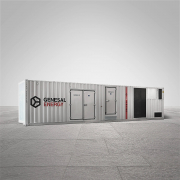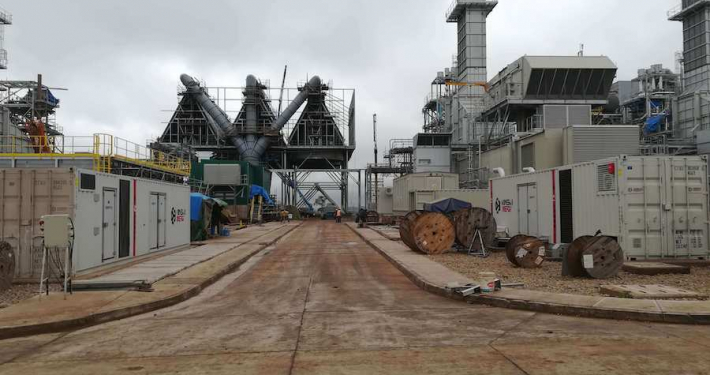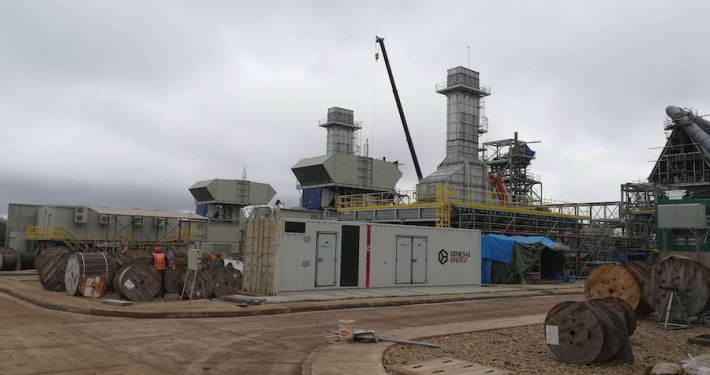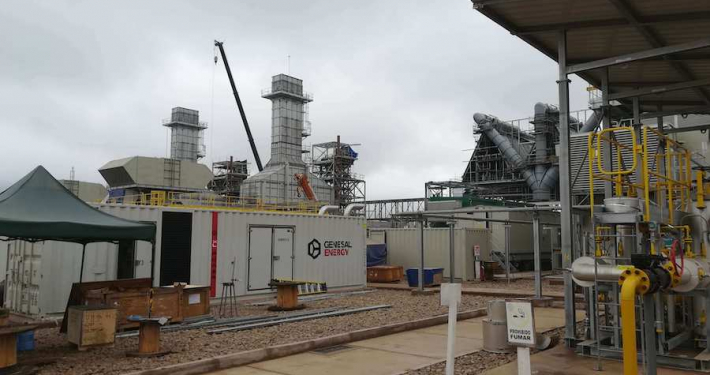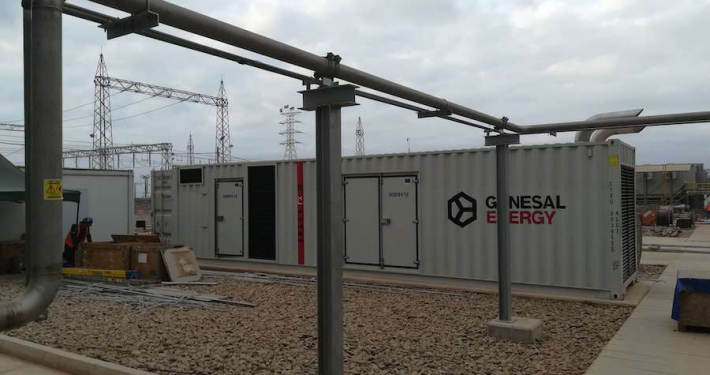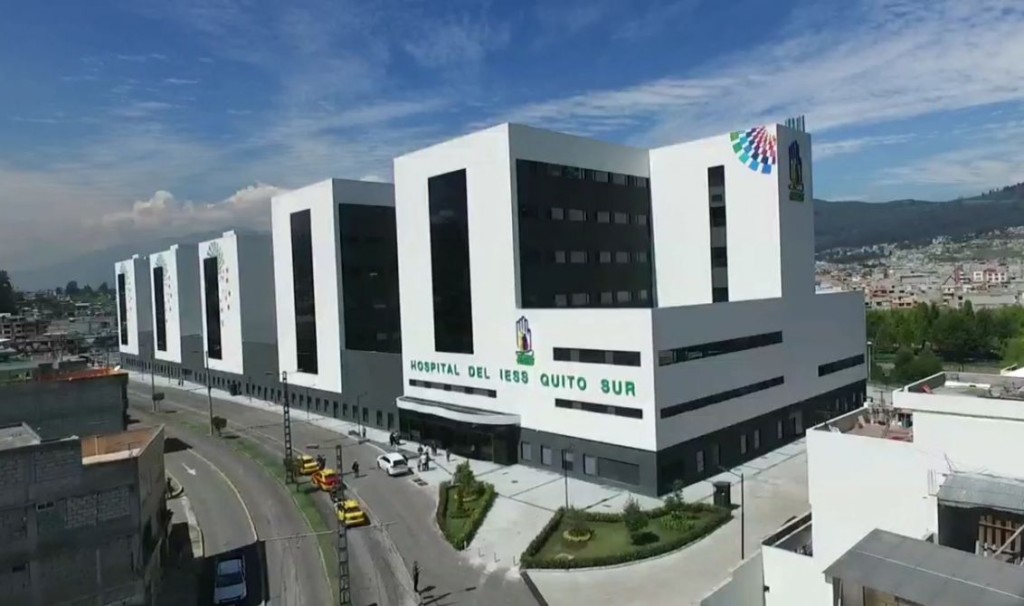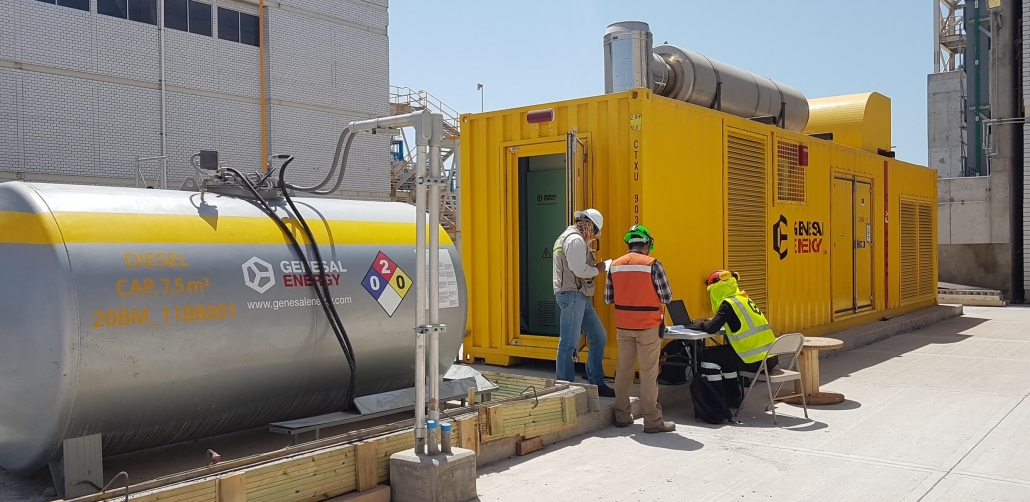
We installed generator sets in the Quito Sur Hospital in Ecuador

Ecuador’s Government installs Genesal Energy generator sets in the Quito Sur Hospital, the largest and most modern hospital in the country.

Covering almost 90,000 sq./m, costing 226 Million US dollars, and fully operational since December 2017, Ecuador’s largest and most up to date hospital has been built in South Quito, the capital.

Covering almost 90,000 sq./m, costing 226 Million US dollars, and fully operational since December 2017, Ecuador’s largest and most up to date hospital has been built in South Quito, the capital.

The project commissioned by the Ecuadorian national health service (IESS), is today a reality, and benefitting the residents of south Quito, in the El Recreo district. This publicly owned hospital with over 400 beds and 50 consultation areas, employs 1,800 people. Each one of the 5 buildings within the complex contains a Genesal Energy emergency power genset.

Power cuts in hospitals can lead to critical situations for patients and the doctors and nurses that care for them. It is obviously vital that these types of buildings can continue to function and must not be brought to a standstill.

The high consequences of a power cut mean it is essential to install back up systems that will continue to supply electricity to all the systems, ensuring the medical teams and doctors can continue their work ensuring that patients continue to receive healthcare.

Project aims: Emergency Power at Quito Sur Hospital in Ecuador

Due to the risks presented by a power cut the client required a solution that would incorporate gensets with automatic start-up (AMF). GENESAL ENERGY designed six generator sets with different voltages and power ratings, to meet the clients needs in relation to the different load requirements for each building. The objective; a guaranteed power supply in the event of a mains failure permitting the hospital to carry on as normal.

Designed for high altitude

The gensets supplied can give the necessary power at an altitude of 2,800M above sea level, bearing in mind that at this altitude there is less oxygen in the air, meaning the gensets mist work harder.

Additionally the solution had to account for the need to install gensets that would not cause noise contamination, and for this reason soundproofed gensets were supplied with the exhaust system at the top of the canopy.

Characteristics

  • Top canopy exhaust system.
  • Automatic fuel transfer from external fuel tanks.
  • Pre-heating resistance included.
  • Automatic start-up due to mains failure.
  • Ethernet connection.
  • PMG excitation system.

Supply of seven mobile soundproof gensets with a remote communication system

7 units of soundproof generator sets

Genesal Energy designed, manufactured and delivered seven 15/16 kVA soundproof gensets mounted on trailers to the client’s installations in Northern Europe.

The project consisted in the supply of seven mobile soundproof gensets. These units were designed to operate at both of the country of destination’s voltages (400/230 V & 230 V 3 phase without neutral). Each unit possesses the adequate power sockets to operate at both voltages.

Remote communication system

The seven units include a remote communication system through a GPRS module that allows the operation of the unit through SMS or through an app available for both iOS and Android. In addition, these gensets incorporate a GPS system that allows the client to trace the units, that is, to know exactly where they are at any given moment.

Steps to choose the right generating set

Commissioning, the best security protocol for the generator sets

Genesal performs more than 600 commissioning processes every year, of which most are outside of Spain.

Making sure that oil, fuel and coolant levels are optimal, that the air inputs are correct or that the unit has arrived to its destination in the same conditions in which it left the factory, are just some of the technical protocol steps to be performed before the commissioning of any generator set, in a fully comprehensive and absolutely essential check-up coordinated by Genesal Energy’s Guillermo Docampo, thanks to an expertise acquired through 40 years of experience in the energy industry.

Since the founding of Genesal almost 25 years ago, Docampo and the rest of the engineers in the testing team know every unit that is designed and built in the factory inside and out, because their job is precisely that, making sure nothing fails, and making sure that the generator that a client purchases, which is created according to their specific needs, is in perfect conditions before definitively handing it over to the client. “Our service is akin to that of the MOT, we’re the ones that give the go-ahead”, he says.

Commissioning is, therefore, fundamental in order to avoid subsequent issues, to minimize and eliminate risks. While with standard generator sets– like those designed to provide power for a farm or a hotel – the steps prior to a successful start-up are relatively simple, in the case of special generators (nuclear plants, hospitals or combined-cycle plants, amongst other installations) the situation is completely different due to the nature of the unit.

While with standard units it’s quite normal for the After Sales department to assume this task – “a good instruction manual and some basic notions are, in most cases, enough”, the expert states – in the case of special generator sets, the protocol is different: “A Genesal team or a group of technicians that have received training by our staff always travel to the area”, Guillermo Docampo points out.

More than 40 countries
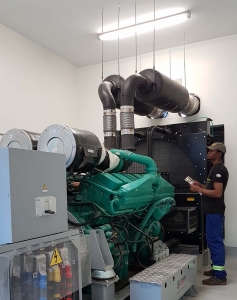
At a global scale, the number of commissioning processes performed by Genesal Energy exceeds 600 a year, which means an average of two a day, although the percentage varies greatly according to the world map. On a national level, 30% of Genesal Energy’s services include commissioning, however this percentage is much higher in the international market, where in countries like Peru they now represent 95%.

In reality, the nature of the generators that are sold outside of Spain (many of them special generators) explain thishigh number of commissioning processes. “It’s always convenient that the start-up and supervision processes are taken out by the manufacturing company because we and our service technicians know the product better than anyone”, says Docampo, who throughout his career has taken Genesal’s energy to more than 40 countries.

Columbia, Ecuador, South Africa, Ghana, Saudi Arabia, Georgia or Qatar are part of thewide client portfolio of the company, where the commissioning service always tends to be included.

Training courses

Without a doubt, training is a basic tool when it comes to commissioning processes, so that the supervision and control tasks that these check-ups require take place with total guarantee.

This way, Genesal provides an average of four courses a year in its headquarters in Bergondo (A Coruña), although its programmes also include training plans and sessions abroad, giving classes to the personnel that will be in contact with the generator set or will be in charge of its maintenance tasks.

“The courses are absolutely necessary in order to have a thorough knowledge of the unit and, therefore, to make sure that everything is okay. We need to guarantee the operation of the generators in times of emergency and in order to achieve this, a good maintenance of the unit is fundamental, which is why adequate training is needed”, Docampo highlights.
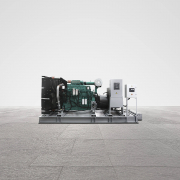
Genesal Energy has supplied an emergency genset for the combined cycle power plant (CCPP) known as Empalme II, a huge engineering project in the Sonora State of Mexico

Back start 2,000 kVA genset

Empalme II is a thermal energy combined cycle power plant with 2 gas turbines and output peak level of 791 MW, an initiative led by the Federal Electricity Commission (CFE in Spanish) of Mexico. Empalme II is a fantastic example of a large-scale engineering project in Sonora State, of which Genesal Energy has had the privilege of participating in. Our role has been to install a black start 2,000 kVA genset, whose purpose is to restore full functionality and start up of the power plant in the event of a mains power cut. The genset has been developed uniquely for this customer and as part of the overall project.

Back start 2,000 kVA genset

Alongside Chihuahuha and Baja California, Sonora is a reference in Latin America as a whole for the commissioning of projects which promote the use of renewable energies. In installations such as Empalme II, whose investment borders on $400 million, the inclusion of gensets is fundamental. This is for a variety of reasons, for example in CCPPs there are essential loads which must be permanently supplied with power for the correct functioning of the installation.

At Emplame II one of the most important loads is for the turning gears or barring gears, consisting of an electric motor which turns the turbine shaft at low speed to ensure balanced cool down and avoid rotor bending or “hog”. In terms of automation, the client asked for System Control And Data Acquisition (SCADA) to be available in the main control panel.

How does it work

In these cases, the emergency genset is connected to the main electrical power cabinet, which at the same time is connected to three different busbars, feeding the panel for general essential services and the essential services for the 2 gas turbines. In an emergency, the genset will feed the essential loads in the power plant and will even be capable of identifying each busbar individually, permitting it supply energy either individually or together.

To correctly install this system, Genesal Energy proposed a redundant PLC using 2 computers, so if one should breakdown, the other will immediately and automatically take full control of the genset, without any noticeable change in the rest of the power plant. Additionally, protection relay was installed and a synchroniser allowing parallel operation with the mains grid. The genset also includes an electrical control room with air conditioning, fire detection and suppression system that can differentiate where it will operate in the genset using FM200 gas agent.

Emergency Power for the Saudi Arabian embassies in Ghana, Cameroon, Niger and Zambia

Design and manufacture of emergency back-up gensets for the Saudi Arabian embassies situated in Ghana, Cameroon, Niger and Zambia, ensuring they will continue to have electricity in the event of a power cut in the mains grid supply.

The first stage in partnership with the construction firm responsible for building the embassies was a rethink to ensure that the gensets were adequately installed according to their characteristics.

The final design was completed, followed by the acquisition of the required materials to ensure the production deadline was met. Finally, the gensets (both mechanical and electrical parts) were built, culminating in testing for approved standards certificates in conjunction with the consultant responsible for design approval and signing off on the delivery.

Energía de emergencia para las embajadas de Arabia Saudí

A total of 20 gensets have successfully been installed: four in Ghana, five each in Niger and Cameroon, and a total of six gensets in Zambia. Although the gensets appear to be very similar, they were configured differently in each room where they have been installed, depending on the position of the fuel tank as well as the accompanying cables.

This also included the need for adequate busbars for the fitting of the power cables to the gensets. Each embassy now has a set of gensets giving back up support to the main on-site buildings. Regarding the genset operational setting, depending on the embassy, this could entail running in parallel between the gensets. It also permits added power output or redundancy, useful where if one genset fails, the others or another will take up the load demand. The project was completed with individual gensets installed in to the underground bunker found in each compound.

Transport & energy – key strategic undertakings for Genesal Energy in Mexico

Two combined cycle power plants – Emplame II in Sonora State, and Valle de Mexico in Acolman – are prime examples of the type of large scale projects which are in Genesal Energy’s agenda for delivery this year in Mexico. The gensets of these two mega-projects by the Mexican Government, have been designed and manufactured almost 10,000 kilometres way in Spain, home of Genesal Energy, a company dedicated to the distributed energy sector, and responsible for exporting the “brand “globally.

   
GEN2000HC – Empalme II                                   GEN2178TC – Valle México

The numbers tell the true story of Genesal Energy’s international focus and growth: their products can be found in over 30 countries in 5 continents, with exports accounting for 65% of all production. Branches are integrated into Peru, Panama whilst business began in Mexico in 2009 leading to a recognition of the long-term potential of the region, and subsequently a branch office operational since 2014 in central Mexico City. Genesal in Mexico has established a strong presence in the principal business and industrial regions of the capital itself, as well as Monterrey, Leon and Guadalajara, in what is Latin America’s third biggest country.

In the last few years Genesal have been involved in more than 10 major projects and success stories including large scale public works such as the cogeneration power plant in Afranrent, the first submerged transport tunnel in Latin America (Coatzacoalcos) and even the new airport in Mexico City. Today Genesal supplies multinationals, the government and small businesses around the country. “Mexico had to be a leading player in our international expansion. It offers many possibilities.” Explained Iago Crespo, General Manager Mexico for Genesal Energy.


GEN1719HC –  Afranrent Plant                             GEN2407H – Tunnel Coatzacoalcos

The company, whose growth continues unabated in this central American region, and that has doubled their turnover in 3 years, is now setting its sights on the energy and transport industries, sectors with enormous potential for business, especially with the commencement of the energy reforms carried out by the government.

“In the past, resources were in the hands of state-controlled companies, but procedures have changed, there is less bureaucracy, and more options,” explains Crespo, who confirms that the Mexican client is demanding in terms of timings and prices “and above all in the service expected.”

Innovation and on-demand service

Without doubt, one of the secrets of Genesal Energy’s success in the international market has been their ability to quickly adapt. Through their constant innovation, and high-level engineering, a very personalised service can also be noted, added value in Mexico which does not go unnoticed. “The difference is in our comprehensive service, quality and flexibility.” points out Crespo, “When we turn up we focus on supply, installation and maintenance, but more and more our clients insist we act more comprehensively, offering for example complete genset packages.”

Gensets for a solar power plant in South Africa that will supply electricity to 150,000 homes

Genesal Energy contributed with the project design and supply of two emergency gensets.

Kathu Solar Park in South Africa is a concentrated solar power system(CSP) up to 100MW. Building commenced in May 2016, and it is destined to be in service by the end of 2018.

The thermoelectric plant itselfwill be able to supply 4.5 hours of thermal energy thanks to cutting edge technology which allows supply to continue well after the sun has gone down. When fully operational Kathu Solar Park will supply power to 150,000 households. Also, according to the construction management team, the installation will contribute to sustainable development in the province of North Cape where the plant is situated. This will result in a C02 emissions saving of 6,000,000 tonnesover the next 20 years.

Genesal designed the emergency gensets in compliance with a series of requirements. The gensets had to be soundproofedand the control room needed to be maintained at an optimal working temperature. This was achieved by installing a split air conditioning system and a heat exchanger.


Remote Control

Rock wool acoustic panels inside a metallic mesh cover were used for soundproofing, guaranteeing an excellent attenuation result, functionally, but also aesthetically. The interior of the generator set was split in to two clearly defined compartments: the engine room and the control room. The emergency gensets can be controlled either directly via the in-built control panels using buttons, switches and touch screen technology or it can be controlled remotely through a DCS (distributed control system) which is a method to centralize and controlthe entire power station.

Alongside the gensets two double walled certified fuel tanks were supplied for external installation, one at 7,500 litres full load, and the other at 10,000 litres, guaranteeing over 24 hours of autonomy if necessary.


Made to measure energy solution for the Almaraz Nuclear Power Plant

Both the reactors at the Almaraz Nucelar Power Plant in Caceres (the oldest in Spain) supply 7% of the nations energy demands.

The plant is located in an area know as Ribera del Rio Tajo, and they have recently placed their trust in GENESAL ENERGY to design an emergency back up generator set capable of dealing with any potential incident.


The project consisted in designing, building, installing and commissioning a genset capable of supplying a 110kVA of power to supply energy to the Individual Temporary Storage (ITS), which alongside the fuel pools, allow for temporary storage of used combustibles from the reactors in the event of a power failure.

Genesal has designed a soundproofed genset inside a 20ft container with an interior control room configured for automatic start up. The bench frame incorporates a 700 litre fully bunded fuel tank, providing the genset with up to 25 hours autonomy. The genset has been specially designed to work at 45°C as well as resist seismic movements, in order to comply with security norms.

To meet with the client’s specific needs the genset was designed with an independent control room and power output with various local controls to manage the genset and other parts of the installation.

Load bank

In the switchgear output of the grid/genset, switches are fitted for each area of the ITS in the power plant. Each one can close or open via pushbuttons or using a pre-programmed sequence designed by the client.

For the correct functionality of the genset, a separate room within the container was built to hold a resistive load bank which is connected to the genset output always and when the load is less than 40% of its maximum capacity. This allows for fuel use optimization and prolongs the lifetime of the genset (normally a genset is recommended to work at 70/80% of its maximum).

The load bank can connect to the genset manually via pushbutton for maintenance work. It is also important to highlight the implementation of signals exchange in the Distributed Control System (DCS) of the power plant, for example the state of switchgear, of the genset and a measurement of zero return to detect grounding failure in the installation.

Emergency Power for Phosphates Treatment Plant in El Jadida, Morocco

The project has been designed for one of the most important companies in the engineering and constructin sector, with headquarters in Marseille (France).

Situated 80KM south of Casablanca and 17Km from El Jadida is the Jorf Lasar industrial complex, a phosphates treatment plant which Genesal Energy has supplied with 3 specially designed gensets for emergency back-up.

The plant whose installations cover an area of 1,700 hectares began its production in 1986 and its numbers are quite impressive: the recuperation of 2 million tonnes annually of P2Oin the form of phosphorus acid.

Genesal Energy has supplied this elaborate facility in Morocco with a genset island comprising of identical generators for outdoor use (3 units at 400V/50Hz containerised with a control system) designed to work in parallel or if necessary individually. Five circuit breakers make up the switchgear.

In detail

As with every project undertaken by Genesal, the control system designed for this phosphate treatment plant was managed to the tiniest detail:

  • If the gensets are operational, they can be synchronised, either with the output switch of each genset or with the coupling point, therefore reducing the number of movements required by the switches in case of changes in the operational format.
  • If a generator is stopped, the circuit breaker is disabled to avoid damage from unwanted power inputs from external busbars
  • If the client has not indicated that a connection panel should receive an electrical feed, the incoming power cabinet circuit breaker will not be permitted to close (not even manually), in order to avoid short circuits caused by external voltage not from the actual genset island.