Hybrid Solar Systems with Diesel Generators for Remote Areas
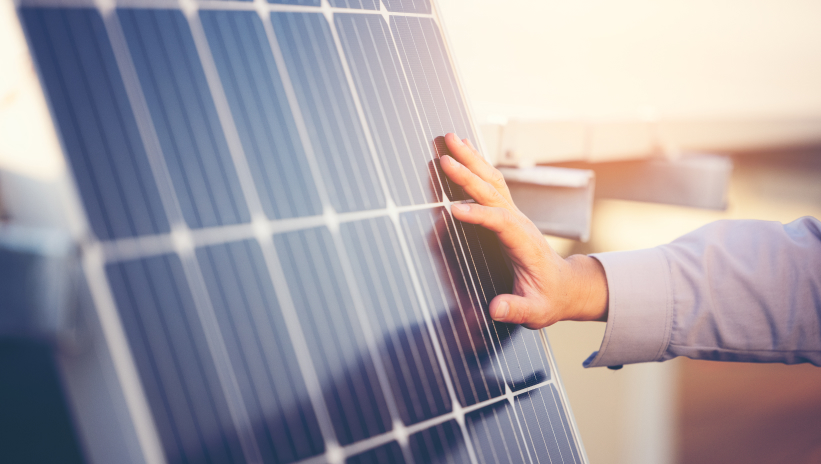
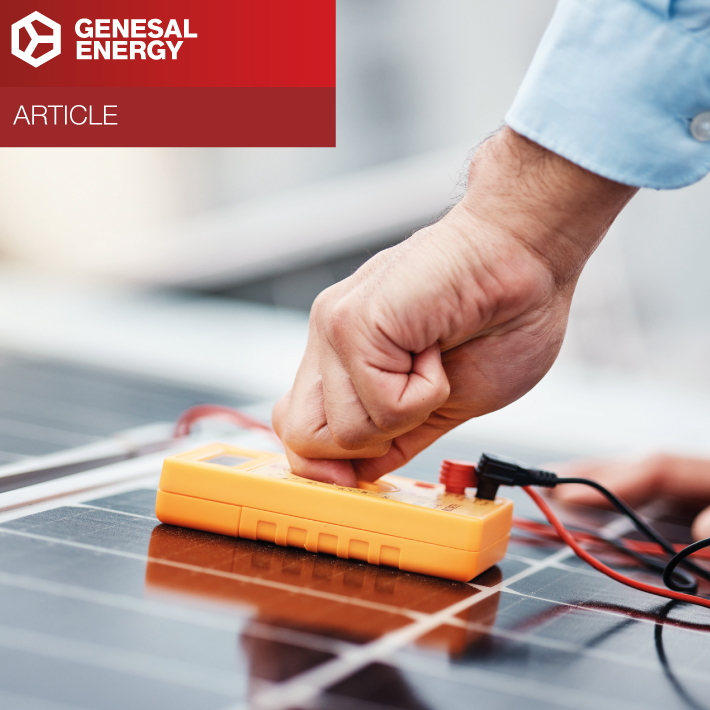
Hand inspecting a solar panel in a solar hybrid system installation.

What is a Hybrid Solar System and How Does It Work?

Hybrid solar systems are energy solutions that combines solar photovoltaic power with another generation source, usually a diesel generator or a battery storage system. Its purpose is to ensure a continuous, stable and efficient electricity supply, even in areas without access to the electric grid or where the connection is unreliable.
In a solar hybrid system, photovoltaic panels capture solar radiation and convert it into electrical energy. This electricity is used to power local consumption or charge the solar batteries, which store the excess energy for later use.

Solar batteries are a key component in hybrid energy systems.

When solar radiation is insufficient or the batteries are depleted, the diesel generator starts automatically to cover the energy demand. The hybrid inverter intelligently manages the available energy sources, prioritising solar power and optimising fuel consumption.

Advantages of Combining Solar Energy with Diesel Generators

Hybrid solar energy systems offer a sustainable and cost-effective alternative to conventional diesel-only systems. Their main advantages include:

  • Fuel savings: by using solar energy, the operating hours of the diesel generator are significantly reduced, lowering operational costs.
  • Reduced emissions: less diesel consumption means lower CO₂ emissions and environmental impact.
  • Greater autonomy: the combination of both sources guarantees 24/7 power supply, even under adverse weather conditions.
  • Lower maintenance: fewer operating hours extend the lifespan of the generator.
  • Total reliability: the hybrid solar-diesel system ensures a stable power supply in locations where the grid is unavailable or unstable.

For these reasons, hybrid solar systems are an ideal solution for remote areas, critical facilities, rural environments or industrial projects far from the grid.
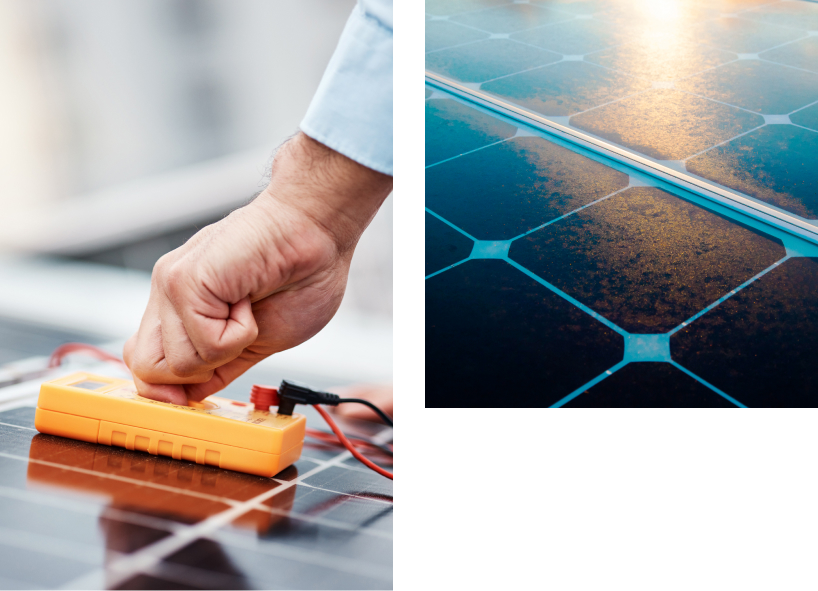
Technician measuring the performance of a solar panel with a multimeter.

Key Components of a Solar-Diesel Hybrid System

A hybrid solar photovoltaic system is made up of several essential components that work together efficiently:

  • Solar photovoltaic panels, which capture sunlight and generate electricity.
  • Hybrid inverter, which manages the conversion from DC to AC and controls the energy flow between sources.
  • Solar batteries, which store energy for use during low or no sunlight hours.
  • Diesel generator, which automatically starts when solar and stored energy are insufficient.
  • Control and monitoring system, coordinating operations for maximum efficiency.
  • Electrical panels and protections, ensuring safety throughout the installation.

Types of Hybrid Solar Systems by Configuration

Different types of hybrid solar systems exist depending on their connection and operation mode:

  • Grid-connected systems: combine solar, diesel, and grid energy. When grid power is available, solar energy is prioritised; the generator acts only as backup.
  • Off-grid or stand-alone systems: operate without a grid connection. These are ideal for remote sites and must be properly sized for solar generation, diesel backup and battery capacity.
  • Modular hybrid systems: allow adding panels, batteries or generators as energy needs grow. Their scalability makes them especially suitable for industrial projects or rural electrification.

Technicians inspecting a solar panel in a technical work environment.

The Role of Batteries in Energy Storage

Solar batteries are a key component in hybrid energy systems, storing energy generated by photovoltaic panels for later use.
They make it possible to have electricity available at night or during low-sunlight periods, minimising the need to start the diesel generator.

Ongoing innovation will make solar hybrid systems increasingly efficient, reducing diesel consumption.

Choosing the right battery type and capacity — lithium, AGM or gel — directly impacts the system’s efficiency, performance and lifespan.

How to Optimise Consumption and Reduce Diesel Use

The main goal of a solar-diesel hybrid system is to reduce fuel consumption without compromising power continuity. Key strategies include:

  • Installing smart controllers that prioritise solar energy use.
  • Adjusting generator operation times to match demand.
  • Incorporating high-efficiency batteries to increase autonomy.
  • Carrying out preventive maintenance to maximise generator performance.
  • Designing a photovoltaic installation properly sized for peak demand.

Applications and Use Cases in Remote Areas

Hybrid solar systems with diesel generators are widely used in applications where grid access is limited or non-existent:

  • Critical infrastructure: telecommunications, weather stations and healthcare facilities.
  • Remote industrial operations: mining, oil and gas, civil works or water treatment plants.
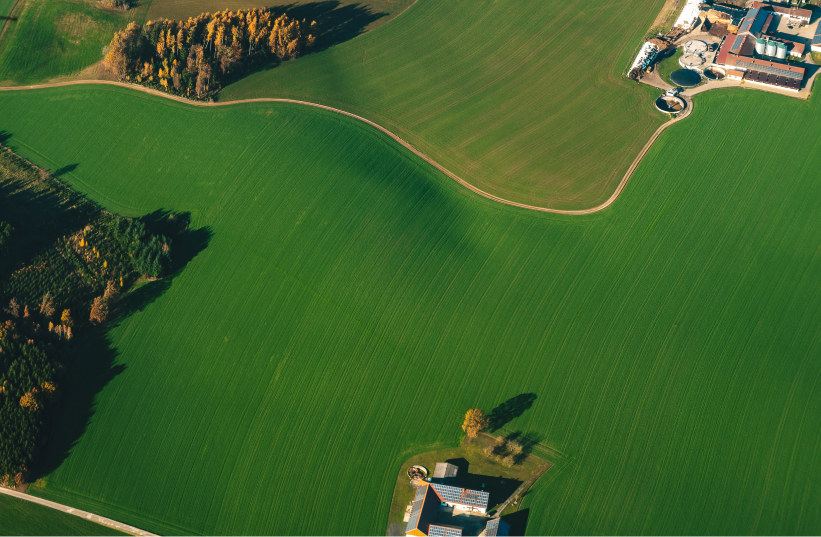
Aerial view of a rural area with wide fields and scattered buildings.

  • Rural areas and isolated communities, enabling electrification where the grid cannot reach.
  • Emergency or military projects, requiring autonomous, robust and fast-deployable energy.

Thanks to their flexibility, hybrid solar systems provide continuous and sustainable power even in the most demanding environments.

Trends and the Future of Hybrid Solar Systems

The future of hybrid solar photovoltaic systems is driven by digitalisation, improvements in battery capacity, and integration with smart management technologies.
Ongoing innovation will make solar hybrid systems increasingly efficient, reducing diesel consumption, advancing decarbonisation, and increasing the energy independence of remote areas.

In a solar hybrid system, photovoltaic panels capture solar radiation and convert it into electrical energy.

In this evolution, diesel generators will continue to play a crucial role as reliable backup units within hybrid energy solutions, ensuring continuity when renewable sources are insufficient.
The trend is clear: combining solar energy with efficient, flexible generation technologies will be key to guaranteeing a stable, sustainable, and adaptable power supply for the energy challenges of the future.


Simplifying to Move Forward: How We Apply the Spirit of the Omnibus Regulation

Bosque iluminado por el sol como metáfora del avance hacia una sostenibilidad más simple impulsada por el Reglamento Ómnibus.
Sustainability is entering a new phase. After years of directives, reports, and standards, Europe has realised that reporting alone is not enough — what matters is not how much is reported, but how much is transformed. With the approval of the Omnibus Regulation, the European Commission is taking a decisive step in that direction, simplifying the way companies report their environmental, social, and governance performance so that sustainability regains the meaning it should never have lost: action.

Properly managed sustainability not only reduces costs or emissions — it also opens doors.

This regulation was not created to lower ambition, but to restore coherence. In recent years, the CSRD Directive and the European Sustainability Reporting Standards (ESRS) have raised the bar for corporate reporting, but in doing so, they also imposed a disproportionate burden on many SMEs. It’s not just about gathering information: the CSRD required companies to measure dozens of environmental, social, and governance indicators with the same level of detail as large corporations. For an industrial SME, that means allocating human and financial resources it may not have, creating complex management systems, investing in digital tracking tools, and training staff in methodologies that until recently were exclusive to multinational ESG departments. In practice, sustainability was starting to look more like an exercise in bureaucracy than a process of improvement, diverting attention from the real goal: reducing impacts and creating value.
Team analysing data to apply the criteria of the Omnibus Regulation.
The Omnibus Regulation, approved in 2025, aims to correct that course. Its goal is to simplify administrative burdens and focus on material indicators — those that truly reflect an organisation’s impact on its surroundings. It’s essentially the same approach that guides our evolution: data that inspire decisions, measurements that drive change, sustainability that translates into action.

Measuring What Matters — and Acting on What Can Be Measured

At Genesal Energy, we’ve always understood sustainability as a tool for innovation and improvement, not a reporting obligation. That’s why, even before the Omnibus Regulation came into force, we were already working under the principles it now promotes: prioritising what’s relevant, reducing complexity, and focusing management on tangible results.
The new European framework particularly strengthens three key areas — those that concentrate most of the changes introduced by the Omnibus Regulation:

  • E1: Climate change. Updated requirements for measuring greenhouse gas emissions, improving energy efficiency, and advancing towards a genuine transition to clean energy.
  • E5: Resources and circularity. Simplified indicators with greater emphasis on responsible use of materials, waste reduction, and the adoption of circular economy principles.
  • S1: People and the value chain. Strengthened social aspects: training, occupational health and safety, and ethical management across the entire supply chain.

E1. Climate Change: More Efficient Energy, Lower Impact

Our commitment to climate action is reflected in the way we manage energy. At our facilities in Bergondo (A Coruña), we have developed a model that integrates renewable sources, smart storage, and consumption optimisation.
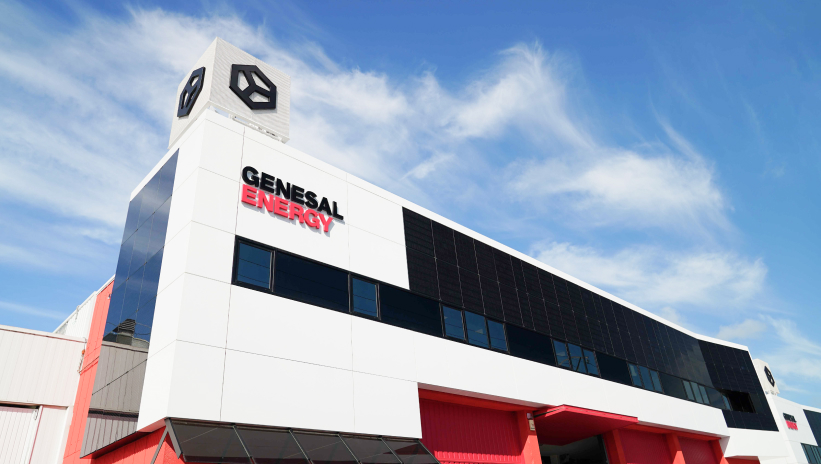
Genesal Energy facilities
The photovoltaic façades and roofs of our B27 and B28 plants generate part of the electricity we consume. Thanks to OGGY, our energy management and storage system, we can monitor production, consumption, and energy flow in real time. Its algorithm automatically decides whether to self-consume, store, or feed energy back into the grid — optimising every kilowatt used.

The results are tangible:

  • We have reduced our annual energy consumption by 27%.
  • We have improved the energy efficiency rating of our facilities from Category E to B.
  • We avoid more than 23 tonnes of CO₂ emissions per year.

These figures are more than indicators — they are proof that sustainability is also a matter of engineering. Our industrial complex now operates as a small microgrid: an energy ecosystem capable of producing, storing, and managing its own electricity efficiently and autonomously.

E5. Resources and Circularity: Designing for the Entire Lifecycle

In this new European context, responsible resource management has become more relevant than ever — and at Genesal Energy, we have long been working in that direction. Efficient use of materials, waste reduction, and the incorporation of circular economy criteria are at the core of our eco-design policy.

That’s why we implemented an eco-design management system certified under ISO 14006, which enables us to assess the impact of each component, material, or manufacturing process — and redesign wherever there’s room for improvement.

Simplify administrative burdens and focus on material indicators — those that truly reflect an organisation’s impact on its surroundings.

This work has led to concrete progress:

  • Replacement of conventional materials with recycled or recyclable ones — for example, replacing metal parts with 3D-printed recycled polymers, reducing emissions linked to transport and processing.
  • Incorporation of local suppliers (km 0) to cut the logistics footprint.
  • Elimination of welding or painting processes in certain components, reducing emissions and waste.

Thanks to these actions, some components have reduced their carbon footprint by more than 80% compared to the original materials.
But eco-design goes beyond the technical aspect — it also transforms the way we communicate. Our eco-designed products include environmental data and comparisons that allow clients to understand the savings in emissions and materials compared to previous models. This transparency is part of our commitment: providing clear, useful, and verifiable data that reflect the positive impact of every improvement we make.
Wildlife in a natural environment and an industrial process with machinery.

S1. People and Knowledge: Learning to Transform

Sustainability is not limited to technology or processes; it also has a human dimension that is essential for progress. At Genesal Energy, we understand that knowledge, education, and social collaboration are fundamental pillars for building a fair and lasting energy transition — and we channel that commitment through the Genesal Energy Foundation.
Through the Foundation, we promote educational, social, and environmental projects that reflect our understanding of sustainability as a shared effort between business and society. We carry out training and awareness activities on energy and environmental issues, support cultural and social initiatives in our local community, and collaborate with organisations working towards more balanced and sustainable development.

Efficient use of materials, waste reduction, and the incorporation of circular economy criteria are at the core of our eco-design policy.

Our goal is to create a positive impact that goes beyond industrial activity — contributing to people’s well-being and to the progress of the environment in which we operate. We believe sustainability begins in the factory, but only becomes meaningful when it’s shared — when knowledge, responsibility, and social action move forward together.

From Measurement to Action

Measurement only makes sense if it leads to action — and at Genesal Energy, we’ve been living by that principle for years. Our environmental policy and management systems — certified under ISO 14001, ISO 14006, ISO 45001, ISO 9001, and UNE 166002 — enable us to turn indicators into technical and business decisions.
Coral reef with colourful fish swimming in clear waters.
We measure our emissions, consumption, and waste — but what matters most is what we do with that information: we select sustainable suppliers, redesign parts, optimise packaging, improve testing efficiency, and reduce impacts at every production stage. In our experience, industrial sustainability is managed with the same precision as any engineering process. It’s not a separate part of the business — it’s part of the way we design, manufacture, and operate.

The new European framework reinforces this vision. Properly managed sustainability not only reduces costs or emissions — it also opens doors. It allows us to access green financing, participate in European projects, and be chosen by clients who value vision and environmental commitment. Sustainability is no longer an obligation; it’s a credential — and a guarantee: the mark of a company that innovates, adapts, and embraces its role in the energy transition with coherence and responsibility.

Dense forest covered in mist.
That’s why we continue to work by a simple principle: less bureaucracy, more innovation; fewer papers, more clean energy; less noise, more consistency.
Europe’s energy transition will be built on data — but above all, on examples. And ours is that of an industrial SME that has decided to integrate sustainability into its DNA — not as a distant goal, but as a way of moving forward every day.

Energy security in car parks: a new project in a public car park in France

Car parks, particularly when underground or large-scale, require a continuous power supply to ensure car & people’s protection (energy security in car parks). In the event of an outage, ventilation systems would stop working, and the risk of poisoning could rise within minutes.

Similarly, without emergency lighting or active signage, evacuation during a fire could be compromised, creating dangerous and panic situations.

Our latest project in this area has been the design and manufacture of a bespoke tailor-made genset for a public car park in France to guarantee power supply in the event of a mains failure ensuring compliance with the strict safety regulations applicable to public spaces of this kind.

A vital need in a busy environment

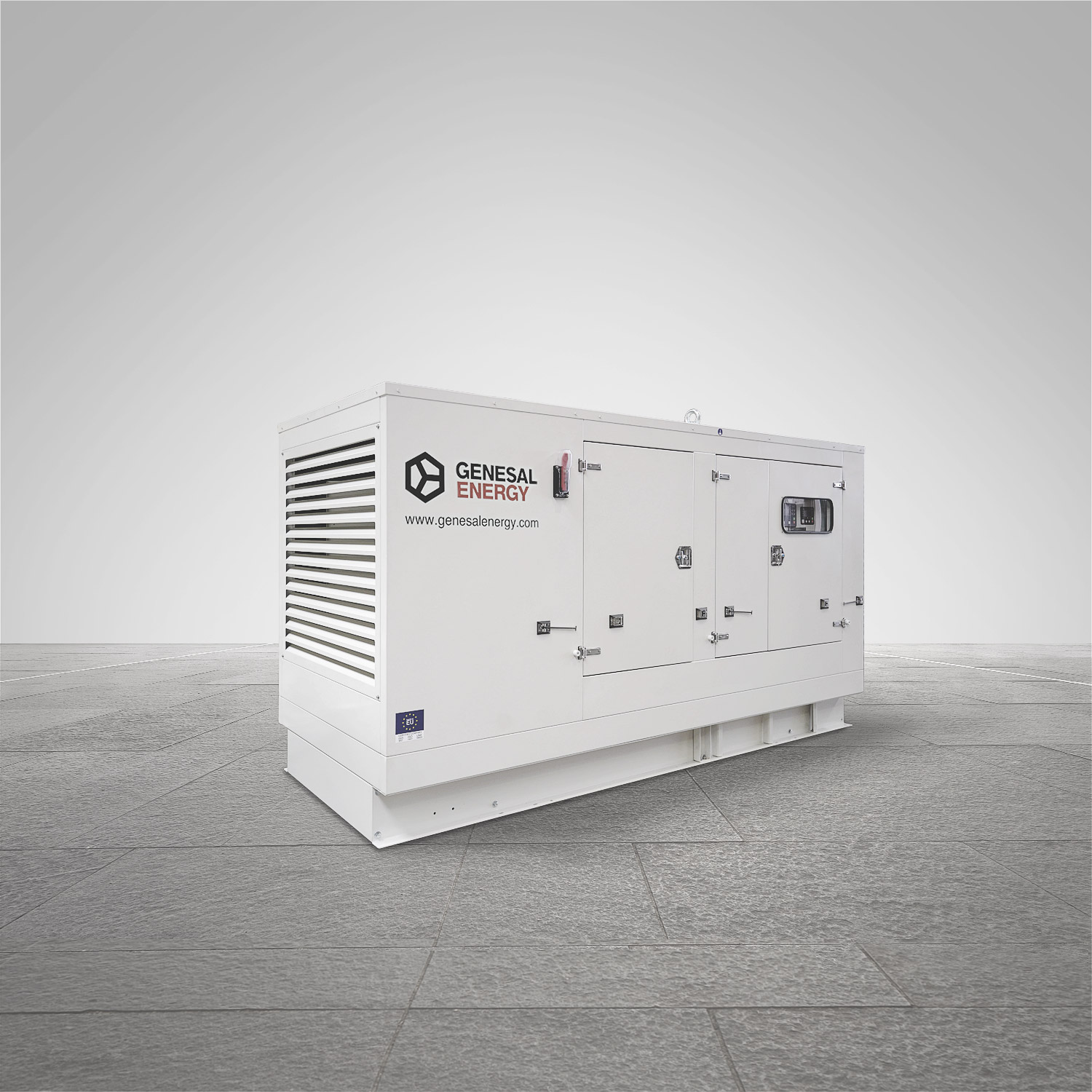
Our engineering team developed a 250/275 kVA genset housed in a 3400mm soundproofed canopy, equipped with a Baudouin engine and a high-performance Leroy Somer alternator. This design ensures reliability, durability and ease of maintenance.

Guarantee power supply in the event of a mains failure ensuring compliance with the strict safety regulations applicable to public spaces.

The generator is fitted with a built-in 500-litre tank, providing up to 8 hours of autonomy, thereby ensuring critical systems remain operational for an entire day in the event of an incident. To further enhance safety, we integrated specific features such as externally operable fuel shut-off valves, redundant control & battery systems, protections against moving and hot parts, and emergency stop push-buttons.

Reliability, safety and continuity

Beyond the robustness of the equipment itself, reliability in this project is reflected in compliance with strict French safety regulations, specifically NF-E-37-312, applicable to this type of installation. This means that the genset not only provides backup power but also ensures the installation meets the highest standards of protection and risk prevention.

Features

  • Design type: Monoblock in 3400mm soundproofed canopy.
  • Fuel tank: 500 litres integrated into the base frame.
  • Control panel: ComAp InteliLite AMF25 IL4.
  • Redundant battery system.
  • Emergency start controller: ComAp InteliNano.
  • Safety fuel shut-off valve.
  • Compliance with NF-E-37-312 safety regulations.

Genesal Energy designs tailor-made generator sets for large retail outlets.

Genesal Energy has designed a generator set to guarantee energy in a shopping centre in Germany and replace its previous generator.

The genset had to be integrated without the need to modify the existing installations and to have a high autonomy and direct connection to an external fuel tank.

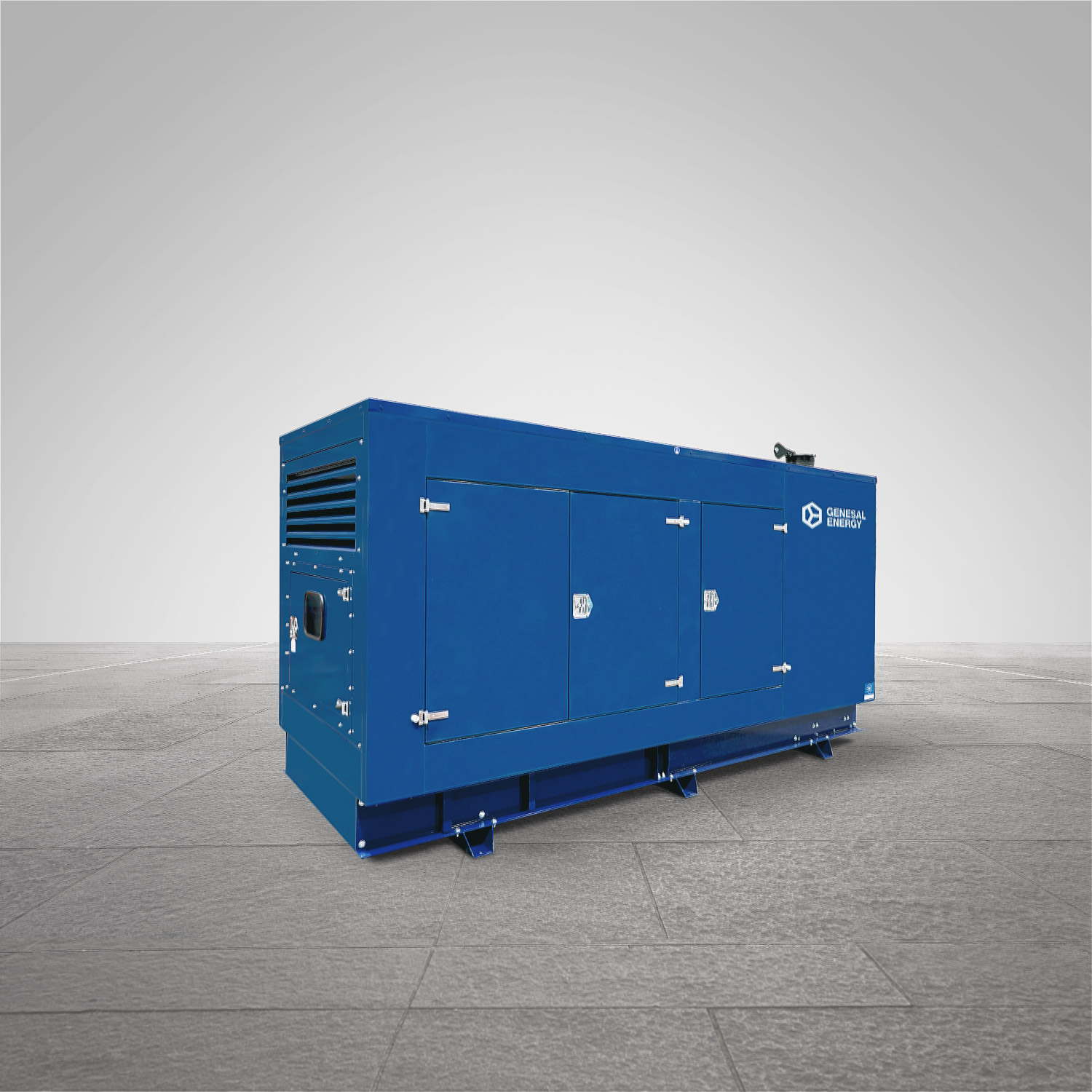
With these indications, our engineering team designed a solution with the necessary features to replace the previous equipment without the need for major modifications existing infrastructure. The control unit was located in a special position that allows access without the need to open the side doors, enhancing space and operability at both an operational and aesthetic level, as it also complied with the specific colour and marking requested.

Our proposal included a control unit in a special position which can be accessed without having to open the side doors of the set.

Bearing in mind that shopping centres are spaces where activity does not stop, the electricity supply must be guaranteed at all times to ensure its proper functioning, as a failure in the grid can lead to operational interruptions, affecting customers, generating economic losses and compromising the safety of the premises.

To prevent this kind of situation, this set has an automatic start-up system, ensuring its immediate activation in the event of a failure in the main network. In order to achieve maximum autonomy, the engineering team designed an external fuel tank by means of wall-bushings, allowing a continuous supply without the need for frequent refuelling.

Thanks to this Genesal Energy design, the shopping centre has a reliable solution adapted to its needs, ensuring that, in the event of any grid failure, activity continues without interruption.

Our Engineering Solution

Based on the client’s specific need to replace an old unit with this new one, we designed a unit as similar as possible to the already existing. Our proposal included a control unit in a special position which can be accessed without having to open the side doors of the set. It was installed in the same precise location without having to make any modifications.

Features

  • AMF Mains failure start.
  • Deif AGC 150 control panel.
  • No fuel tank integrated in the base, only liquid collection tray with sensor for leak detection.
  • Wall bushings for fuel lines (suction and return) from external tank.
  • Protective mesh against animals (at air inlet and outlet).
  • Special customer marking.
  • Unit painted in the customer’s required colour – RAL 5003.
  • Oil extraction hand pump.
  • Heating water recirculation pump.
  • Fuel pre-filters with water decanter.
  • Special batteries.
  • Completely covered power supply preventing any access to live parts.