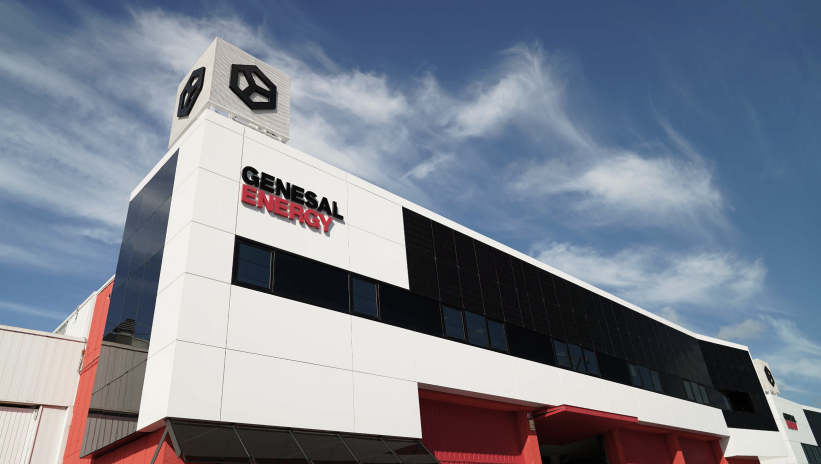
Decarbonisation in industry is not just about technology: it’s about acknowledging operational complexity and the need to combine multiple solutions. Genesal Energy knows this well. That’s why we chose to take action.
Our renovation of units B27 and B28 at the Bergondo industrial estate (A Coruña) is a real example of how to integrate concrete, measured, and coordinated efforts to move towards a more sustainable industry.
Producing renewable energy is not enough, you also need to manage it properly.
In recent years, we’ve taken an active role in the energy transition, convinced that decarbonising our processes is not a choice but a responsibility. However, we are under no illusion: the path is not easy. Challenges are high energy consumption, demanding technical processes, and above all, the need to ensure uninterrupted operational continuity. We understand there is no single solution or magic formula. Every industry is different, and every step matters.
In our case, the first step was analysis. We studied our energy consumption, losses, thermal demand, and the renewable potential of our facilities in depth. Based on that data, we designed an intervention around four pillars:
Integration of renewable energy
Smart energy management
Recovery of energy flows
Overall efficiency improvement
For renewable generation, we chose to integrate the solution into the architecture of our buildings. We installed 111 sq metres of photovoltaic glass with a capacity of 13.1 kWp directly into the façades, allowing us to generate clean energy while also improving thermal insulation. This was complemented by a 252 m² photovoltaic roof (57.3 kWp) on unit B27. Thanks to these installations, we now cover 100% of the energy consumption of both units during peak solar hours.
But producing renewable energy is not enough, you also need to manage it properly. That’s why we incorporated the OGGY, an advanced energy storage and management system that monitors usage in real time and automatically determines the most efficient use of the available energy. This system helped us reduce consumption by 27% in just one year.
There is no single solution or magic formula. Every industry is different, and every step matters.
We went one step further: we began recovering the energy generated during genset testing (FATs). Thanks to its integration with OGGY, that energy is fed back into the system, further reducing our dependence on the electricity grid.
The results came quickly: in the first year, we avoided more than 23 tonnes of CO₂ equivalent emissions. Our facilities also improved their energy certification, moving from a rating of “E” to “B”. An improvement that reflects not just efficiency, but a genuine commitment to sustainability.
This project has shown us that industrial decarbonisation is not achieved through isolated grand gestures, but through concrete, measurable, and coordinated actions. It requires vision, strategy, and the ability to adapt solutions to the specific needs of each operation. And above all, it requires commitment.
Genesal Energy is clear on this: we’ll keep moving forward.
Author: Antía Míguez Fariña, Sustainability Coordinator, Genesal Energy
https://genesalenergy.com/en/wp-content/uploads/sites/5/2025/07/ge-netzero-thumbnail-eng.jpg710710creativohttps://genesalenergy.com/en/wp-content/uploads/sites/5/2025/03/logo-genesal-pureenergy-2025.svgcreativo2025-07-18 09:40:302025-10-20 13:16:01Keys to effective industrial decarbonisation: The Genesal Energy Experience.
Genesal Energy’s sustainability commitment is tangible, reflected in real-world projects. One such initiative is the integration of HVO (Hydrotreated Vegetable Oil) into generator set testing—an important step towards a cleaner energy model that maintains the reliability and quality for which the company is known.
HVO is a second-generation biofuel produced from organic waste such as used cooking oils and animal fats. These feedstocks undergo a hydrotreatment process that removes impurities and enhances fuel properties, resulting in a product with characteristics very similar to—if not superior to—conventional fossil diesel. One of its main advantages is that it can be used in existing engines, fuel tanks and storage systems without the need for modification, allowing direct deployment within current infrastructure.
Every step towards a more sustainable energy model must be based on independent validation, technical reliability, and a commitment to quality.
In addition to its compatibility, HVO offers key environmental benefits. It can reduce lifecycle CO₂e emissions by up to 90% compared to standard diesel, supports the circular economy by repurposing waste, and avoids the ethical conflicts often associated with first-generation biofuels derived from food crops. As a result, HVO has become a key tool in the energy transition: a practical, progressive and realistic pathway towards industrial decarbonisation. It is already part of Genesal Energy long-term sustainability strategy.
This solution is particularly relevant in sectors where energy reliability is critical and environmental requirements are increasingly strict—such as data centres, defence, healthcare and telecommunications. In these environments, HVO allows organisations to move forward with decarbonisation goals without compromising operational security or power continuity.
Ensuring Quality in Real-World Conditions
The shift to HVO was not based on laboratory trials or isolated testing. Genesal Energy sought to validate the fuel’s behaviour under real-world operating conditions, applying the same level of technical rigour required of every system component.
To achieve this, two generator sets representative of typical product applications were selected: a 100 kVA and 200 kVA units in Spain. Both were already in active service, supplying energy to installations under standard daily load and operational demands. These conditions offered an authentic view of how HVO performs in routine use and within the environments where it must deliver value.
Real-world testing and laboratory analysis confirm that HVO is a high-quality, dependable fuel solution—ready to meet the challenges of the energy transition.
Fuel samples were taken directly from the gensets, without altering or manipulating the product. These were submitted to an independent, accredited laboratory for full testing and verification against all required specifications and standards for safe, efficient use in diesel engines.
This approach reflects the company’s technical philosophy: every step towards a more sustainable energy model must be based on independent validation, technical reliability, and a commitment to quality. It is not enough for a fuel to be cleaner—it must also meet the performance and durability standards that define Genesal Energy solutions.
Test Results: Confirming HVO’s Quality and Reliability
The laboratory analysed the samples in accordance with UNE-EN 15940, the European standard for paraffinic synthetic and bio-based diesel fuels. Key parameters assessed included:
Density: Crucial for energy yield per combustion cycle. The measured density fell within the standard limits, ensuring consistent engine performance without the need for recalibration or risk of increased consumption.
Kinematic viscosity: Essential for proper fuel flow, lubrication, and injector spray pattern. The tested HVO met all viscosity requirements, supporting complete combustion and preventing deposit formation or clogging.
Distillation curve: Confirmed stable fuel volatility across temperature ranges, ensuring efficient evaporation and ignition under varying load conditions.
Cold behaviour: The fuel demonstrated excellent performance in low temperatures, avoiding filter blockage or crystallisation. This makes it well suited to variable climates and reduces the need for additional maintenance precautions.
Cetane number: Indicative of ignition quality under compression. The high cetane value contributed to smoother starts, fewer emissions on ignition, and stable engine operation throughout usage.
Water and solid content: Low levels were recorded, within safe limits, reducing the risk of corrosion, wear, and system contamination—key to maintaining genset durability.
Overall, the results confirm that HVO complies with all regulatory and technical requirements for safe diesel engine operation. Most importantly, it offers seamless integration with existing systems, enabling immediate adoption in projects where full electrification is not yet feasible from a technical or economic standpoint. This positions HVO as a realistic and effective solution for decarbonisation without sacrificing performance or reliability.
Conclusión
Real-world testing and laboratory analysis confirm that HVO is a high-quality, dependable fuel solution—ready to meet the challenges of the energy transition. Its adoption supports a dual goal: reducing the carbon footprint of distributed generation systems while maintaining the security and effectiveness expected in critical infrastructure.
HVO is a second-generation biofuel produced from organic waste such as used cooking oils and animal fats.
Genesal Energy’s use of HVO is not a symbolic gesture but a strategic commitment combining technological innovation, environmental responsibility and technical excellence. Every step forward is backed by data, independent validation, and a clear focus on delivering reliable, sustainable energy solutions.
Looking ahead, the company will continue to explore and validate emerging technologies that enable clients to decarbonise their operations with confidence—because sustainability is not something to declare, but something to prove.
https://genesalenergy.com/en/wp-content/uploads/sites/5/2025/07/ge-hvo-thumbnail-en.jpg710710creativohttps://genesalenergy.com/en/wp-content/uploads/sites/5/2025/03/logo-genesal-pureenergy-2025.svgcreativo2025-07-07 10:23:442025-10-20 13:16:08HVO: From Commitment to Reality
Generator sets are essential to ensure uninterrupted power supply in remote locations, critical facilities, or areas with an unstable grid. However, when exposed to extreme conditions—scorching heat, freezing cold or high altitudes—specific solutions must be applied to guarantee optimal performance and extend equipment lifespan.
Challenges of Operating Generators in Extreme Conditions
Environmental factors can directly impact a generator’s performance, reliability and durability. Extreme temperatures, humidity, dust, and even air density at high altitudes present technical challenges that require proper equipment preparation.
The main challenges include:
Increased wear on mechanical and electronic components.
Need for reinforced cooling systems.
Overcoming these challenges demands adaptive engineering, durable materials, and an optimised configuration tailored to each environment.
Adaptations for Cold Climates: Generators in Arctic Zones
In polar or mountainous regions where temperatures drop well below zero, a standard generator may struggle to operate reliably. To ensure performance in these environments, several measures are implemented:
Engine and fuel preheating systems, enabling starting in temperatures as low as -30 °C.
Thermally insulated enclosures to shield internal components from extreme cold.
Low-viscosity lubricants and fuels suitable for Arctic climates.
Battery and alternator heaters.
These adaptations ensure that the generator can effectively meet critical energy needs, for instance in scientific bases, telecommunications infrastructure, or emergency systems in sub-Arctic areas.
Operation in High Temperatures: Solutions for Desert Environments
In desert climates—where temperatures can exceed 50 °C and dust levels are high—several parts of the generator must be reinforced:
Oversized cooling systems, with additional fans or high-efficiency radiators to prevent overheating.
Specialised air and dust filters to block abrasive particles from entering the engine.
Protection of electronic components from direct solar radiation.
UV-resistant paints and coatings.
The goal in these environments is to keep engine temperature within safe operating ranges and prevent dirt accumulation that could impair combustion or damage components.
The Importance of Cooling Systems in Extreme Conditions
Cooling systems are critical for generator sets exposed to extreme temperatures. Whether in high heat or freezing cold, efficient thermal management is essential to avoid mechanical failure, efficiency loss or irreversible engine damage.
Common cooling solutions include:
Liquid cooling with special antifreeze for cold environments.
Tropical-grade radiators or large-capacity heat exchangers for hot climates.
Redundant ventilation or forced-air cooling systems.
Continuous monitoring of temperature and cooling pressure helps extend the generator’s lifespan and ensures optimal performance.
How Altitude and Air Density Affect Generator Performance
As altitude increases, air density decreases, which negatively affects combustion and, consequently, the power output of the generator. This results in:
Reduction in rated power (up to 10% for every 1000 metres above sea level, depending on the model).
Increased load on the intake and exhaust systems.
Requirement for specific calibrations to adjust the air-fuel mix.
Therefore, for applications in mountainous or high plateau areas, the generator must be calibrated and fitted with systems to offset these conditions, such as tuned turbochargers or adapted electronic configurations.
Protection and Maintenance to Prolong Equipment Life
Generators designed for extreme environments require a stricter maintenance plan and additional protective measures:
More frequent inspection of filters, oil and coolant.
Regular checks of the electrical system and thermal insulation.
Preventive cleaning to counteract sand, ice or salinity depending on the environment.
Use of anti-corrosion coatings and components resistant to thermal shock.
These measures not only help avoid breakdowns, but also ensure reliable performance in the harshest conditions.
Use Cases and Applications in Critical Sectors
Generators engineered for extreme conditions are vital in sectors where power failure is not an option:
Defence and security: military operations in desert or polar zones.
Oil and gas: platforms or fields in remote or hostile regions.
Emergency and rescue: humanitarian camps or temporary installations.
Scientific exploration: Arctic research stations or desert locations like the Sahara or Atacama.
High-altitude mining: projects in the Andes or the Himalayas.
In all these cases, generator design must meet specific power requirements with long-term reliability, performance and resilience.
Technological Trends to Enhance Generator Resilience
Technological advancements continue to improve generator resistance to extreme environments:
Smart sensors and IoT systems for remote monitoring of operating conditions.
Self-diagnosis systems to detect faults before they occur.
New insulating and lightweight materials that better withstand thermal and mechanical stress.
Compact, modular designs for easier transport and installation in remote locations.
In addition, alternative fuels such as HVO or natural gas are being integrated, offering more stable performance under certain environmental conditions.
Conclusion
Preparing a generator set for extreme conditions is not optional—it is essential to ensure operational efficiency and performance. From the Arctic to the desert, each environment demands a tailored technical approach adapted to its temperature, altitude and energy requirements. Investing in robust, well-designed and properly maintained equipment is the best way to guarantee long-term reliability.
https://genesalenergy.com/en/wp-content/uploads/sites/5/2025/06/ge-climaextremo-thumbnail-en.jpg710710Gestorhttps://genesalenergy.com/en/wp-content/uploads/sites/5/2025/03/logo-genesal-pureenergy-2025.svgGestor2025-06-26 10:34:162025-10-20 13:16:14Preparing Generator Sets for Extreme Environments: Deserts, Arctic Regions and More
The digitalisation of energy systems has revolutionised the power generator sector. In this context, advances in remote monitoring and telemetry for power generators are redefining the way these units are managed, monitored and optimised. The ability to start a generator remotely, monitor its status in real time and anticipate faults adds a level of efficiency, safety and reliability that was unthinkable just a decade ago.
How Does Remote Start Work in a Generator?
Knowing how to start a generator remotely is no longer the preserve of specialist technicians. Today, thanks to connectivity and automation technologies, any authorised user can start a generator from a mobile phone, tablet or computer – safely and securely.
Remote starting is carried out via control systems connected through mobile networks or Ethernet. These platforms allow the generator to be activated without being physically present, which is particularly useful in remote locations, emergency backup systems, or sectors such as industry, healthcare and telecommunications.
Benefits of Remote Monitoring in Generator Management
Equipping a generator with a remote monitoring system brings numerous advantages:
24/7 supervision: real-time information on operational status, fuel levels, temperature, oil pressure, and more.
Instant response: the system sends immediate alerts in the event of a fault, enabling rapid intervention.
Maintenance optimisation: collected data supports the scheduling of preventive maintenance tasks, reducing unexpected shutdowns and extending the equipment’s service life.
Cost reduction: fewer breakdowns and unnecessary site visits translate into optimised technical and financial resources.
Moreover, these systems are scalable and adaptable to any generator model, from portable units to large-scale industrial solutions.
Key Telemetry Technologies for Power Generators
Telemetry in power generators relies on sensors, controllers and communication modules that collect and transmit data to cloud platforms. Key technologies include:
PLCs and intelligent controllers: for collecting generator operational data.
Communication modules (GSM, 4G, LTE, Ethernet, Wi-Fi): which transmit data to control centres or mobile applications.
SCADA systems and IoT platforms: for visualising data, generating reports, and controlling equipment remotely, reducing the need for human intervention.
Cybersecurity protocols: with encrypted communication and advanced authentication to safeguard remote system access.
These technologies are custom-integrated based on the generator type, power output, intended use, system integration and environmental conditions.
Applications of Remote Monitoring Across Sectors
Remote monitoring and remote start systems for power generators are now used across many sectors:
Data centres: where uninterrupted power is critical and continuous monitoring is essential.
Hospitals: where emergency generators must always be available with no margin for error.
Construction and infrastructure projects: in areas without stable grid access.
Telecommunications: in repeater towers and remote stations where access is difficult and power surveillance is vital.
Agriculture and livestock farming: to run irrigation, ventilation or refrigeration systems in rural areas.
In all these sectors, the ability to start a generator remotely is a strategic solution to unexpected power issues.
Impact on Efficiency and Maintenance of Generators
Remote monitoring has transformed the concept of operational efficiency. Thanks to telemetry, it is now possible to:
Reduce downtime.
Detect faults before they occur.
Improve the planning of technical resources.
Avoid unnecessary technician site visits.
In addition, the continuous collection of data enables predictive maintenance models, where systems “learn” from previous patterns to recommend specific interventions.
Advances in remote monitoring and telemetry for power generators are redefining the way these units are managed, monitored and optimised.
This approach not only improves the overall performance of the power generator but also enhances the reliability of the energy system as a whole.
Safety and Control in Remote Operation
One of the most valued aspects of remote start systems is security. To protect generator operation and prevent unauthorised access, various measures are implemented:
User profiles with differentiated permissions.
Access control using two-factor authentication.
Encrypted data transmission systems.
Operation logs for audits and traceability.
Furthermore, in the event of a fault or tampering attempt, the system can automatically block access and notify technical staff.
Trends and the Future of Smart Monitoring in Generators
The future of smart generator monitoring lies in even deeper integration with emerging technologies such as artificial intelligence and machine learning. These tools will enable:
The analysis of large volumes of operational data.
The early detection of anomalies, even before they become noticeable.
Greater automation of real-time energy management.
Likewise, the adoption of generators compatible with HVO (Hydrotreated Vegetable Oil) and other clean energy sources will require more advanced monitoring platforms that track not only performance but also the environmental impact of each operation.
Conclusion
The implementation of remote monitoring and telemetry is raising the bar for reliability, efficiency and control in the power generation sector. Being able to start a generator from anywhere, anticipate faults, and manage maintenance efficiently makes these systems essential allies in the transition towards a smarter, more resilient energy model.
https://genesalenergy.com/en/wp-content/uploads/sites/5/2025/05/ge-monitoreo-thumbnail-en.jpg710710creativohttps://genesalenergy.com/en/wp-content/uploads/sites/5/2025/03/logo-genesal-pureenergy-2025.svgcreativo2025-05-30 09:23:182025-06-30 10:28:43Advances in Remote Monitoring and Telemetry for Power Generators
“Backup power isn’t a luxury – it’s a need. This blackout has shown us something essential: the importance of being prepared.”-Ángeles Santos, Director of HR and Institutional Relations at Genesal Energy
At 12:33pm CEST on the 28th of April, the Iberian Peninsula experienced an unprecedented event: a massive blackout that affected more than 55 million people. For hours, entire regions were left in the dark, with services interrupted and widespread uncertainty that exposed how vulnerable the power grid is to unexpected failures.
The consequences were immediate, impacting every sector of society: supermarkets closed, ATMs stopped working, traffic lights went out, telecommunications were disrupted, transport collapsed, petrol stations were out of service, industry ground to a halt – and the list goes on. The incident clearly demonstrated our deep dependence on a continuous and reliable power supply to keep daily life running.
And it’s not just about day-to-day activity; some sectors require an uninterrupted power supply under all circumstances. Hospitals, for example, rely on electricity to operate life-saving equipment like cardiac monitors and ventilators, and to carry out emergency procedures. Thanks to emergency generators, many of these facilities were able to continue operating normally.
Beyond the immediate impact, the blackout served as a stark reminder of the need for effective backup power solutions such as generator sets – and the need to guarantee their availability through proper maintenance. Being prepared isn’t just about having the equipment installed but ensuring it will respond when it’s needed most.
The Importance of Grid Security
The Iberian power system is made up of various energy generation plants (wind farms, solar parks, hydroelectric stations, combined cycle plants, etc.), which are interconnected by high-voltage transmission lines. These lines in turn connect to transformer substations, which lower the voltage from high to medium or low levels, before distributing electricity to points of use via medium and low-voltage networks.
Generator maintenance is essential in any sector that depends on these systems.
So, every time we switch on a light or plug in an appliance, we’re setting off a complex process that is constantly monitored to ensure energy generation matches demand – maintaining a fine balance between what’s produced and what’s consumed. However, the system is vulnerable: any failure can cause a power outage in a matter of seconds, as the recent blackout has shown.
That’s why many sectors – particularly those considered critical – must be equipped with backup power systems to guarantee supply continuity in the event of a grid failure:
In healthcare, a power outage can be life-threatening, as many patients rely on machines that must remain continuously powered. Emergency procedures cannot be delayed due to a lack of electricity.
In sectors such as data-centres and telecommunications, uninterrupted power is essential to maintain operations, prevent data loss and ensure emergency communication.
In industry, stopping production processes can cause damage to equipment, faults and major financial losses due to delays and downtime.
Ensuring an uninterrupted power supply – and with it, the safety of people and the resilience of industry – is not only a necessity, but a moral responsibility. In this context, emergency generator sets play a vital role as an alternative energy source.
How Do You Make Sure a Generator Responds When Needed?
It all starts with a proper installation and a configuration that allows for automatic response. A generator set includes key components like the engine, alternator and control panel. But its true value lies in its ability to activate without human intervention, thanks to the automatic transfer switch (ATS) – a device that detects a power cut, starts up the generator, and transfers the electrical load in a matter of seconds. This immediate reaction keeps power flowing during even the most critical moments.
But for this seamless response to work, one element is just as important as the system design itself: maintenance.
The Value of Maintenance: Ready for the Unexpected
Generator maintenance is essential in any sector that depends on these systems. It helps detect wear and tear, prevent unexpected breakdowns, and correct minor faults before they escalate and compromise system performance.
These tasks cover both the mechanical and electrical components and are carried out with the generator both stopped and running. Checks include:
Electrical, hydraulic and pneumatic connections
Fuel system (pump, filters)
Lubrication system (oil level and replacement, filters)
Cooling system (coolant level and condition, radiator cleaning)
Adjustments are made depending on the overall state of the equipment. Load tests are also carried out regularly to ensure all operating parameters remain within optimal limits, and alarm and safety systems are verified to guarantee an effective response if triggered.
Thanks to this process, critical infrastructure – including hospitals, data centres and industrial plants – can continue to operate in emergencies. Lives are saved, information is protected, essential services remain functional, and the supply chain stays active. In short, maintenance turns generators into a true guarantee of continuity.
More Than Just a Response: The Broader Benefits of Preventive Maintenance
In addition to ensuring an immediate response during a power failure, preventive maintenance brings a host of long-term benefits that directly impact safety, efficiency and operational profitability:
Safety. Proper maintenance prevents internal failures that could lead to accidents such as fires or explosions, protecting both people and property.
Improved performance and lifespan. Regular checks and adjustments reduce premature wear and tear, ensuring the genset runs in optimal condition.
Lower costs. Early fault detection helps avoid costly repairs. A well-maintained generator also consumes fewer resources (fuel, coolant, etc.).
Regulatory compliance. In many sectors, having generators is not only essential, but so is complying with specific maintenance regulations. Avoiding fines is also part of good management.
Business reputation. A preventable failure due to poor maintenance can severely damage a company’s image – especially if it puts customer service at risk.
The Genesal Energy Experience
Genesal Energy knows that the key to ensuring energy continuity lies in foresight and maintenance. A generator is only useful if it’s ready to run when the time comes. That’s why, in addition to designing and manufacturing tailor-made power solutions, we offer a comprehensive Technical Support Service (SAT) to accompany each customer throughout the entire lifecycle of their equipment.
Through it, we define, design and implement maintenance plans tailored to the specific needs of each installation, with 24/7 expert support. We also handle generator installation and commissioning, ensuring everything is ready to respond to any contingency.
One clear example of this capability was our response to the blackout on the 28th of April. Given the scale of the event, we activated a crisis unit to resolve as many incidents as possible, prioritising the most urgent. Thanks to the commitment and professionalism of our technicians, we managed to restore power to numerous critical locations, delivering energy where it was needed most.
https://genesalenergy.com/en/wp-content/uploads/sites/5/2025/05/ge-apagon-thumbnail-en.jpg710710creativohttps://genesalenergy.com/en/wp-content/uploads/sites/5/2025/03/logo-genesal-pureenergy-2025.svgcreativo2025-05-29 10:34:172025-06-30 10:25:56The Importance of Generator Maintenance
Choosing the right fuel type for a generator set is a critical decision that directly impacts operational costs and the efficiency of the power supply. The most common options are diesel generators and those powered by natural gas. This article provides a comparative overview of both systems, examining their advantages, disadvantages, and suitability based on the energy demands of each sector.
Factors Influencing the Operational Costs of a Generator Set
The operational cost of a generator set depends on more than just the fuel price. Other key factors include:
Fuel consumption according to load and operating hours.
Maintenance frequency and spare parts requirements.
Engine durability, depending on the type of fuel used.
Fuel supply availability and logistics at the project location.
Thermal performance and energy conversion efficiency.
Environmental regulations relating to fuel emissions.
These elements influence long-term investment, especially in industrial environments or critical applications where continuity of power supply is essential.
The most common options are diesel generators and those powered by natural gas.
Price Comparison: Diesel vs Natural Gas
Diesel has long been a reliable choice, but the price of natural gas is often more competitive, particularly for long-duration or continuous-use applications.
Diesel is subject to volatile pricing, influenced by global markets and specific fuel duties.
Natural gas generally offers more stable and predictable costs, making operational and financial planning easier.
Furthermore, long-term contracts with gas suppliers allow many industries to manage their operating energy costs more effectively.
Efficiency and Fuel Consumption: Diesel vs Gas Generators
Diesel generators typically deliver high efficiency under variable load conditions and quick start-up, making them ideal for short-duration or standby use. Their design allows for high power output within a short time frame.
In contrast, natural gas generators offer:
Lower specific fuel consumption in continuous, stable-load operations.
Cleaner combustion with fewer residues.
Improved thermal efficiency, particularly when used in combined heat and power (CHP) systems.
Lower noise and vibration levels, enhancing operational comfort.
Impact on Lifespan and Maintenance of Generator Sets
The type of fuel also affects equipment lifespan and maintenance needs:
Diesel engines require more frequent maintenance, including regular oil and filter changes and injector checks.
Natural gas engines generally allow longer intervals between servicing, with some models offering up to double the maintenance cycle compared to diesel engines.
However, gas engines require specific components, such as spark plugs and advanced air-fuel mixing systems, which demand specialised care.
Generator sets must meet new market challenges with the lowest possible operating cost and the highest commitment to sustainability.
Industrial Applications and Energy Demands Based on Fuel Type
The choice between diesel and gas depends on the specific power supply needs and application context:
Diesel generators: well-suited for emergency backup, quick starts, mobile use, and remote areas without gas infrastructure.
Gas-powered generator sets: ideal for continuous operation, thermal-electric cogeneration, and facilities with access to natural gas or biogas networks.
Industries such as manufacturing, logistics hubs, hospitals, data centres, public infrastructure, and agri-food facilities can benefit from either type depending on operational requirements.
Sustainability and Emission Reduction with Natural Gas
Natural gas is increasingly seen as a more environmentally friendly alternative to fuels such as diesel:
Significant reduction in NOx, CO₂, SO₂ and suspended particulate matter (PM10 and PM2.5), mainly generated by incomplete combustion in diesel engines.
Reduced impact on air quality, especially in urban or enclosed environments.
Lower odour and noise pollution.
Reduced risk of soil contamination in case of leaks.
In addition, using biogas or renewable natural gas brings operations closer to carbon neutrality, in line with European decarbonisation goals.
How to Choose the Best Option for Your Power Supply Needs
Deciding between gas and diesel depends on several key considerations:
Expected operating duration of the generator set (standby vs continuous).
Fuel availability and delivery logistics in the area.
Environmental restrictions and local regulations.
Climatic conditions and technical project requirements.
Available budget, covering both CAPEX and OPEX
For projects requiring long annual operating hours, gas is often more cost-effective in the long term. In contrast, for installations with sporadic use or urgent demand, diesel remains a robust and practical choice.
Trends and the Future of Fuel Use in Generator Sets
The shift towards a cleaner energy model is encouraging the adoption of alternative fuels, such as biogas, LPG, green hydrogen, or HVO blends (hydrotreated vegetable oil).
In addition, using biogas or renewable natural gas brings operations closer to carbon neutrality,
Hybrid systems that combine generator sets with renewable energy and battery storage are also gaining traction, offering more flexible and sustainable power solutions.
In the short to medium term, natural gas will remain a key solution for efficient and sustainable electricity generation, particularly in industrial settings and medium-to-large-scale projects.
Meanwhile, diesel generators will continue to play a vital role in applications requiring immediate response and proven reliability, such as hospitals, telecommunications, and emergency systems.
Ongoing technological development, tighter environmental regulations, and the demand for flexible energy solutions will shape the sector’s future, where generator sets must meet new market challenges with the lowest possible operating cost and the highest commitment to sustainability.
https://genesalenergy.com/en/wp-content/uploads/sites/5/2025/04/ge-gasdiesel-thumbnail-eng.jpg710710creativohttps://genesalenergy.com/en/wp-content/uploads/sites/5/2025/03/logo-genesal-pureenergy-2025.svgcreativo2025-04-28 10:51:062025-04-29 06:53:02Operational Cost Analysis: Diesel vs Gas in Generator Sets
In an increasingly interconnected world, data centres have become the digital backbone of the global economy. The reliability of their power supply is crucial for their operation, as any interruption can lead to substantial financial losses and affect millions of users. In this context, Genesal Energy has established itself as a leader in emergency power generation, providing bespoke solutions for data centres across Europe and beyond.
Power that never fails
Our journey in the data centre sector is the result of more than 30 years of experience in designing and manufacturing generator sets for critical infrastructures such as data centers. Over time, we’ve strengthened our international presence with key projects in countries such as Norway, Germany, Spain and France, where our systems ensure power continuity in high-demand environments.
All our generator sets are ready to operate using renewable fuels such as HVO.
Some of the most notable examples include the supply of five generators in Norway and the installation of two units in Madrid, specifically designed to ensure the operational safety of data processing centres. In Germany, we developed generators with advanced noise reduction and emissions control systems, meeting the most stringent environmental regulations in the European market.
Engineering precision for a demanding sector
Every project is approached from an integrated engineering perspective, where customisation and reliability go hand in hand. Our generator sets for data centres feature:
Full compliance with Uptime Institute standards, supporting projects of up to 5250 kVA and enabling us to meet the demands of large-scale, high-availability facilities.
Fully tailored configurations: side-by-side layouts, radiator or air-cooled systems, custom acoustic enclosures, output switching for both critical loads and load banks via Powerlock connectors, direct generation at medium voltage (up to 15 kV), medium-voltage switchgear integration, and fire detection and suppression systems.
Redundancy systems to guarantee continuous operation under any circumstances.
Advanced automation, enabling real-time communication and seamless integration into Building Management Systems (BMS).
Emissions control technologies in line with the most demanding European regulations.
Custom testing protocols, including functional tests and simulations under real-world operating conditions to ensure performance in critical scenarios.
Sustainability and Ecodesign: Our commitment to the future
Our vision of industrial development is deeply rooted in sustainability. We are certified under ISO 14006, which supports our ecodesign approach, applied from the conceptual phase through to the final manufacturing stage. This methodology allows us to systematically reduce the environmental impact of our generators throughout their lifecycle.
All our generator sets are ready to operate using renewable fuels such as HVO (Hydrotreated Vegetable Oil), offering a practical solution for reducing CO₂ emissions without compromising performance.
We also invest in R&D initiatives related to hydrogen as an alternative energy source and apply modular design and additive manufacturing techniques to increase efficiency and extend product life.
In addition, we align our products with European directives such as the Energy Efficiency Directive (EED) to ensure that our solutions are not only technically advanced but also aligned with long-term sustainability goals.
More than a supplier: A strategic partner
Our ability to offer the best lead times in high-power delivery is one of our key competitive advantages. In an environment where every minute counts, speed in implementation can be the difference between success and failure in a critical operation.
Our journey in the data centre sector is the result of more than 30 years of experience in designing and manufacturing generator sets for critical infrastructure.
We are involved in every stage of the project: from initial analysis and custom design to manufacturing, commissioning, and ongoing maintenance. This continuous technical support ensures that every energy solution meets the client’s exact needs.
Our approach, based on personalised attention and uninterrupted support, has made us a trusted strategic partner for the data centre sector.
Leadership in a growing market
Digital transformation is driving an increasing demand for reliable, efficient digital infrastructures. In this context, emergency power generation has become a cornerstone for the growth and expansion of data centres.
At Genesal Energy, we continue to demonstrate that our technology, experience, and commitment to sustainability are the guarantee of uninterrupted power for the most demanding environments in the new digital era.
https://genesalenergy.com/en/wp-content/uploads/sites/5/2025/04/ge-datacenters-thumbnail-eng.jpg710710creativohttps://genesalenergy.com/en/wp-content/uploads/sites/5/2025/03/logo-genesal-pureenergy-2025.svgcreativo2025-04-23 13:30:262025-04-29 06:47:55Uninterrupted power for the New Era of Data Centers
In a world increasingly focused on sustainability and energy efficiency, integrating generator sets with renewable energy has become a key solution for optimising power supply in specific applications. These hybrid energy systems combine various energy sources in locations where the generator set is the primary source, and renewable energy is added to enhance autonomy, reduce fuel consumption, and lower emissions.
What Are Hybrid Energy Systems?
Hybrid energy systems are solutions that combine generator sets with renewable energy sources, such as solar photovoltaic or wind power, to generate electricity more efficiently and sustainably in specific applications. In the case of Genesal, additional flexibility would primarily come from incorporating battery energy storage systems (BESS), as solar or wind power cannot perform the same function as an emergency generator set.
These hybrid energy systems combine various energy sources.
It is important to note that, in terms of grid stability, emergency generator sets do not inject energy directly into the grid. Instead, they ensure the operational continuity of critical infrastructure, preventing disruptions in electricity generation.
How Do Hybrid Generator Sets Work?
A hybrid generator set operates in conjunction with a renewable energy source and, in some cases, an energy storage system. Its operation is based on:
Renewable energy capture: Solar panels or wind turbines generate energy when conditions are favourable.
Primary electricity supply: Renewable energy covers the main electricity demand when available.
Backup generator set: If renewable energy is insufficient, the generator set automatically activates.
Energy storage: Some systems incorporate batteries to store excess energy, reducing unnecessary generator starts and, consequently, emissions and operational costs.
Benefits of Integrating Generator Sets with Renewable Energy
Combining generator sets with renewable energy offers several advantages, including:
Reduced fuel consumption, lowering operational costs and environmental impact.
Lower environmental footprint, due to decreased greenhouse gas emissions.
Energy autonomy, ideal for locations without grid access.
It is important to clarify that energy efficiency is generally used in the context of energy demand rather than generation. While integrating renewables reduces fuel use, it does not affect the efficiency of the internal combustion engine, which continues to operate at its standard performance levels.
Types of Hybrid Energy Systems
There are different configurations of hybrid systems, including:
Solar-diesel system: A combination of solar panels and diesel generator sets.
Wind-diesel system: Integration of wind turbines with electrical generators.
Storage-based system: Incorporates batteries to enhance energy management and optimise generator set usage.
The Role of Energy Storage in Hybrid Systems
Energy storage plays a crucial role in these systems, enabling:
Stabilisation of the electricity supply, smoothing fluctuations and improving power quality in modern systems.
Utilisation of surplus energy generated by renewable sources.
Reduced generator runtime, extending equipment lifespan and minimising emissions.
Applications and Sectors Benefiting from Hybrid Systems
Hybrid systems are widely used across various industries, including:
Rural and remote areas: Where grid access is limited or unavailable.
Industry and manufacturing: To ensure a continuous power supply.
Critical infrastructure: Such as hospitals and data centres, where stable electricity is essential.
Renewable energy projects: Requiring reliable backup solutions for variable generation.
Challenges and Future of Hybrid Power Generation
Despite their benefits, implementing hybrid systems also presents challenges, such as:
High initial costs, although offset by long-term savings.
Need for advanced technologies, for efficient management of multiple energy sources.
Battery and equipment maintenance, to ensure performance and longevity.
Nevertheless, technological advancements and the growing demand for sustainable solutions are driving their adoption.
The Evolution Towards a More Sustainable Energy System
Hybrid energy systems represent the future of electricity generation, combining the reliability of generator sets with the sustainability of renewable energy and storage systems. Their implementation contributes to reducing environmental impact and enables a more resilient and cleaner electricity supply.
https://genesalenergy.com/en/wp-content/uploads/sites/5/2025/03/ge-sistemashibridos-thumbnail-enfr.jpg710710Gestorhttps://genesalenergy.com/en/wp-content/uploads/sites/5/2025/03/logo-genesal-pureenergy-2025.svgGestor2025-03-24 13:32:292025-10-20 13:17:52Hybrid Systems: Integrating Generator Sets with Renewable Energy
Safety in the use of generator sets is essential to prevent accidents and protect workers. These units are crucial in various applications but also carry risks if not handled correctly. It is vital to follow specific regulations and recommendations during installation, operation, and maintenance. This minimises associated hazards and ensures the safe and efficient operation of electric generators.
Importance of Safety Measures
The implementation of safety measures when handling generator sets is fundamental to ensuring a secure environment for both operators and equipment. The risks associated with these generators require special attention and a rigorous management approach.
Risks Associated with the Use of Generator Sets
Some of the most common risks include:
Electric shocks: Accidental contact with energised parts can cause serious injuries or even be fatal.
Fires: Fuel combustion and overheating can lead to fires, particularly if storage or maintenance conditions are inadequate.
Exposure to harmful gases: Exhaust gases, such as carbon monoxide, are invisible and odourless. Inhalation can be fatal if proper precautions are not taken.
Excessive noise: The noise levels produced by generator sets can cause hearing damage if adequate protection is not used.
Safety Regulations to Follow
Safety regulations are essential to minimising risks associated with the use of generator sets. These rules provide a framework that all organisations must follow. Some of the most relevant include:
Local and national regulations: Compliance with the standards set by the relevant authorities is crucial for safety.
Manufacturer’s instructions: Following the manufacturer’s recommendations regarding installation, operation, and maintenance ensures the safe use of the equipment.
Personnel training: Properly training personnel involved in the operation and maintenance of the generator set is vital to preventing accidents.
Regular maintenance: Preventive maintenance based on specific regulations helps identify and correct potential faults before they become hazards.
Safe Installation of Generator Sets
The installation of generator sets is a critical process that requires meticulous attention to detail.
Proper assembly not only ensures efficient operation but also minimises potential risks associated with the equipment.
The risks associated with these generators require special attention and a rigorous management approach.
Component and Equipment Inspection
Before installing a generator set, it is essential to conduct a thorough inspection of all components and equipment. A preliminary check reduces the likelihood of failures and ensures that the unit is in optimal condition for operation.
Proper Ventilation and Exhaust Gas Management
Adequate ventilation is crucial to prevent the accumulation of harmful gases during generator operation. The following guidelines should be observed:
Ensure the installation area has sufficient airflow, directing exhaust outlets to open spaces.
Install mechanical ventilation systems if necessary, particularly in enclosed spaces.
Conduct regular checks on the exhaust system to prevent blockages.
Proper handling of exhaust gases contributes to personnel safety and extends the lifespan of the equipment.
Considerations During Transport
Transporting generator sets also requires specific safety measures to prevent damage that could compromise their future performance. Some key measures include:
Using appropriate lifting equipment to move the generator and avoiding manual handling whenever possible.
Securing external components to prevent movement during transport.
Inspecting the generator upon arrival at the installation site to ensure it has not suffered damage.
These considerations are essential to ensuring that the generator set functions safely and effectively from the outset.
Operational Safety Standards
The safe operation of generator sets is fundamental to avoiding risks and ensuring a continuous power supply. Certain rules and procedures must be followed to guarantee operability and protect all involved.
Access Control and Authorised Personnel
Access to areas where generator sets are located must be strictly controlled. It is crucial to limit entry to authorised and properly trained personnel. The following guidelines should be implemented:
Identifying all workers with direct access to the generator.
Prohibiting entry to unauthorised individuals, including visitors and employees from other areas.
Establishing clearly marked security zones.
Inspections and Preventive Maintenance
Regular inspections are essential for detecting potential failures before they become major problems. These inspections should include:
Visual checks of the generator set’s general condition, including electrical connections and ventilation systems.
Verification of the proper functioning of all safety devices.
Scheduled preventive maintenance according to the manufacturer’s recommendations.
Knowledge of safety procedures and efficient equipment operation is key to minimising risks.
Load Control and Generator Power Capacity
It is crucial not to exceed the generator set’s power capacity, as this can cause failures and compromise safety. The following precautions are necessary:
Installing devices to monitor the connected load and generator capabilities.
Training personnel on the equipment’s load specifications and limitations.
Prohibiting the connection of devices that exceed the generator’s maximum capacity.
Proper Use of Protective Equipment
The correct use of protective equipment is fundamental to ensuring the safety of personnel working with generator sets. Proper use of clothing and protective gear minimises the risk of accidents and ensures a safe working environment.
Protective Clothing and Personal Equipment
Appropriate clothing is an essential aspect that must not be overlooked. Personnel should wear specific attire designed to minimise risks, including:
Fitted clothing: Loose garments should be avoided, as they can become entangled in moving parts of the generator.
Safety footwear: It should be sturdy, non-slip, and provide adequate protection against sharp or heavy objects.
Protective gloves: Gloves should offer insulation against electric shocks and mechanical protection.
Eye protection: Safety glasses are crucial for protecting the eyes from flying particles during generator operation.
Hearing protection: Earplugs or earmuffs are recommended to reduce exposure to the intense noise generated by the equipment.
Electrical and Mechanical Protections
In addition to clothing, electrical and mechanical protections are essential for maintaining a safe working environment. These protections include:
Ground connections: All metallic parts must be correctly grounded to prevent electric shocks.
Component insulation: Active generator parts should be properly insulated to avoid accidental contact.
Protective covers: Moving parts of the generator set should be protected with covers to prevent entrapment.
Soundproof enclosures: In industrial spaces, enclosures help reduce noise levels and protect the equipment from adverse environmental conditions.
Hazard area signage: Warning signs should indicate risk areas and restrict access to unauthorised personnel.
Safety in Generator Set Maintenance
Maintaining generator sets is crucial to ensuring their continuous and safe operation. Implementing proper procedures and training personnel are fundamental aspects of preventing accidents and ensuring equipment efficiency.
Disconnection and Safe Procedures
Before carrying out any maintenance work, it is essential to disconnect the generator set from the electrical network. This step is crucial to avoid electrocution and other potential accidents. The following procedures should be followed:
Conduct a visual check to ensure the generator is completely switched off.
Use lockout and tagout systems to indicate that the equipment is out of service.
Ensure all tools and materials are prepared before starting maintenance to avoid improvisation.
By following these guidelines, the likelihood of accidents is minimised, creating a safer working environment for personnel.
The safe operation of generator sets is fundamental to avoiding risks and ensuring a continuous power supply.
Maintenance Operation Records
Documenting all maintenance operations is essential for ensuring an accessible and clear history of the generator set’s condition. Keeping detailed records allows:
Performance evaluation of the generator over time.
Identification of patterns in recurring faults or problems.
Compliance with maintenance regulations, which is crucial for worker safety.
Implementing an organised record-keeping system facilitates maintenance management and ensures that all established guidelines are followed.
Continuous Staff Training
Training personnel responsible for generator set maintenance must be ongoing. Knowledge of safety procedures and efficient equipment operation is key to minimising risks. The following measures are recommended:
Conducting regular courses on electrical safety and emergency management.
Providing training on the proper use of personal protective equipment (PPE).
Updating personnel on industry innovations and regulations that may impact maintenance and safety.
This training not only enhances workplace safety but also improves the efficiency of generator set operation, extending its lifespan.
https://genesalenergy.com/en/wp-content/uploads/sites/5/2025/03/ge-medidasseguridad-thumbnail-enfr.jpg710710Gestorhttps://genesalenergy.com/en/wp-content/uploads/sites/5/2025/03/logo-genesal-pureenergy-2025.svgGestor2025-03-12 10:10:402025-10-20 13:17:59Safety Measures in Generator Sets: Prevention and Best Practices
Power generators have undergone significant evolution in recent years, adapting to the increasing energy demand and technological advancements. In 2025, the industry will focus on optimising efficiency, sustainability, and flexibility, aligning with the new challenges of the energy sector.
Technological Advancements in Power Generators for 2025
Innovations in electrical generators are geared towards improvements in automation, digitalisation, and energy efficiency. Key trends include:
Smart Monitoring: Through the integration of IoT and management software, generators optimise their operation, reducing costs and enhancing performance.
Enhanced Reliability: Ensuring an emergency power supply prevents operational issues in renewable energy plants, increasing their uptime.
Hybrid Systems: The combination of traditional generators with batteries allows for better energy utilisation and reduced fuel consumption.
Renewable Energy and Its Impact on Power Generators
Renewable energy sources, particularly solar photovoltaic and wind, are becoming key players in the global energy landscape. However, they rely on non-controllable resources, making it essential to address their intermittent generation. Sudden power losses can lead to voltage dips or issues in plant electronic equipment. In the event of a failure or reduced generation, a reliable backup energy source is crucial. Power generators play a vital role in this sector due to their rapid start-up, power ramp-up capabilities, and flexibility in load acceptance and shedding.
More Efficient and Sustainable Generators
The primary goal in the sector is to minimise environmental impact while enhancing operational efficiency. Some strategies to achieve this include:
Low-Consumption Engines: Designed to optimise fuel usage and improve energy production.
Emissions Reduction Systems: Integration of filtration and catalytic technologies to minimise pollutants.
Alternative Fuels: The use of fuels such as HVO or biogas significantly reduces net emissions, minimising the environmental footprint of these systems.
Heat Recovery: Repurposing generated heat to enhance overall system efficiency.
Environmental regulations are driving the development of technological solutions to lower greenhouse gas emissions. Manufacturers are investing in new technologies to ensure power generators are cleaner without compromising performance.
Growing Demand for Power Generators
The rising energy demand has led to an increased need for reliable solutions. Key industries, such as technology and healthcare, require effective backup systems to guarantee a continuous power supply.
In 2025, the industry will focus on optimising efficiency, sustainability, and flexibility, aligning with the new challenges of the energy sector.
The growth of data centres, for example, has created significant demand for generators to ensure operational continuity. With the rise of digitalisation and cloud data storage, an uninterrupted power supply is crucial to prevent data loss or disruptions to essential services.
Another factor driving the demand for power generators is the expansion of renewable energy. While these energy sources are essential for a more sustainable future, they also pose intermittency challenges. Electrical generators serve as a vital backup solution to complement renewable energy production.
Climate Change and Its Influence on Energy Generation
Extreme weather conditions have impacted grid stability, increasing the necessity for alternative energy systems. Power generators are evolving to meet these challenges, integrating technologies that enhance their performance in adverse conditions.
For instance, the rise in wildfires, hurricanes, and storms has led to prolonged power outages in various parts of the world. In such cases, power generators have proven to be a reliable solution to ensure energy supply in hospitals, critical infrastructure, and affected communities.
Another factor driving the demand for power generators is the expansion of renewable energy.
The development of new technologies will enable power generators to be not only more fuel-efficient but also smarter. These systems’ ability to anticipate failures, regulate their operation according to demand, and synchronise with other energy sources will contribute to the creation of more resilient and sustainable energy infrastructures.
The operational flexibility and high reliability of power generators make them the perfect backup solution for the future industry, which is expected to be defined by the proliferation of critical systems and increasing electrification.
https://genesalenergy.com/en/wp-content/uploads/sites/5/2025/02/ge-futuro-thumbnail-enfr.jpg710710Gestorhttps://genesalenergy.com/en/wp-content/uploads/sites/5/2025/03/logo-genesal-pureenergy-2025.svgGestor2025-03-12 10:09:512025-10-20 13:18:03Technological Trends in Power Generators for 2025