Articles
How much fuel does a generator set use?
17 September - 2026
Generator set fuel consumption is one of the factors that has the greatest impact on both operating costs and the autonomy an installation can provide. But how much fuel does a generator actually use?
There is no single answer. Consumption mainly depends on the power rating of the unit, the load at which it operates, the engine type, the fuel used and the operating conditions.
For this reason, two generator sets with the same rated output may record different fuel consumption figures if their engines, configurations or operating conditions differ.
Understanding these variables makes it possible to size the system correctly, estimate fuel requirements and prevent the equipment from routinely operating under inefficient conditions.
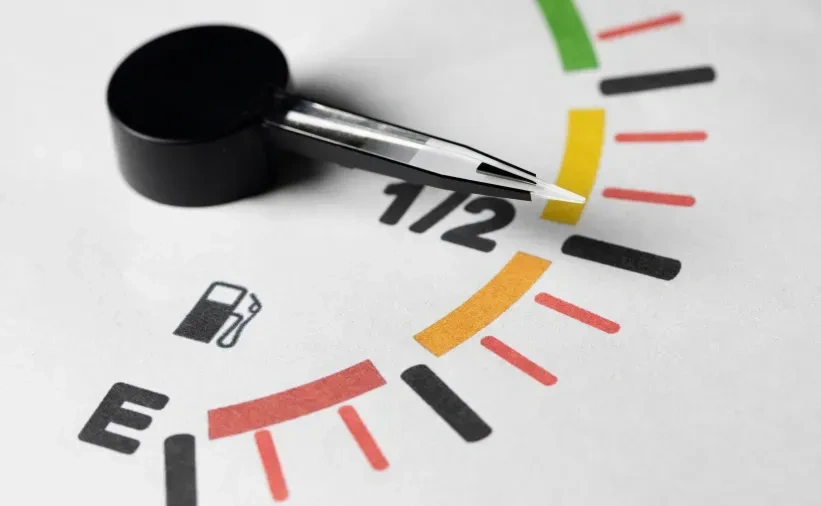
How much fuel does a diesel generator use per hour?
The fuel consumption of a diesel generator set is normally expressed in litres per hour (l/h) and provided for different load levels, for example:
- 25% load.
- 50% load.
- 75% load.
- 100% load.
This is important because a generator set does not consume the same amount of fuel when operating at full power as it does when supplying only part of its available capacity.
Therefore, to answer the question “how much fuel does a generator use?”, knowing its kVA rating is not enough. We also need to know how much power it will actually be required to deliver during operation.
As an initial approximation, the engine's specific fuel consumption can be used to estimate fuel requirements. However, to determine the actual consumption of a specific unit, the relevant technical data sheet and fuel consumption curves for the selected engine and configuration should always be consulted.
What affects generator set fuel consumption?
Several factors directly determine how much fuel a generator set requires.
1. Generator set power rating
Power is one of the first parameters to consider.
A small generator set designed to supply auxiliary equipment will have very different fuel requirements from a multi-MVA solution designed to provide backup power for a data centre, industrial facility or power plant.
However, rated power alone is not enough to determine actual fuel consumption. Engine performance and, particularly, load percentage are key factors.
2. Load percentage
This is one of the most important aspects.
If a generator set is sized to provide a certain output but the installation only requires a small proportion of that capacity for long periods, the engine may operate outside its optimum operating range.
For this reason, a generator set should not be oversized, as prolonged operation at very low loads is not recommended.
Sizing should take into account the actual load, peak demand, critical loads, motor starting currents, potential future expansion and the expected operating regime.
3. Engine type and characteristics
Engine technology also affects fuel consumption.
Factors such as engine design, displacement, injection system, electronic management, operating speed and control strategy all influence the amount of fuel required to produce a given amount of energy.
For this reason, accurate generator set fuel consumption calculations should use the specific curves and technical data for the engine selected for each project.
4. Operating regime
A unit designed solely to provide emergency backup power does not have the same requirements as a generator intended to operate for extended periods as a primary power source.
Depending on the application, a generator set may operate under different duty ratings, for example as standby, prime or continuous power.
The annual operating hours will have a direct impact on total fuel consumption and the operating costs of the installation.
5. Environmental conditions
Temperature, altitude and site conditions must also be taken into account.
An installation located at high altitude or exposed to extreme temperatures may require specific adaptations to its cooling, ventilation or air intake systems.
For international projects in particular, the specific conditions of the site should be analysed from the engineering stage onwards.
6. Equipment maintenance
The condition of the generator set also affects its performance.
Proper maintenance helps preserve the operating conditions specified by the manufacturer. Filters, air intake, injection, cooling and lubrication systems should be inspected in accordance with the maintenance programme established for each unit.

How to calculate generator set fuel consumption
The most reliable way to determine consumption is to consult the engine fuel consumption curve for the relevant load percentage.
For an initial estimate, three main parameters can be considered:
Power demand × engine-specific fuel consumption × operating hours.
If we know the electrical power actually required by an installation and the specific fuel consumption expected at that operating point, we can estimate the litres required per hour and subsequently calculate the fuel needed over a given period.
To determine the actual consumption of a specific unit, the relevant technical data sheet and fuel consumption curves for the selected engine and configuration should always be consulted.
However, this approximation is not a substitute for a technical project calculation.
In critical installations, an accurate calculation must take into account not only consumption but also related factors such as required autonomy, fuel storage capacity, fuel transfer systems, redundancy, response to load variations and the actual operating profile.
Rated power and actual power demand: an important distinction
One of the most common mistakes when estimating how much fuel a generator set uses is to base the calculation solely on its rated output.
Imagine an installation equipped with a 500 kVA generator set.
This does not mean that the unit will continuously deliver 500 kVA. Demand may vary considerably throughout operation.
This is precisely why the load profile must be analysed when designing a power generation system.
This analysis makes it possible to identify:
- Typical power demand.
- Maximum demand.
- Peaks caused by the starting of specific equipment.
- Priority or critical loads.
- Future requirements of the installation.
- The expected operating regime.
With this information, it is possible to select a solution that is better suited to the actual operation of the installation and avoid both undersizing and unnecessary oversizing.
Does a generator set use less fuel at low load?
In absolute terms, reducing the power supplied will normally reduce fuel consumption in litres per hour.
However, this does not mean that prolonged operation at very low load is the most efficient or recommended operating condition.
Diesel engines are designed to operate within certain load ranges. Therefore, a generator set should not be oversized simply to provide additional spare capacity, as this may result in it routinely operating below the appropriate load levels.
Correct generator set sizing is therefore essential.
The aim is not to select the most powerful unit possible, but to define a configuration capable of responding appropriately to the different expected load scenarios and the actual requirements of the installation.
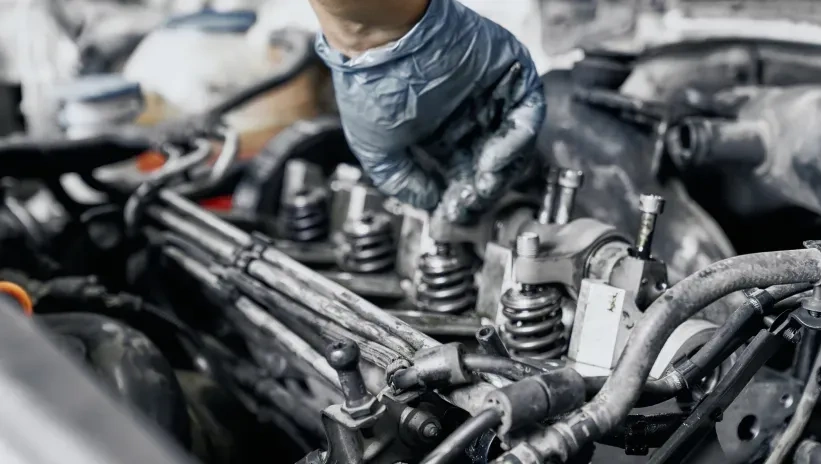
How to optimise generator set fuel consumption
Although every project requires a specific analysis, several measures can help optimise fuel consumption:
- Correctly size the generator set according to the actual load profile.
- Avoid unnecessary oversizing.
- Analyse the different operating scenarios.
- Select engines and configurations suited to the application.
- Carry out the specified preventive maintenance.
- Monitor generator operation and load.
- In installations with multiple generator sets, assess parallel operating strategies that allow available power to be adapted to demand.
- Incorporate monitoring and management systems where required by the application.
In complex projects, these decisions should be made during the engineering stage rather than only after the equipment has been installed.
Fuel consumption also determines autonomy
Knowing how much fuel a generator uses does more than help estimate fuel costs.
It is also essential for calculating its autonomy.
If we know the expected hourly consumption and the usable capacity of the fuel tanks, we can determine how long the installation can operate without refuelling.
Generator set fuel consumption is one of the factors that has the greatest impact on both operating costs and the autonomy an installation can provide.
This becomes particularly important in critical applications where the electricity supply must be maintained even during prolonged grid outages.
Hospitals, data centres, telecommunications infrastructure, industrial facilities and power plants may require specific levels of autonomy and fuel systems designed specifically to ensure continuity of service.
For this reason, the fuel tank and the generator set should be designed as parts of the same system.
There is no single consumption figure: every project requires specific analysis
Asking how much fuel a generator set uses is a good starting point, but an accurate answer requires an understanding of how and where the equipment will operate.
Power, load, operating hours, environmental conditions, autonomy, engine and technical configuration are all part of the same equation.
At Genesal Energy, we analyse these parameters from the earliest stages of a project to develop power generation solutions tailored to the actual requirements of each installation.
Correct sizing not only ensures that the required power is available. It also helps optimise operation, fuel consumption and operating costs throughout the service life of the equipment.
Do you need to calculate fuel consumption or size a generator set for your project? Contact our engineering team and we will assess the requirements of your installation.
Frequently asked questions about generator set fuel consumption
How much diesel does a generator set use per hour?
It depends on the generator set's power rating and, above all, on the percentage of load at which it is operating. The exact figure should be taken from the relevant engine fuel consumption curve, normally expressed in litres per hour at different load levels.
How much fuel does a 100 kVA generator use?
There is no single figure that applies to every 100 kVA generator. Consumption depends on the engine fitted and the amount of power actually being supplied. For an accurate figure, the model's technical data sheet and fuel consumption curve should be consulted.
Does a generator set consume the same amount at 50% and 100% load?
No. Fuel consumption increases as load increases, although the relationship between load percentage and litres consumed is not completely proportional. This is why manufacturers normally provide different consumption figures for different operating points.
How do I know what size fuel tank my generator set needs?
To size the fuel tank, you need to know the expected generator consumption and the required autonomy. Other factors must also be considered, including usable capacity, fuel reserve, transfer systems and the specific characteristics of the installation.
Does a larger generator set always use more fuel?
Not necessarily in terms of efficiency. The key factor is the relationship between available power and actual demand. A generator set should not be oversized, as prolonged operation at very low loads is not recommended. Sizing should therefore be based on the actual operating profile of the installation.
Contact
Do you need a generator set?
Fill in the form with your information if you want one of our generator sets or if you have any questions. We will prepare a quotation for you based on your requirements.

Customer Service Telephone/Fax:
Customer service team Email